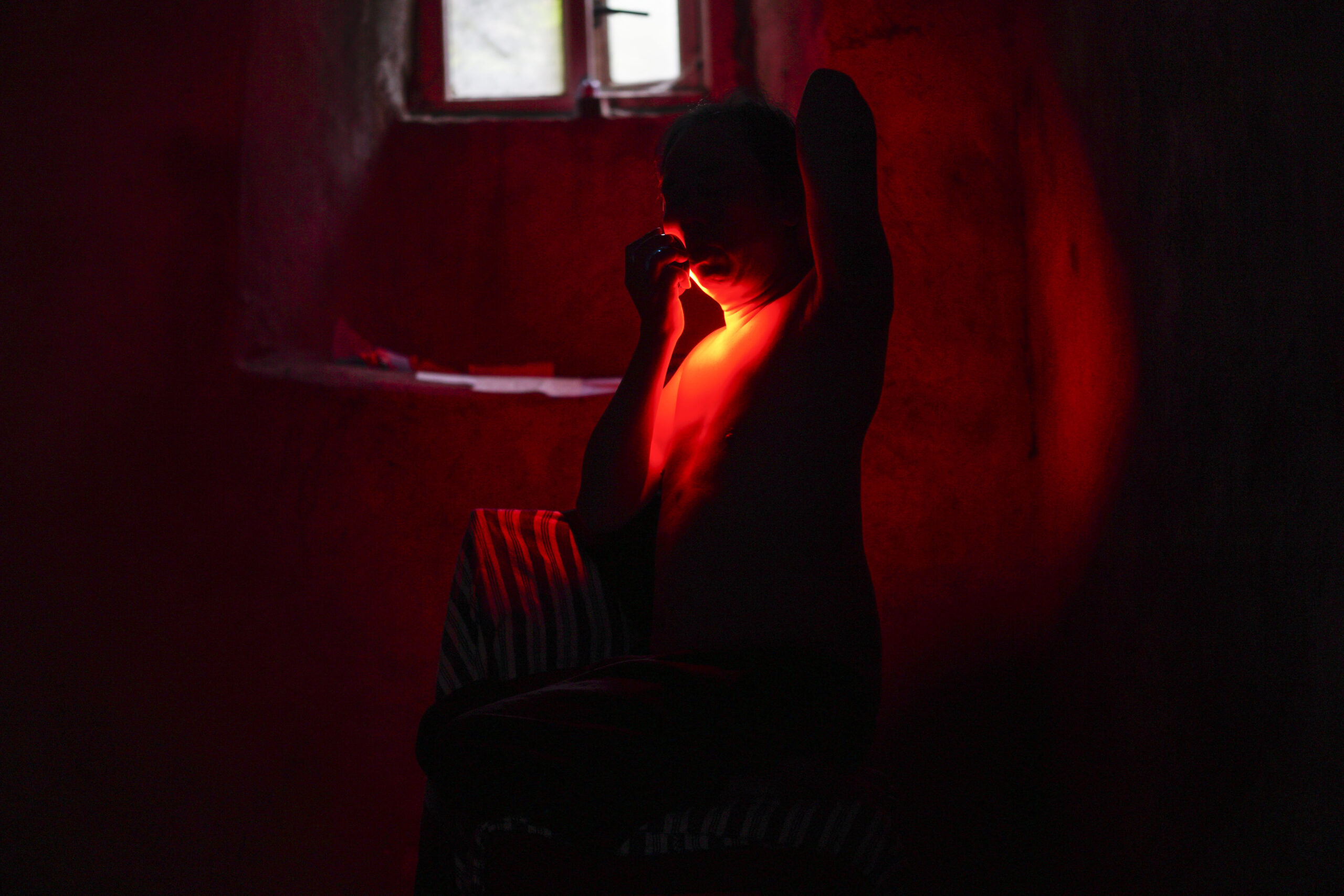
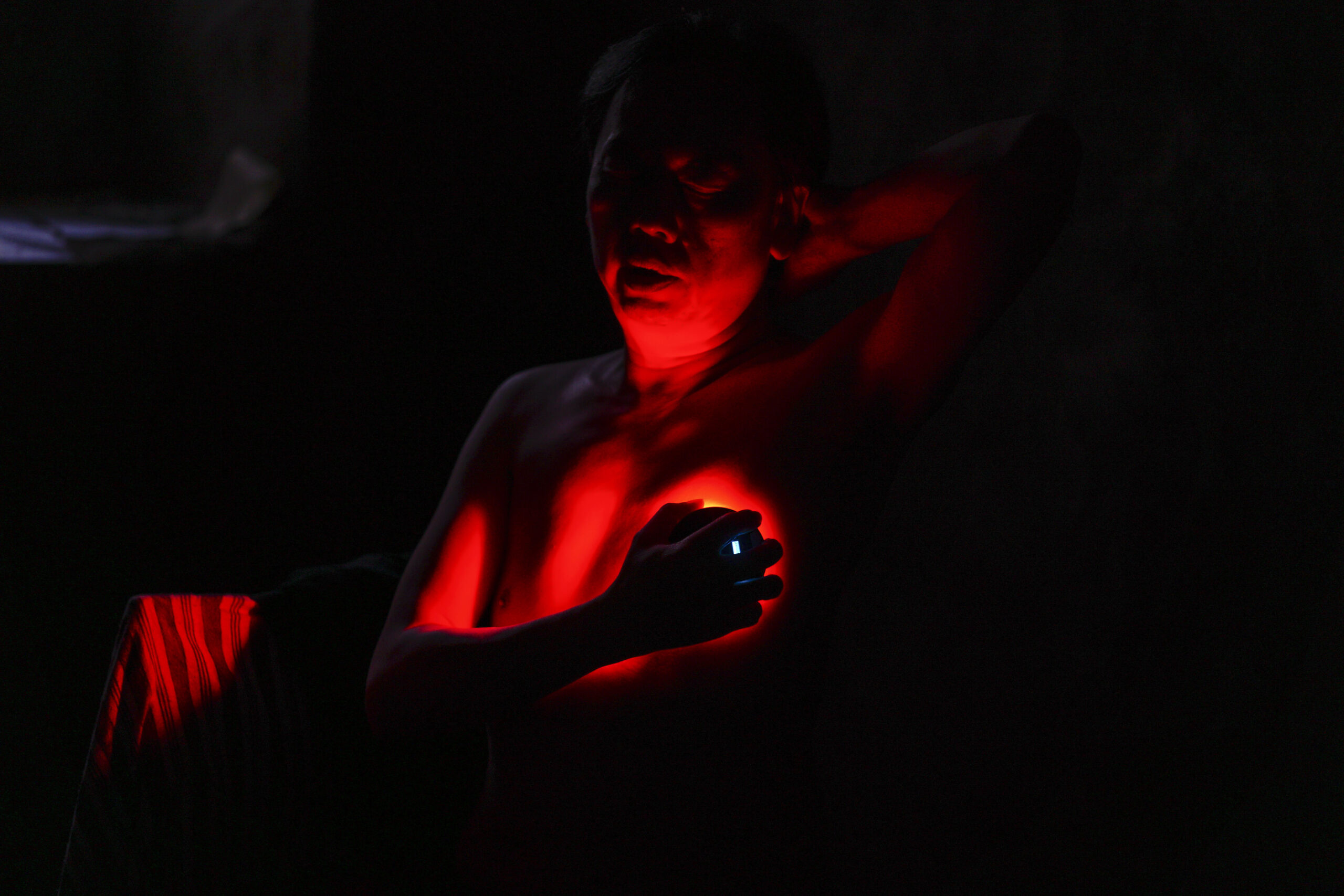
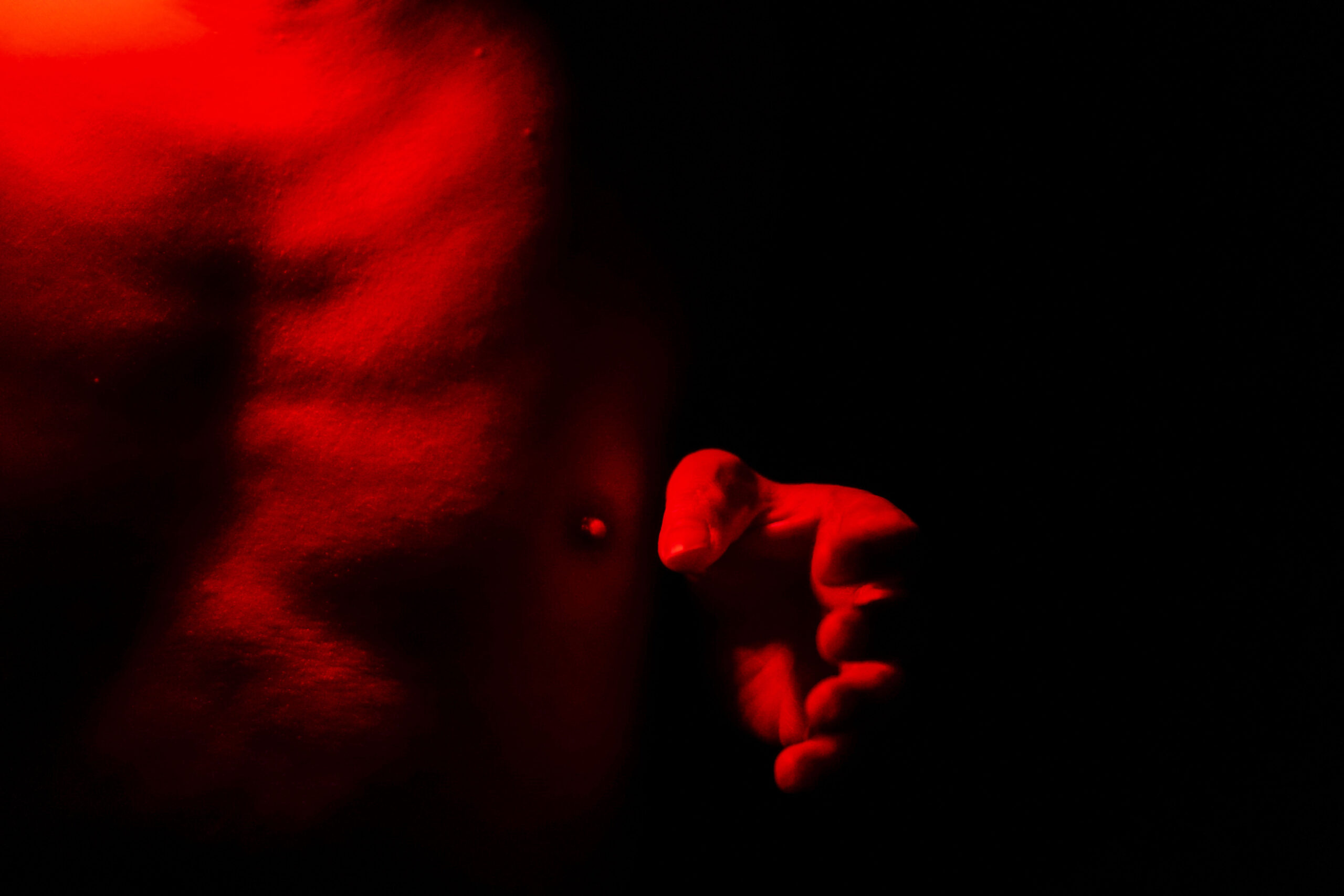
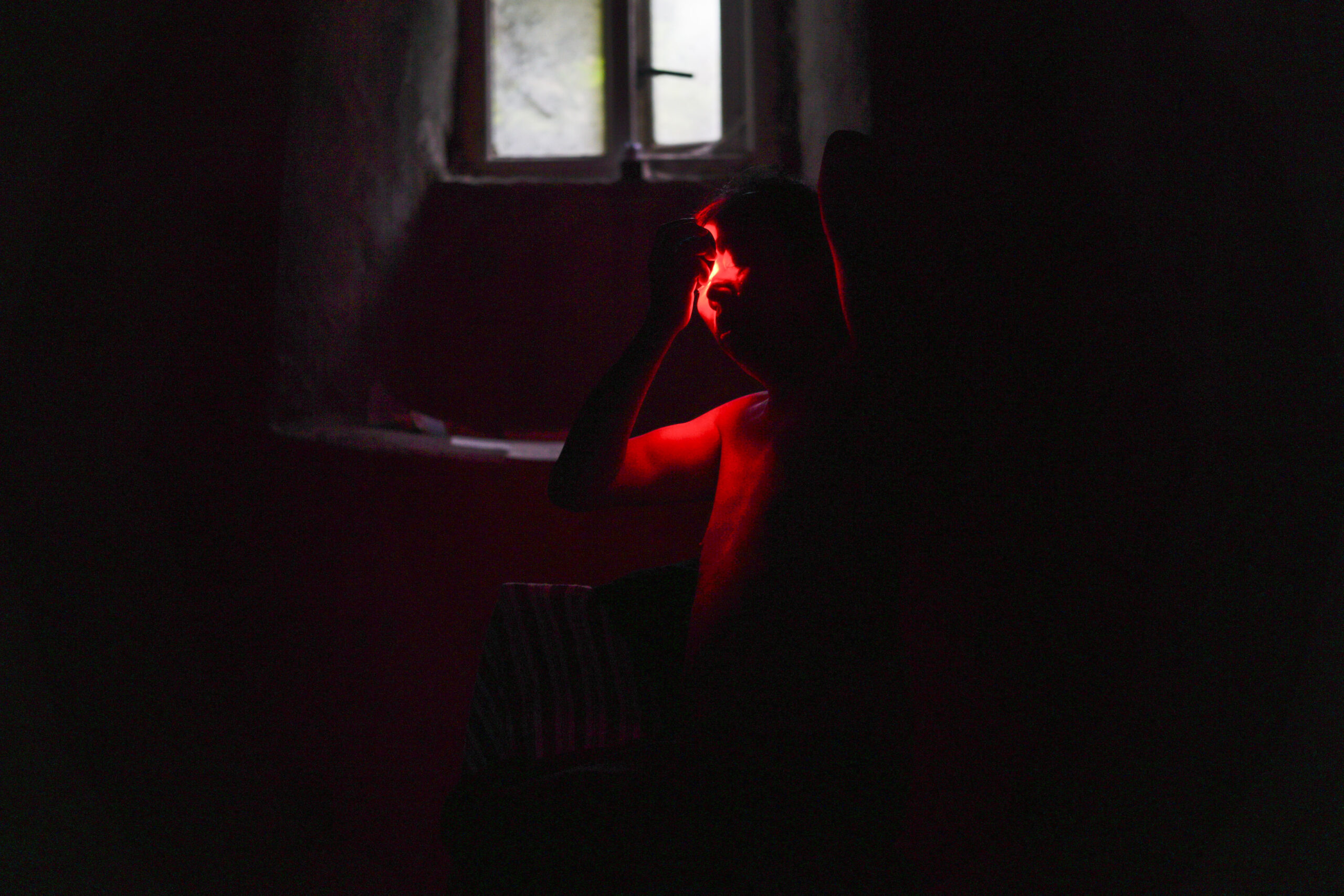
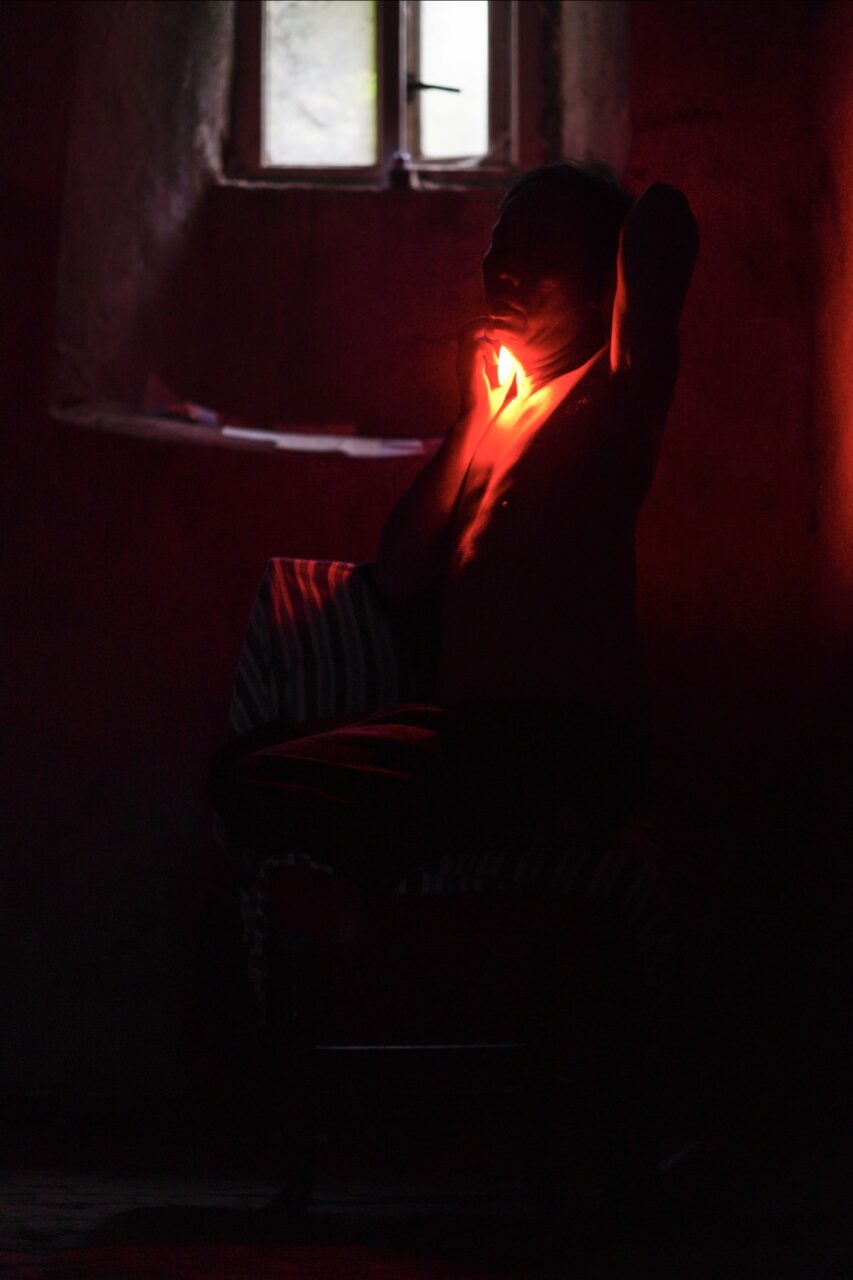
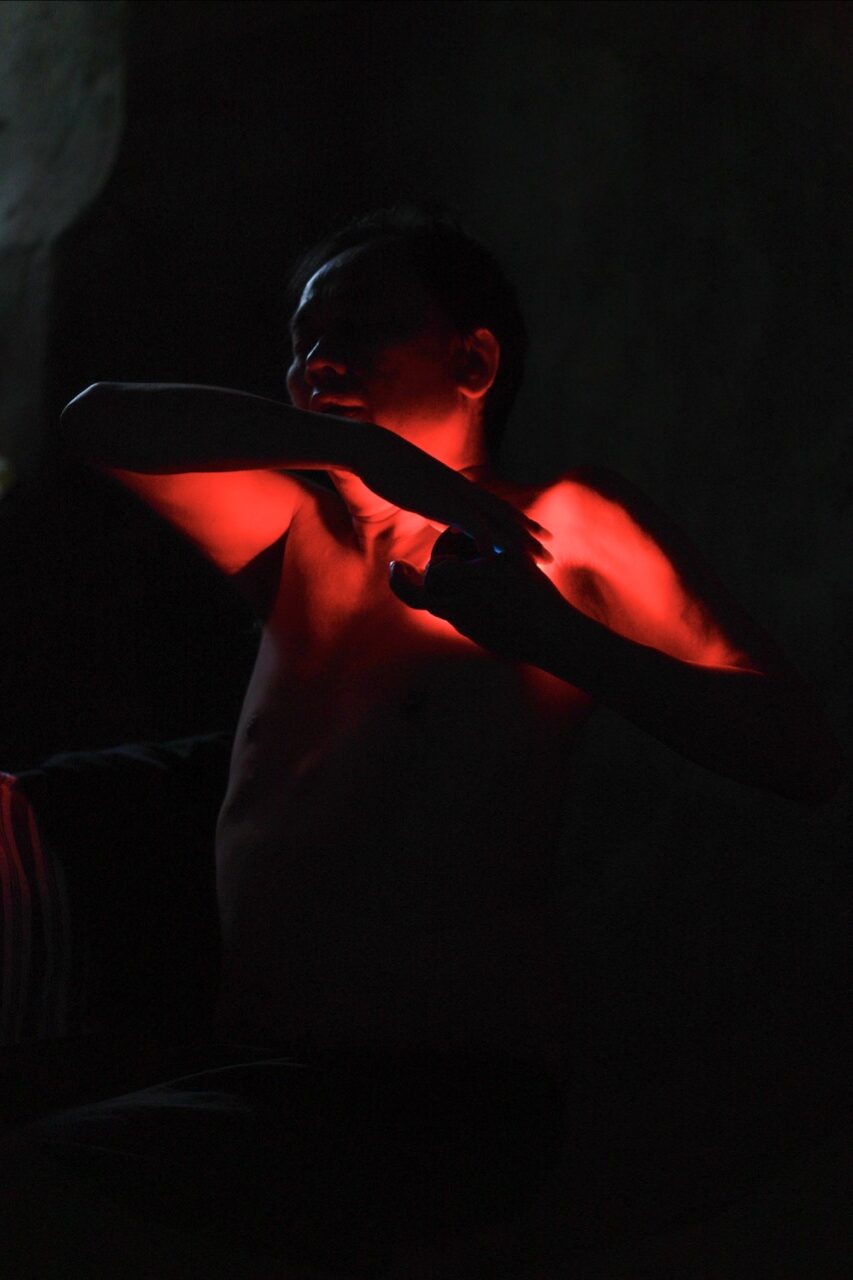
Sonic Bath (2024) continuous performance
The Sonic Bath: Sound, Light, and the Ritual Body of Philemon Mukarno
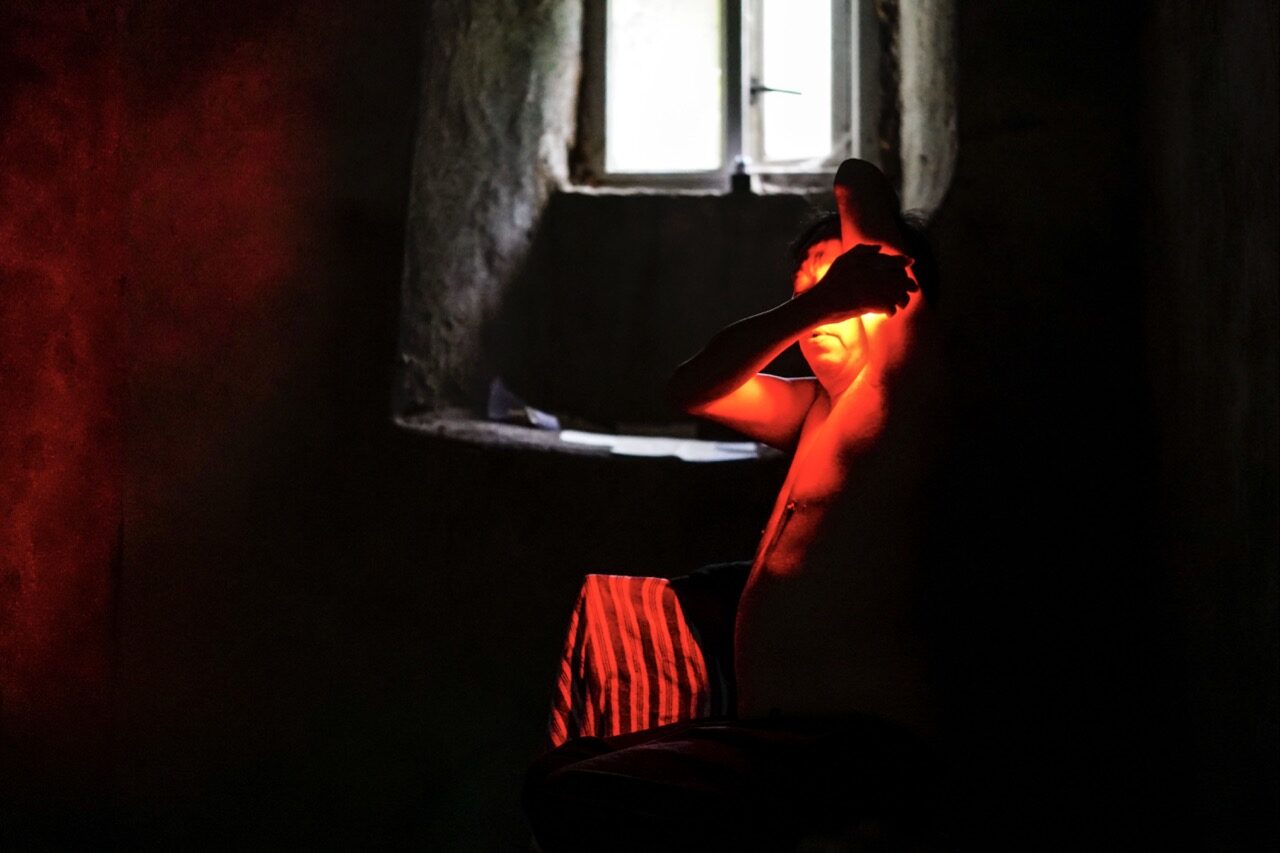
Philemon Mukarno’s Sonic Bath unfolds as far more than an audio-visual event: it is an immersive spiritual practice assembled inside the human body itself. Performed during a residency at Live Art Ireland, the work strips away every layer of costume and convention to place the performer directly within the altar space — standing naked before a consecrated surface, Mukarno opens his form to both the audience present and the divine presence invoked at once. He transforms the body from object into medium, from container into conduit, and the kitchen table becomes, quite literally, a altar for the consecration of sight and sound. What follows is not instruction but witness: an account of an event that invites rather than explains, and that asks you to feel what sight alone cannot adequately convey.
At the core of the performance lies overtone singing, a technique in which a single sustained tone extends into multiple simultaneously audible partials. The voice does not merely produce a note — it breathes, carrying guttural harmonics that build continuously from the depths of the throat. Continuous in this sense means unbroken; each breath adds another layer, a new frequency stepping forward to join the rising whole. The technique relies on the chest cavity and larynx themselves becoming resonant instruments, requiring long practice before the partials separate cleanly enough to escape audible distortion. Mukarno’s mastery of it is evident even at first listen: what begins as a steady breath resolves, by degrees, into a woven texture of pitches too rich to summarize in a single description. There is nothing decorative here. Every partial reaching the ear carries intention, and every breath carries stillness.
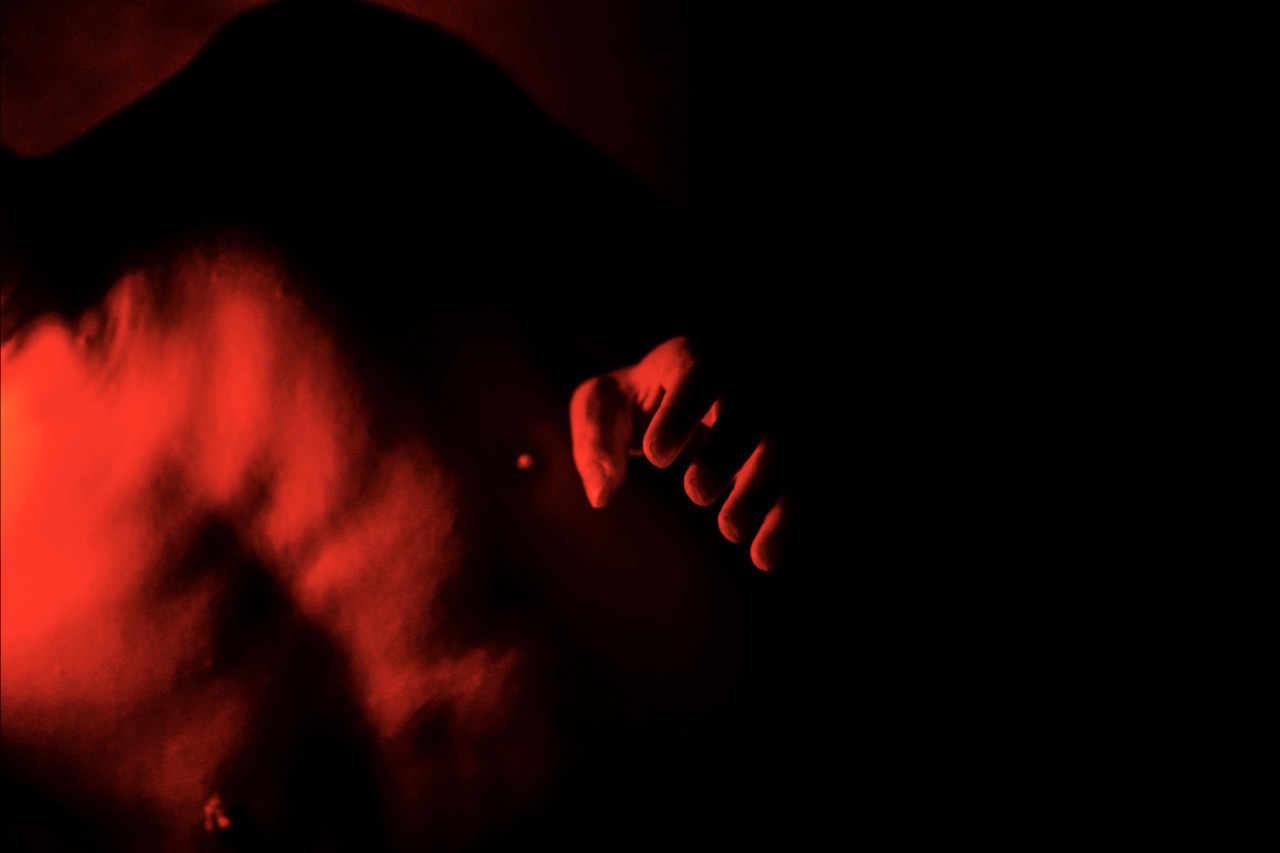
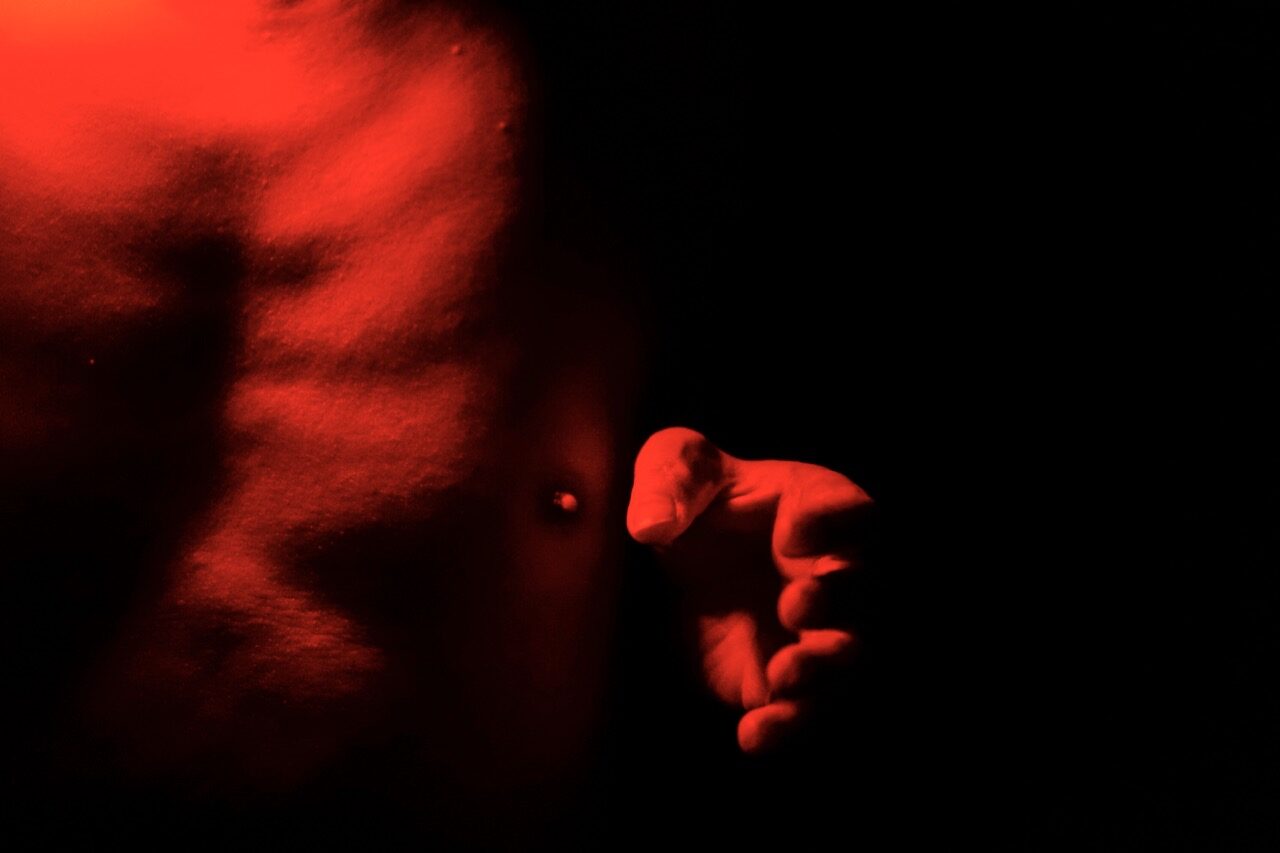
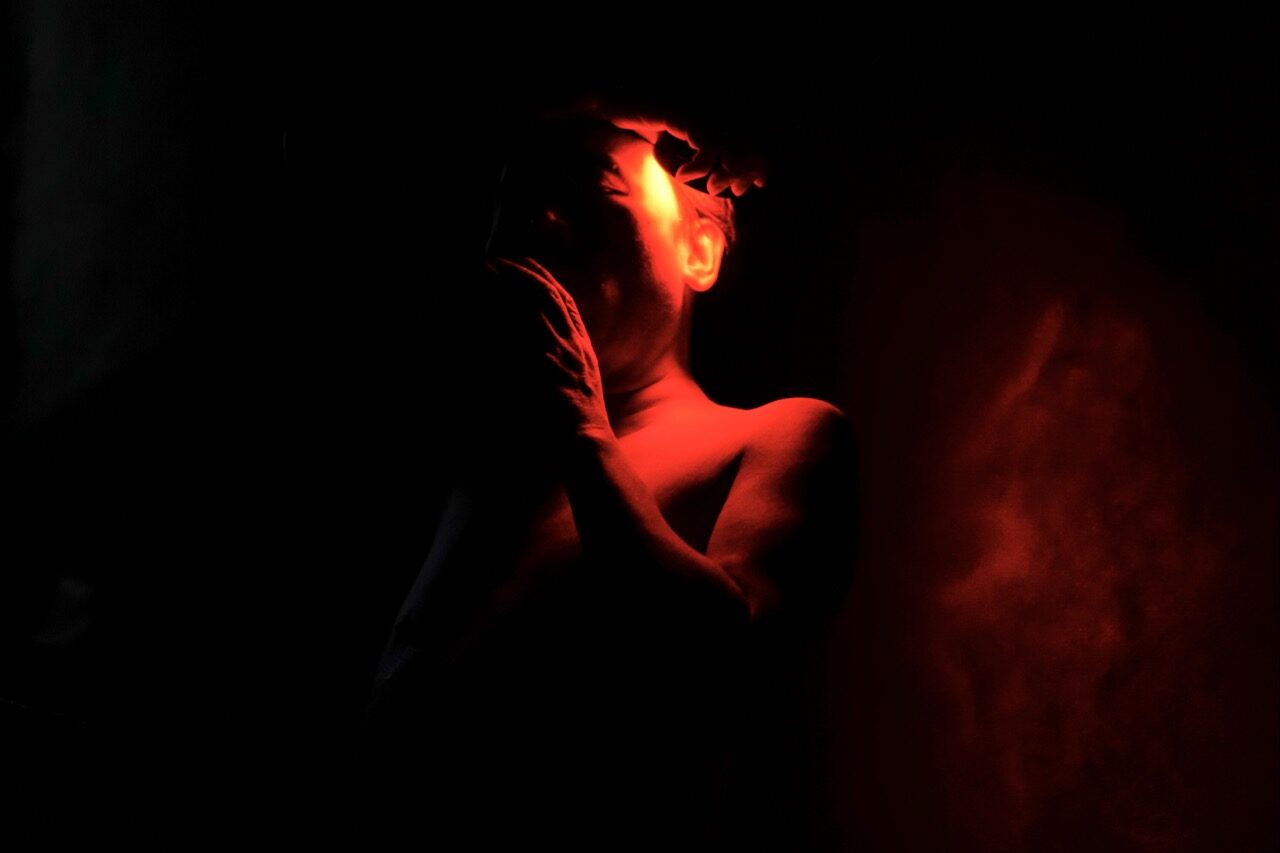
As the sound sustains, a second element enters the frame: red light moves across Mukarno’s exposed body. In its movement, the illumination participates fully in the ritual: red signifies blood, heat, energy, and devotion — the life force animating the visible form. Each pass deepens the field, so that the body appears inscribed with light as though illuminated from within by a fire that predates both performer and listener. The effect is indelible for anyone who stood close enough to watch the light travel. Sound and light do not merely accompany each other here; they coalesce into a single event. The audience hears what becomes visible and sees the transition become audibly sacred. A prayer. A bath of sound and light. These two nouns compress the entire experience into phrases that connect theatre with worship, movement with stillness, the public with the private. There is no television show concealed beneath the language, and the ritual asks for nothing else but attention.
When the performance closes, it closes quietly and without any conventional finale. Silence replaces the acoustic event entirely. Hands fold into an open posture of receptivity, and Gratitude for the green fields, the Irish sky, the clouds is offered outward. There is no applause, no spoken instruction, no invitation to return to daily life with the comfort derived from seeing a spectacle ended. Instead the ritual simply ends the way ceremony actually ends — with an act of reception from the people present. The gratitude that moves outward belongs equally to the body standing in the room and the landscape beyond it: the sight, the field, the sky, the cloud passing overhead. What is received in that moment is not entertainment. It is interruption. The ordinary world that would dismiss such an encounter is displaced by presence so total that even structure must yield. That yielding is the point. A creature willing to stand naked before a consecrated surface, breathing on harmonics produced by nothing but itself, has already committed to transformation.