A Cycle of Return – Philemon Mukarno’s Spiritual Performance in Rotterdam (2026) 20min.
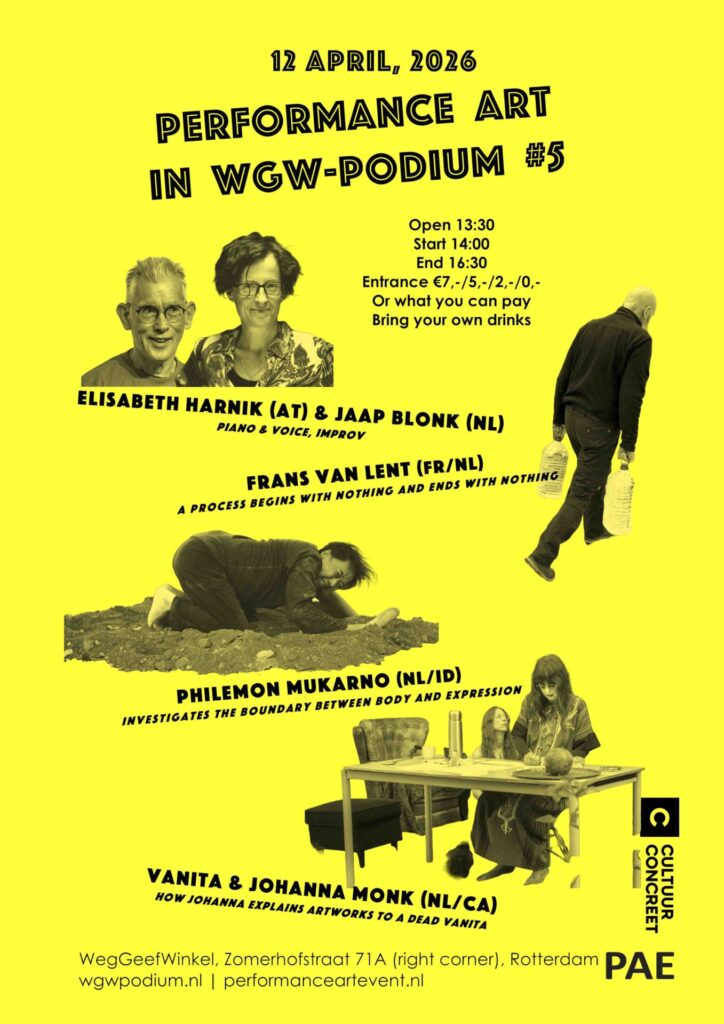
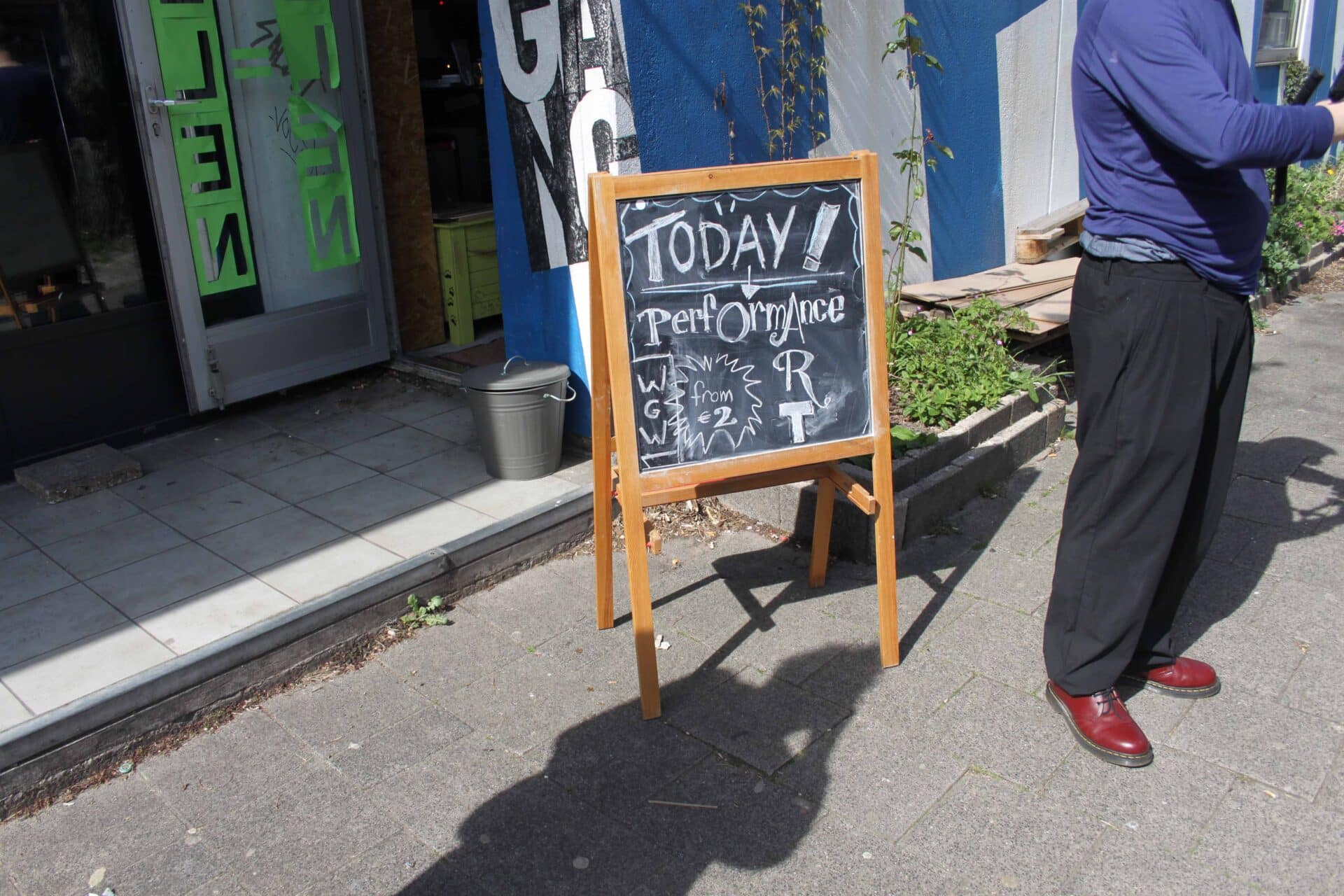
A Cycle of Return, presented on April 12th, 2026 at WGW Podium in Rotterdam, performance artist Philemon Mukarno explores the boundaries between body, breath, and awakening. The performance develops as a spiritual journey where physical struggle becomes a bridge toward inner cleansing. Invited by curator Ieke Trinks, Mukarno enters the stage not to entertain but to transform perception—his own and the viewer’s.
Performance art often resists comfort. It asks the body to speak, even when silence follows. Through his deliberate movements, Mukarno transforms weight into meditation, air into resistance, and exhaustion into rebirth. Each gesture reflects a question: How does individuality connect with spirit when stripped of every symbol and object?
The First Act: Walking as Struggle
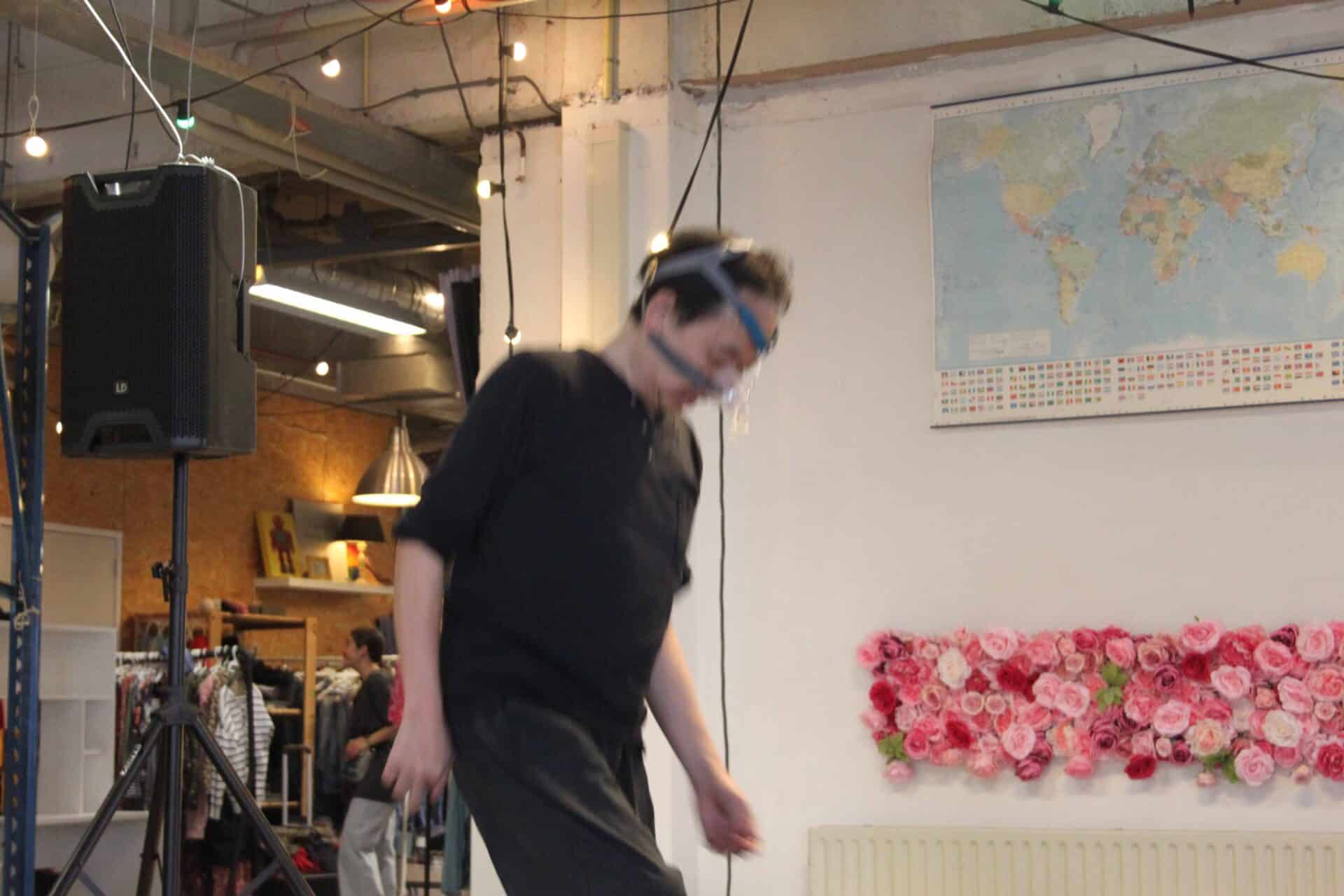
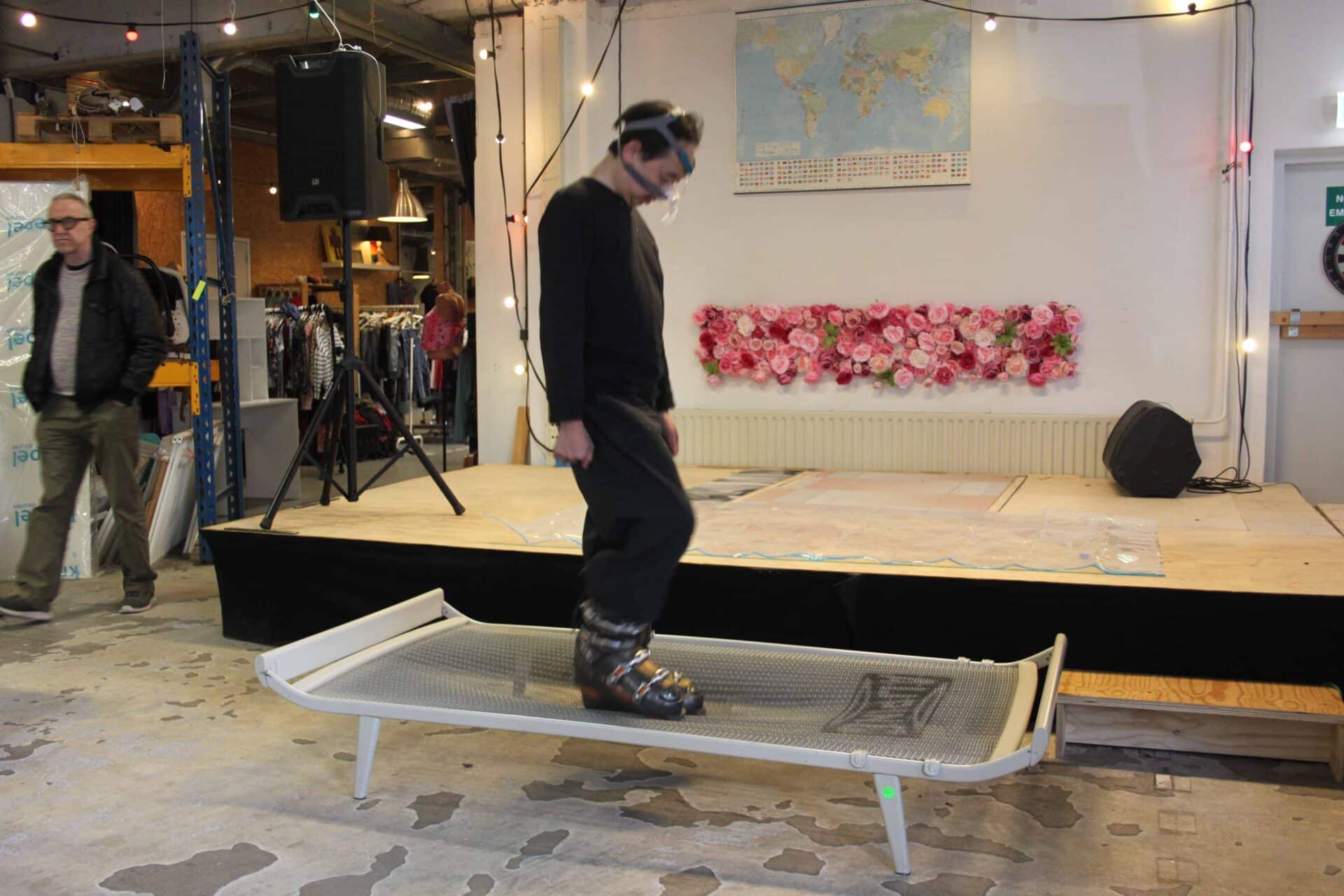
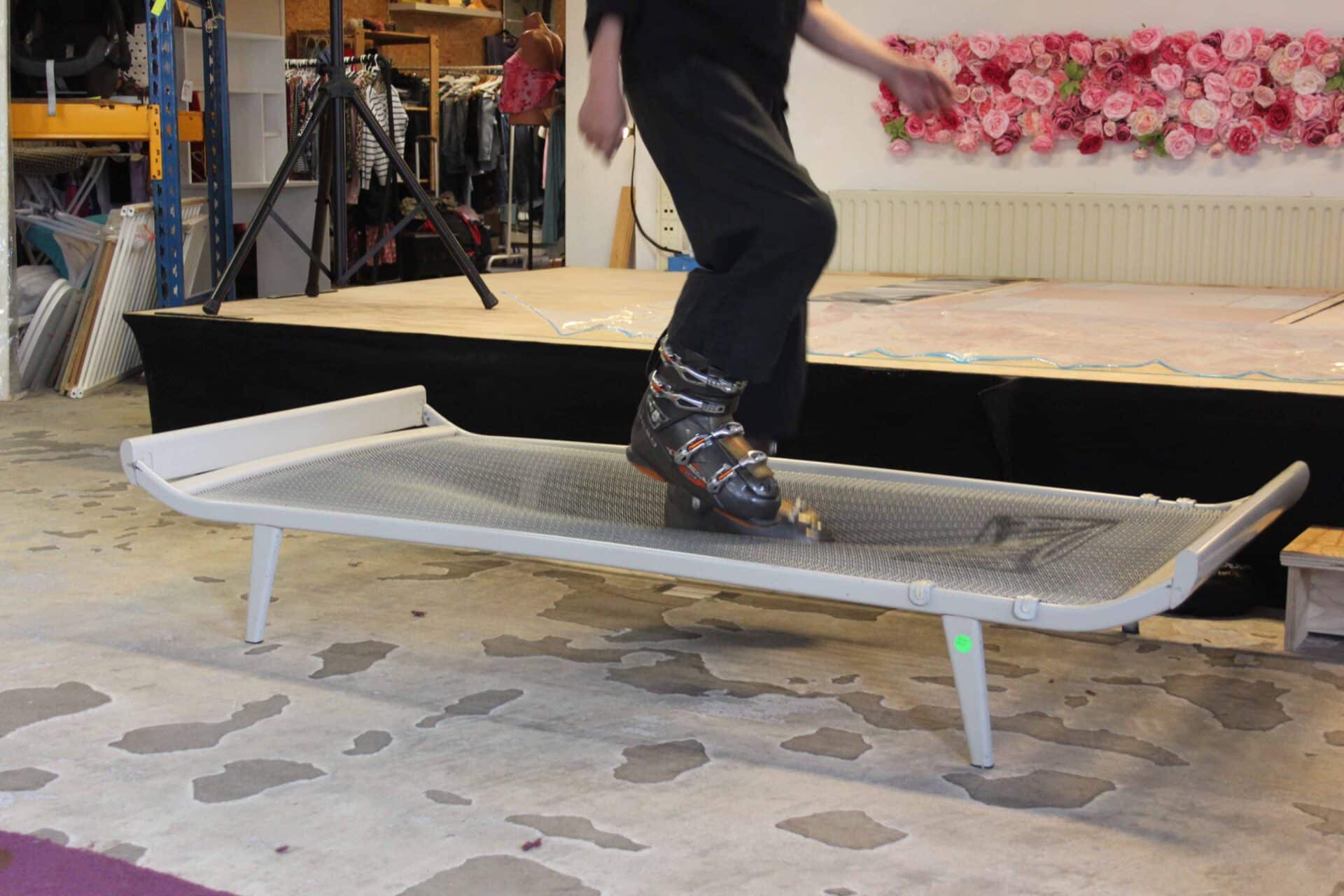
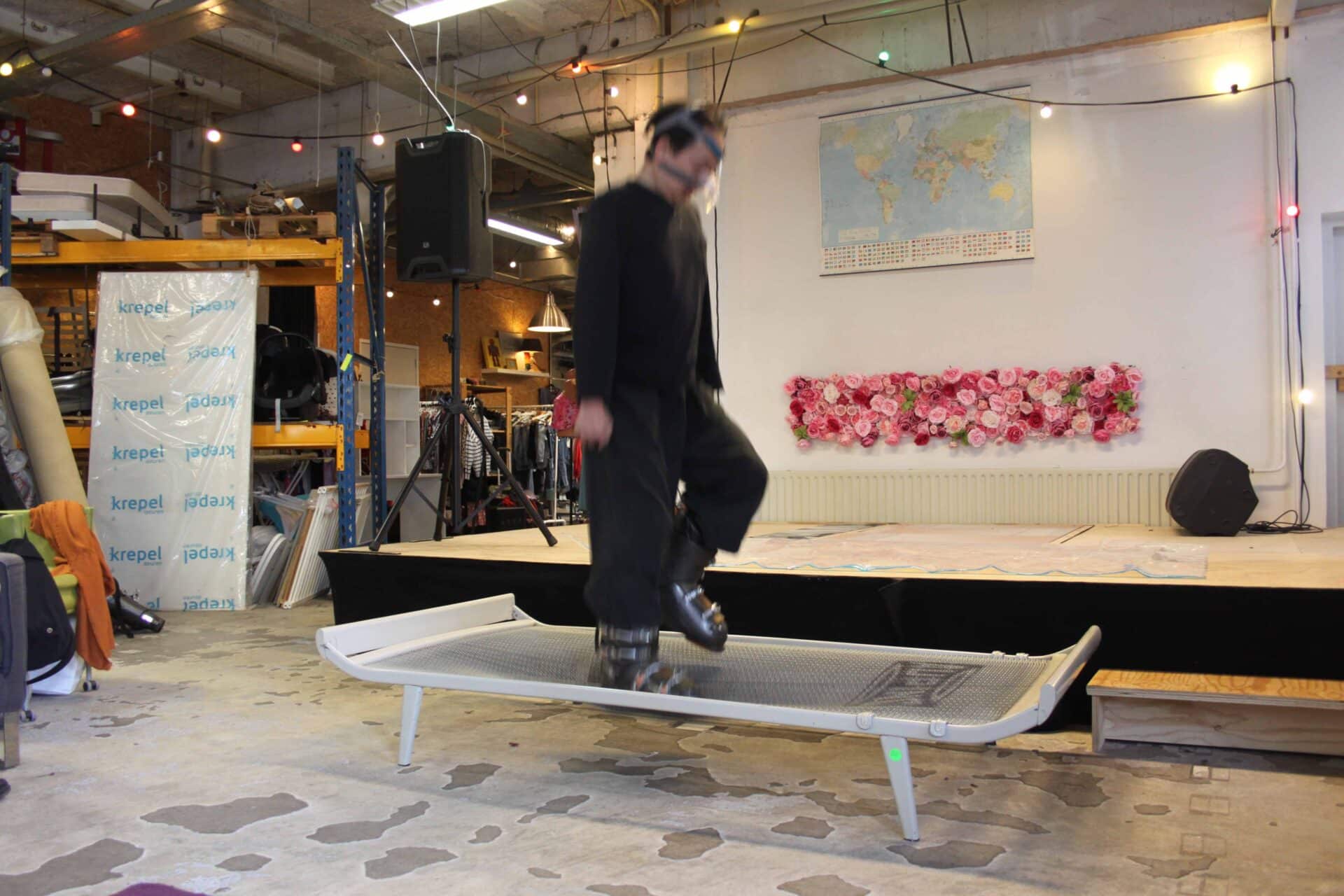
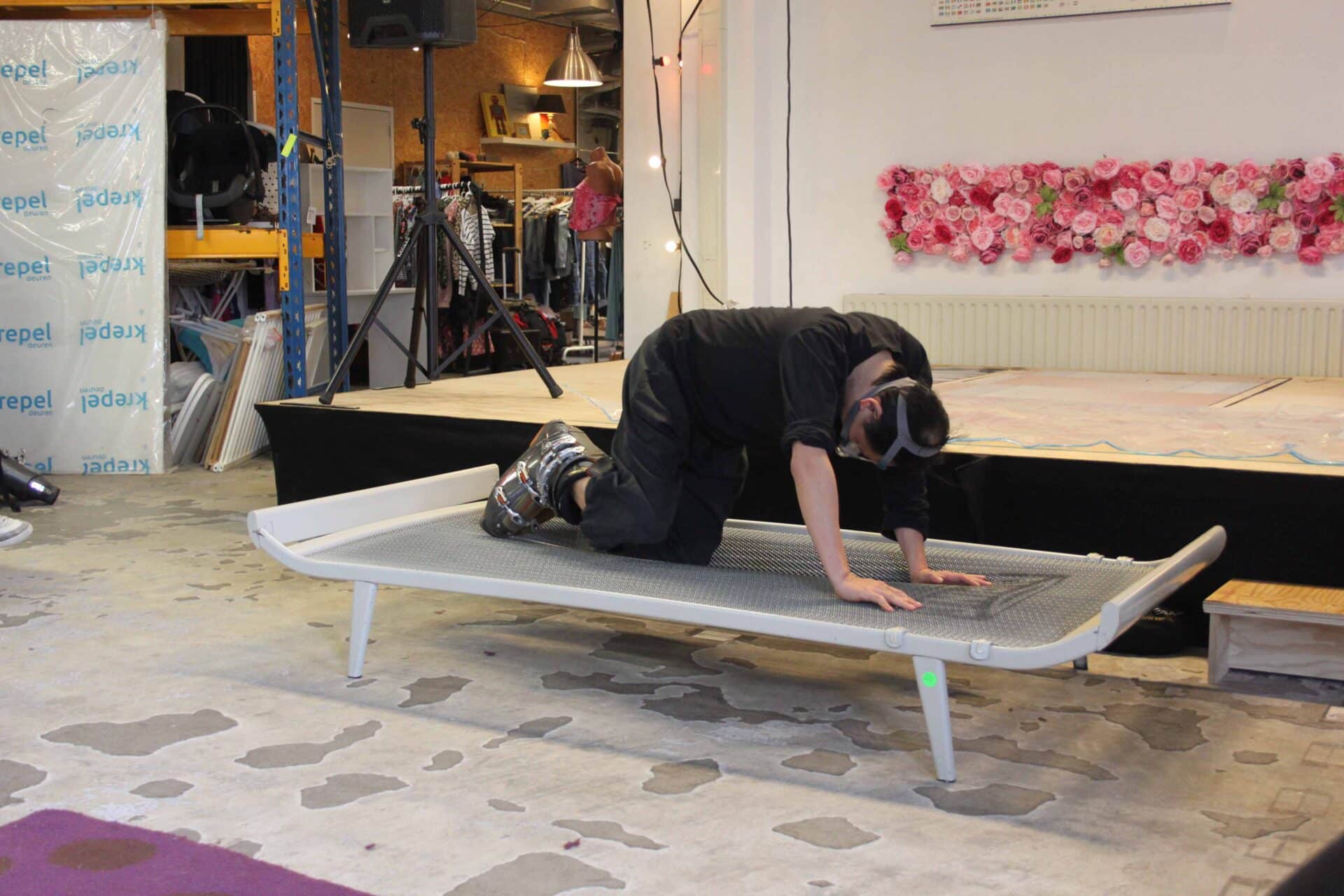
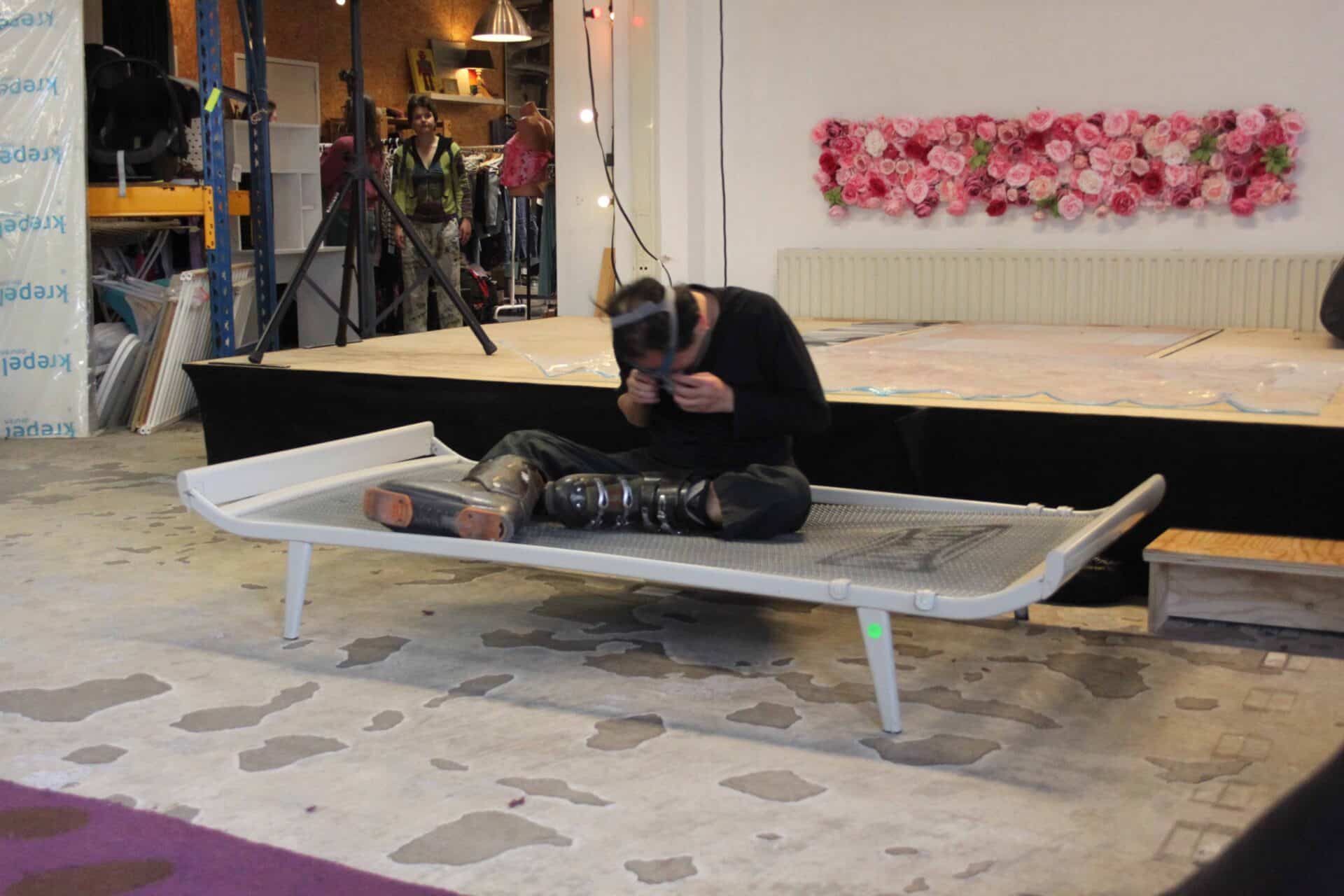
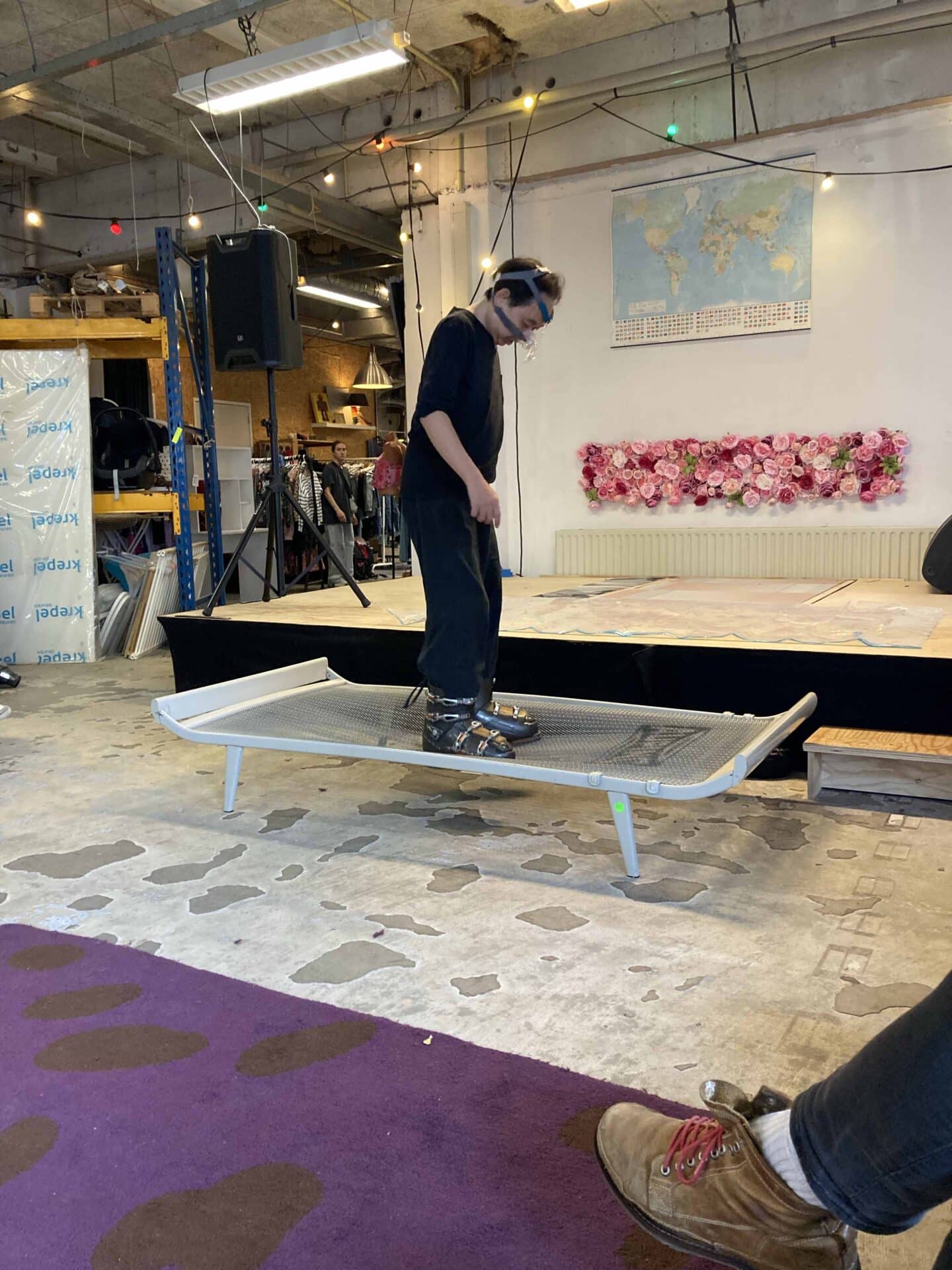
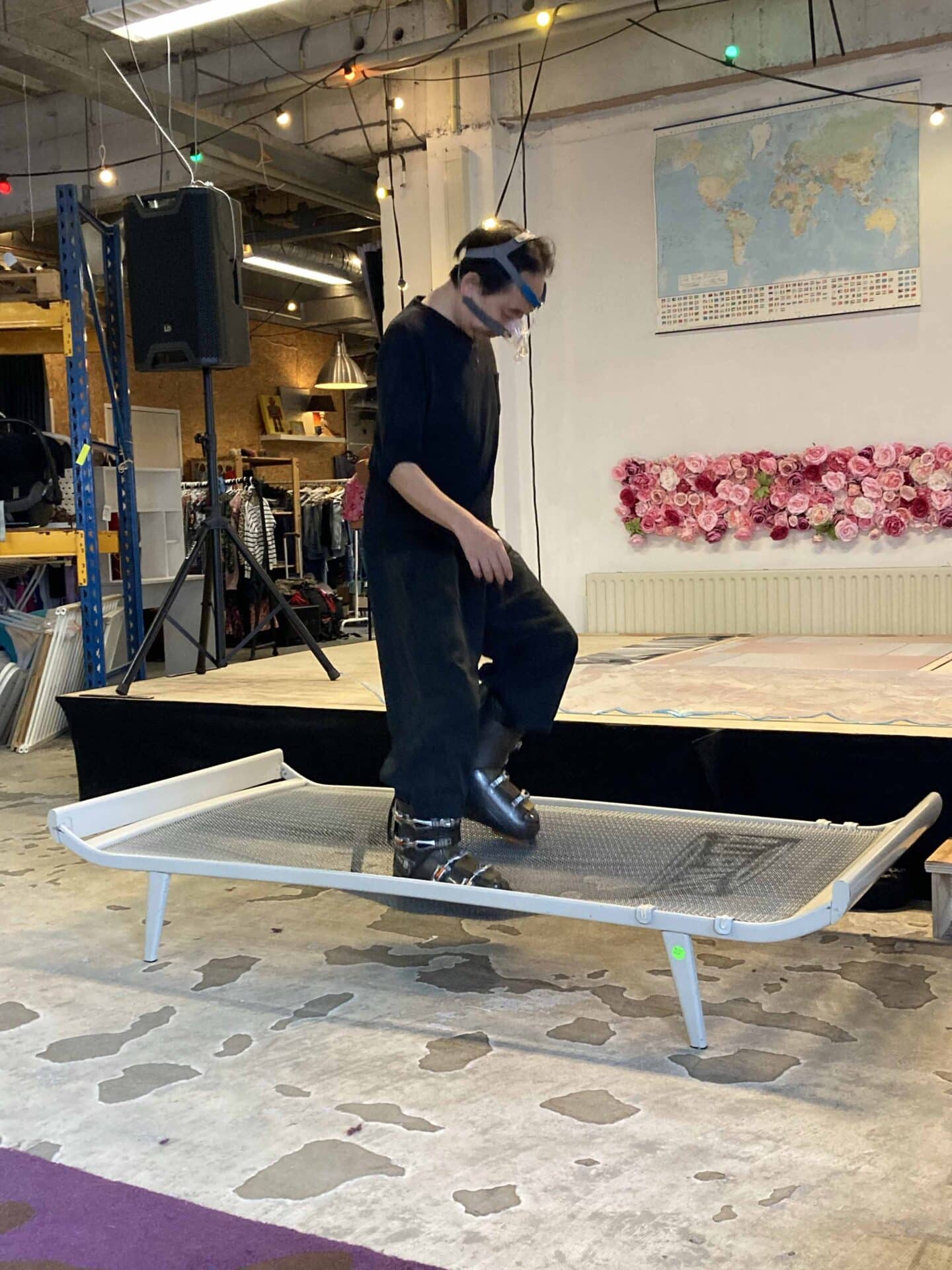
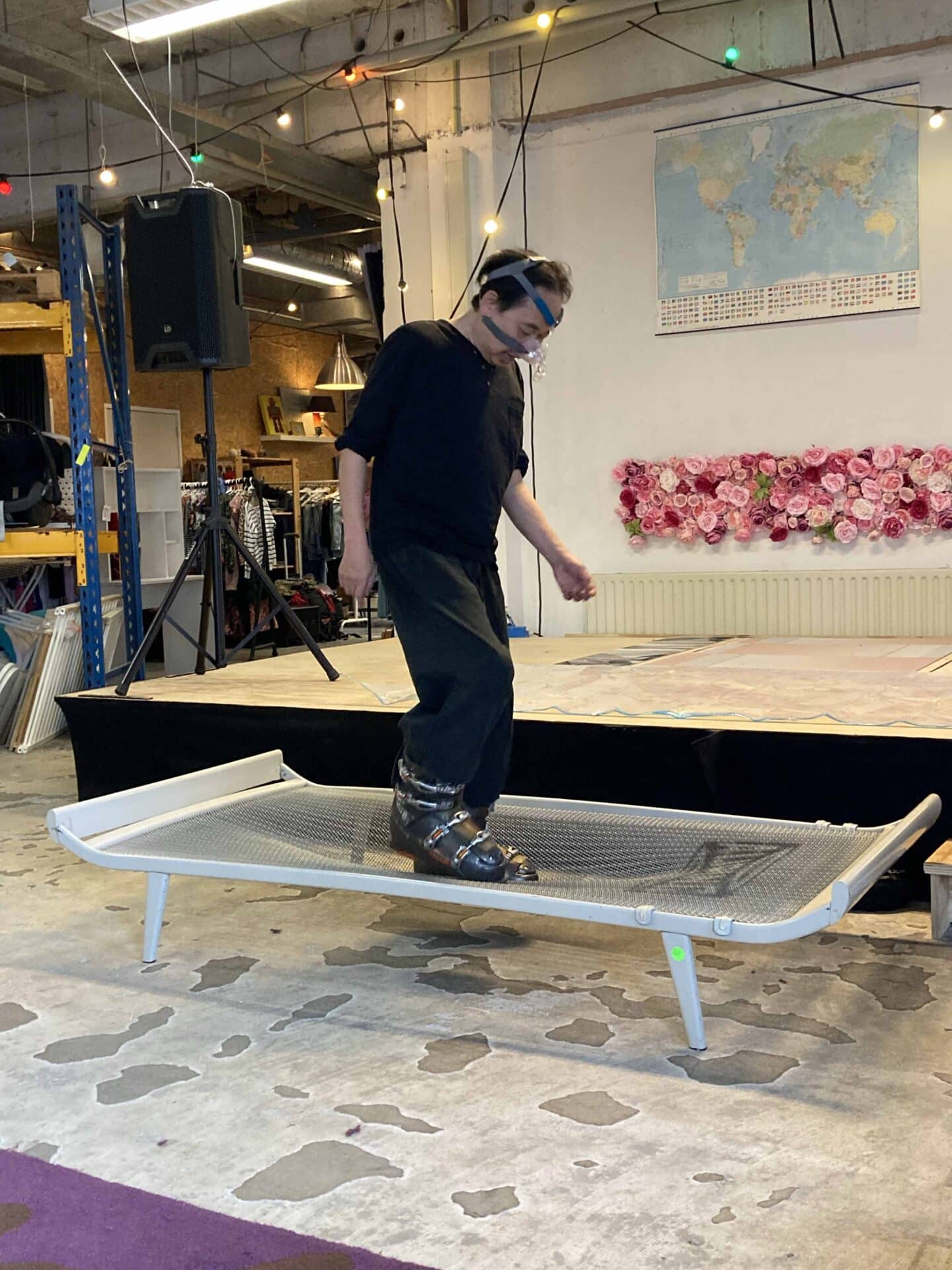
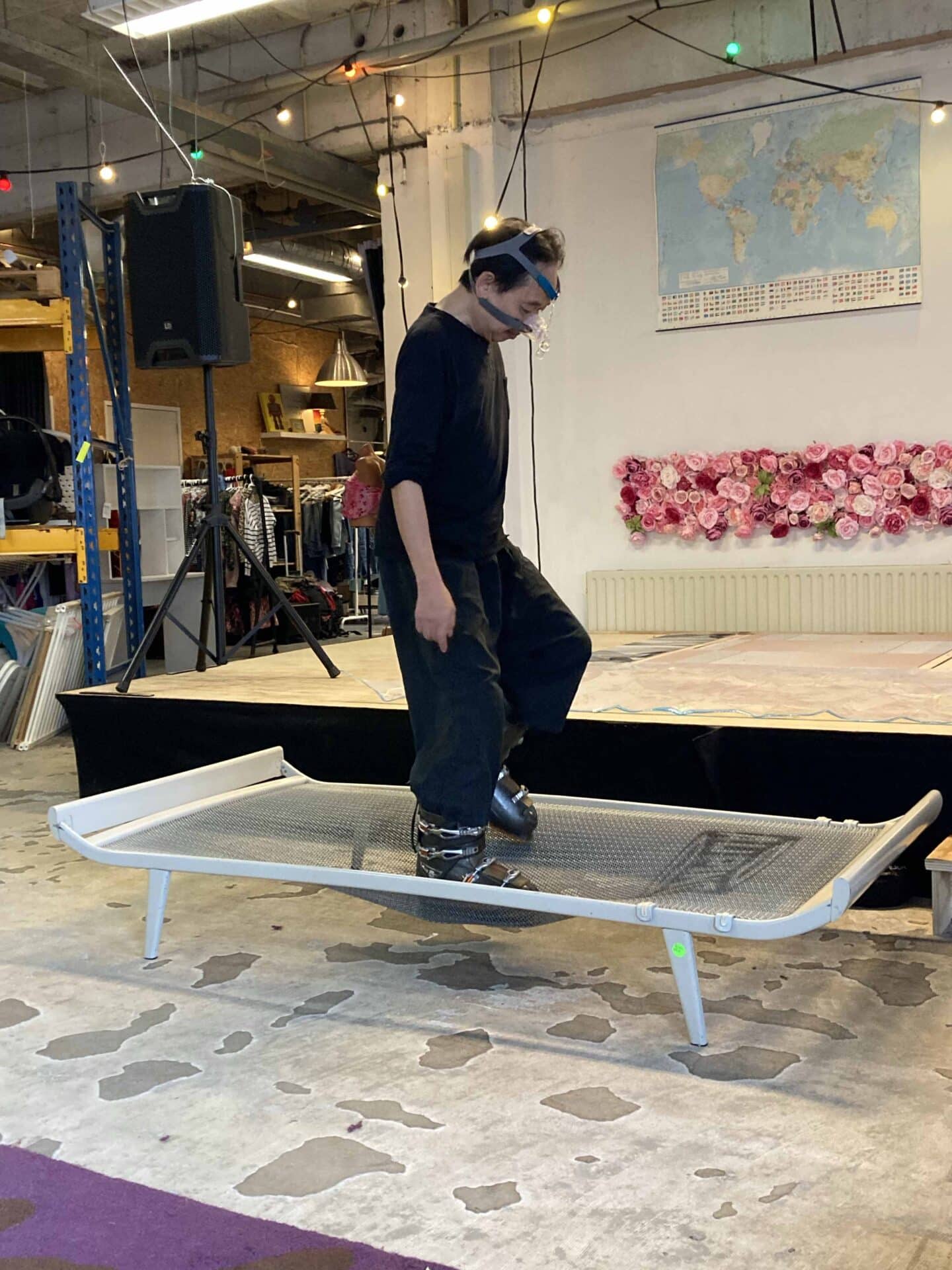
The performance opens in a confined space. On a simple bed frame, Mukarno stands wearing heavy ski boots and a breathing mask. The mask amplifies every inhale and exhale. His steps fall slow and deliberate, echoing through the room. The sound of breath becomes rhythm; the sound of resistance becomes pulse.
The image is straightforward yet symbolic. The bed represents rest, but under his feet, it denies comfort. The ski boots, tools meant for movement, now restrict motion. Time stretches with each step as he walks for nearly ten minutes—ten minutes of visible effort, trembling balance, and audible tension. Every breath grows louder, every motion slower. The viewer senses struggle as a living substance.
This extended act creates a feeling of being drawn backward through time. The elastic surface of the bed resists progress, forcing him to push against invisible weight. Slowly, gravity merges with memory; the act of walking begins to resemble a ritual of endurance. When his body finally collapses, the fall speaks of release—an acceptance of human limitation.
The Unmasking and Transition
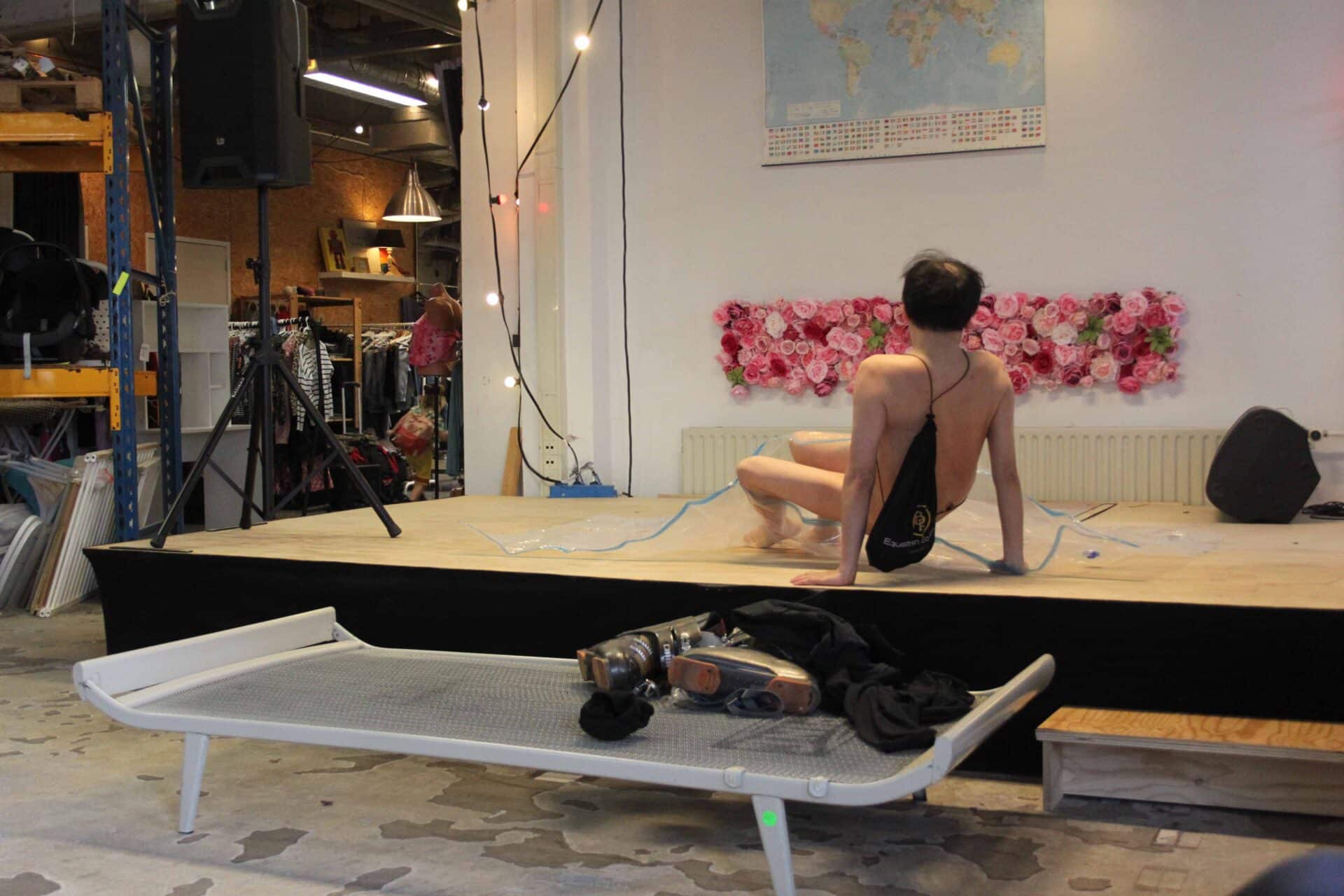
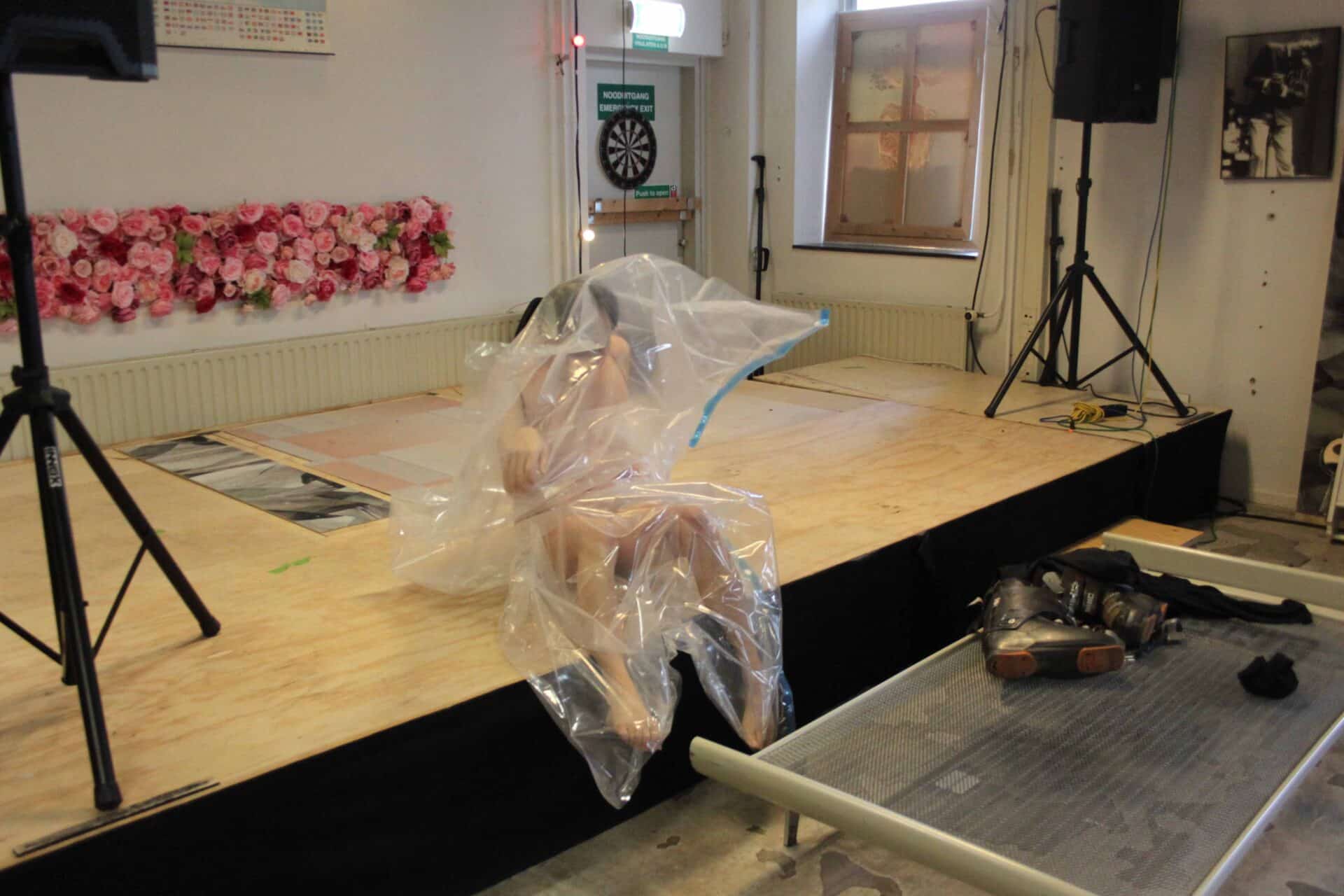
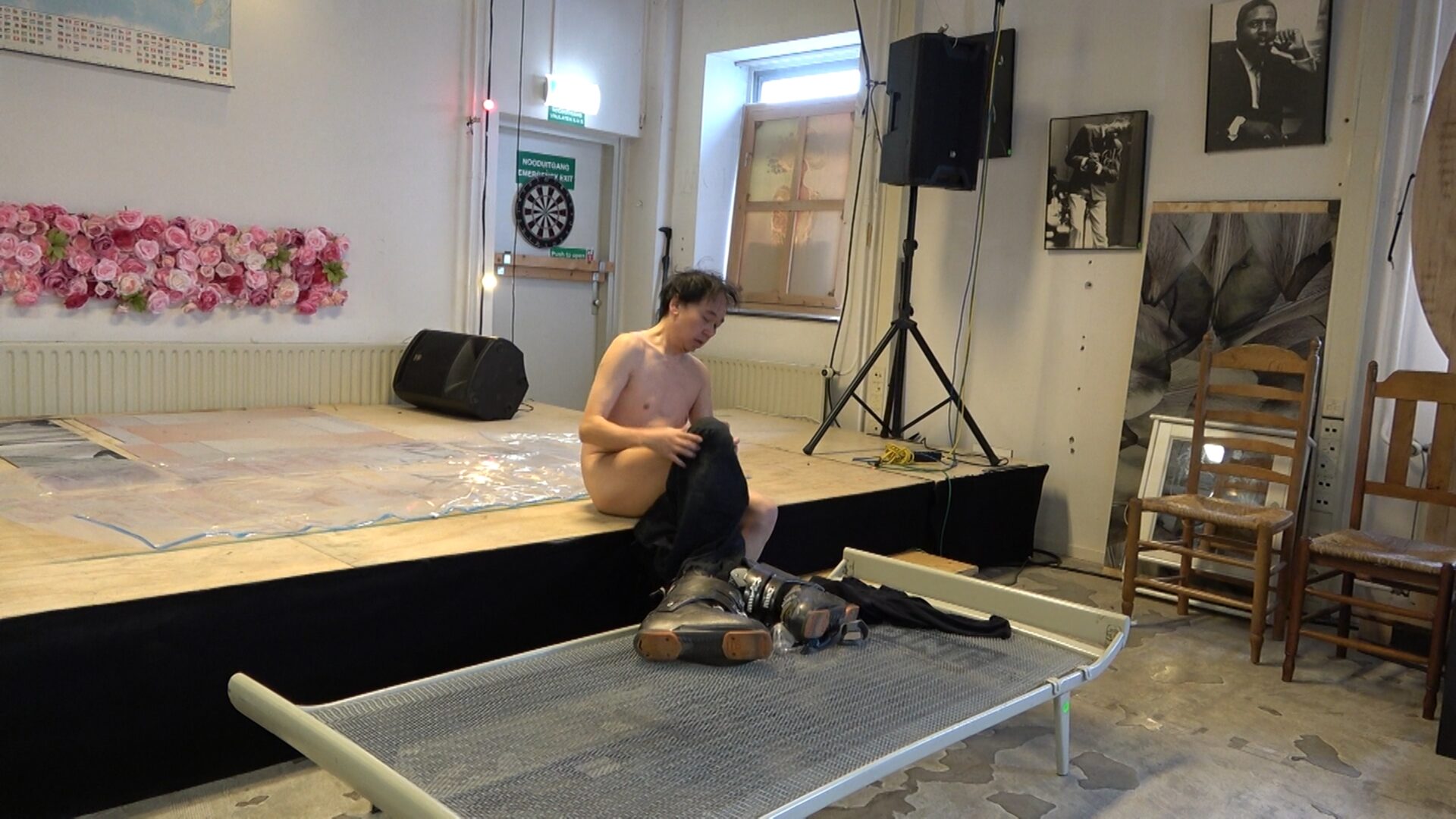
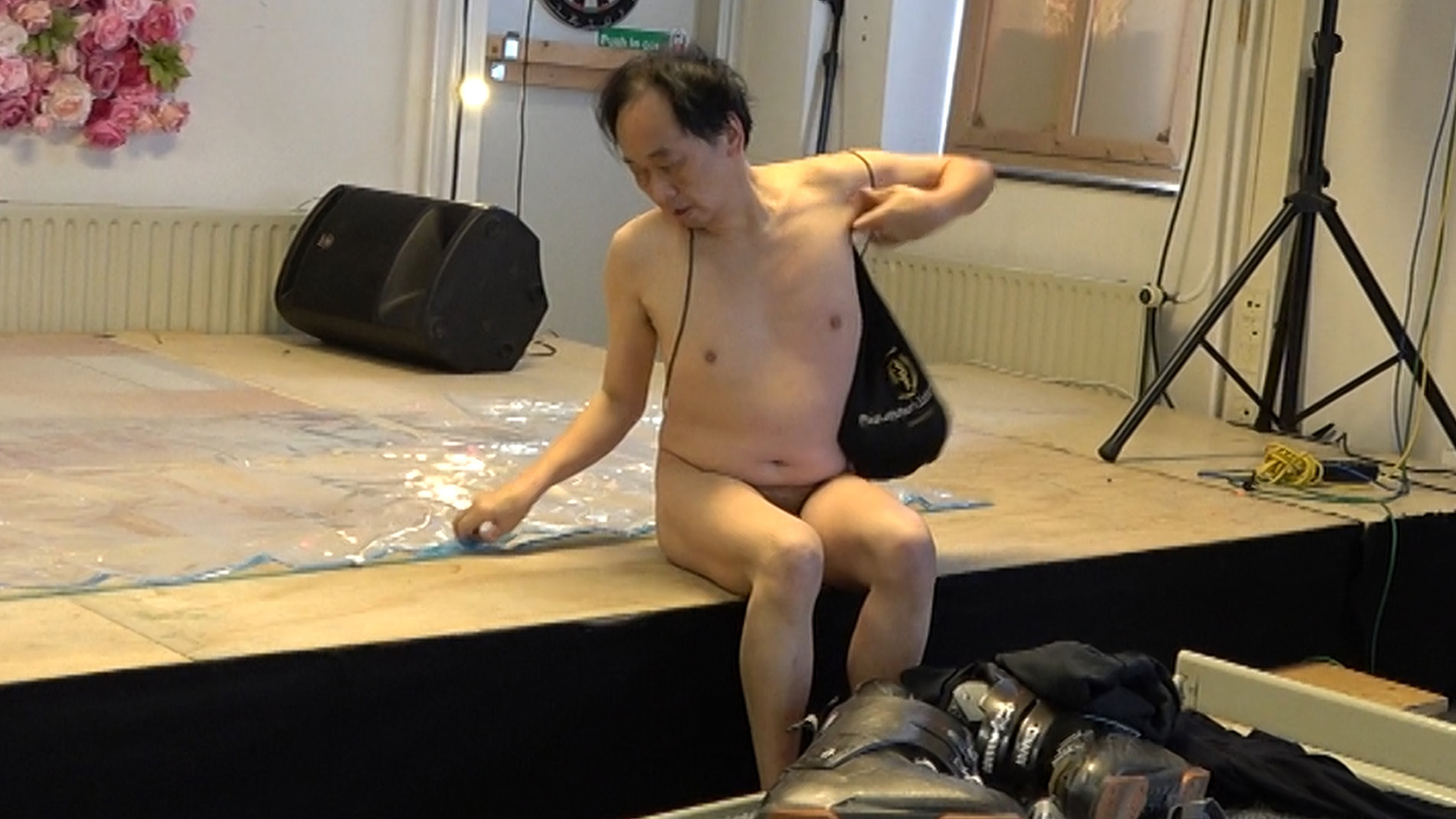
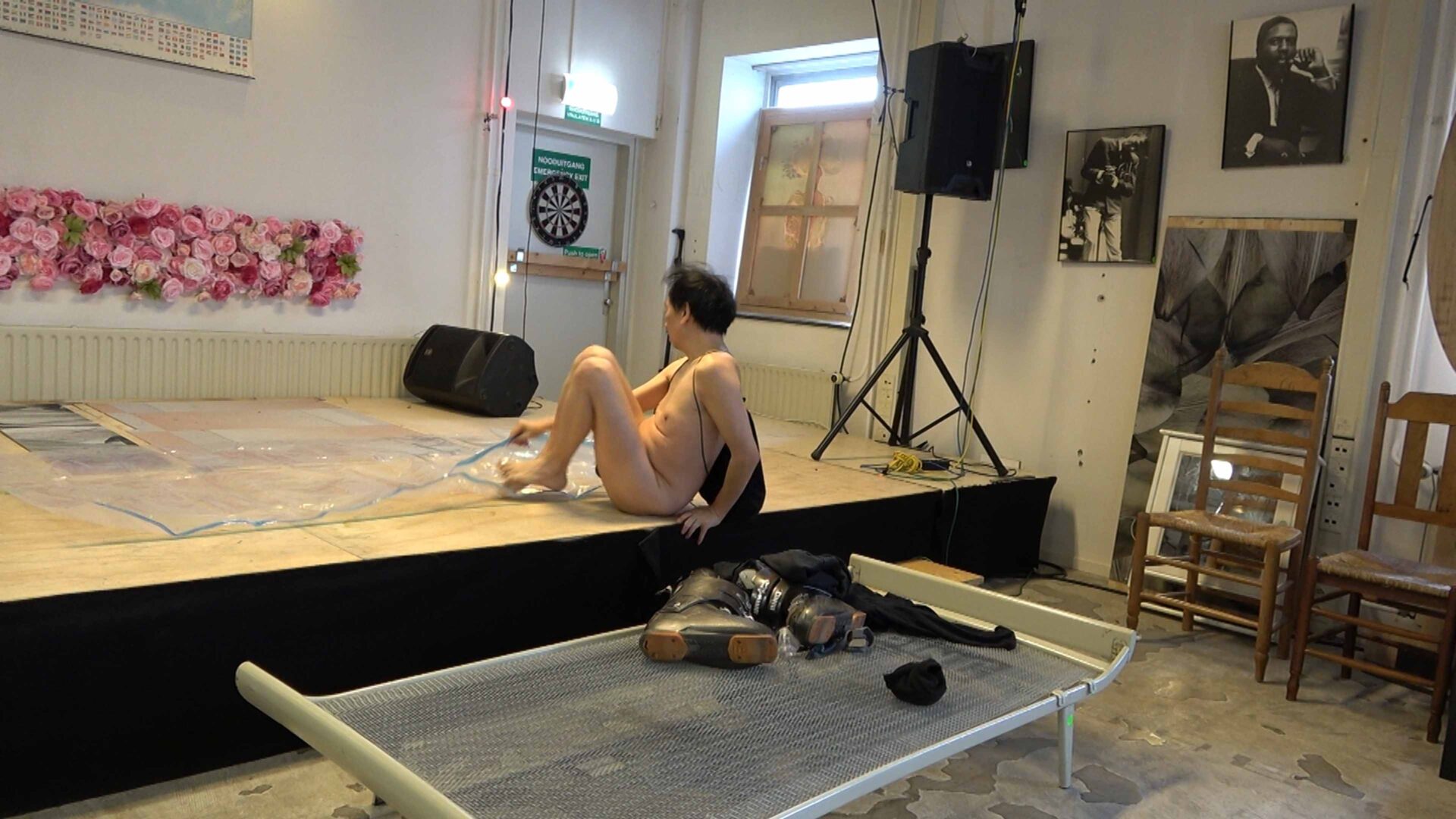
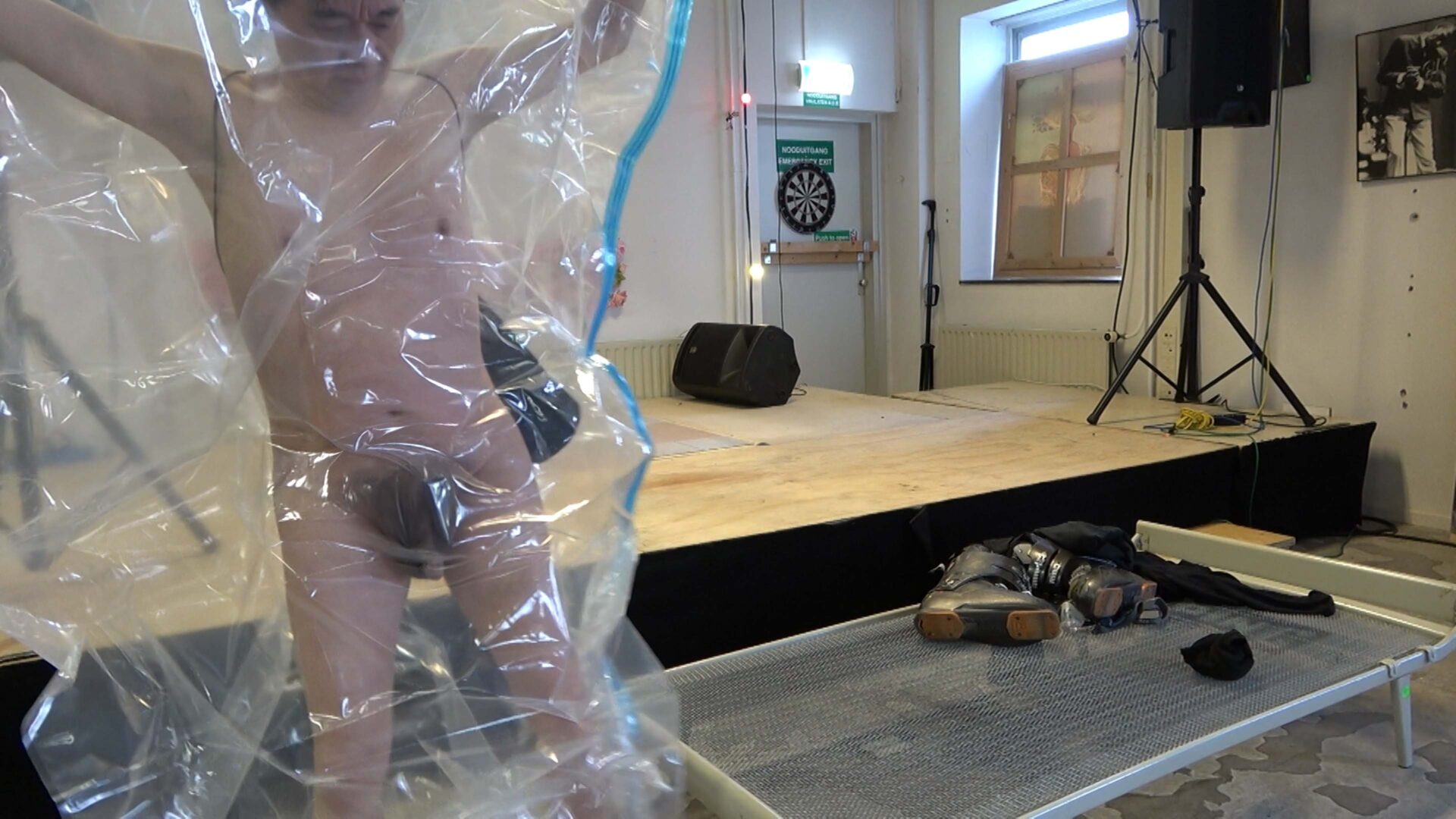
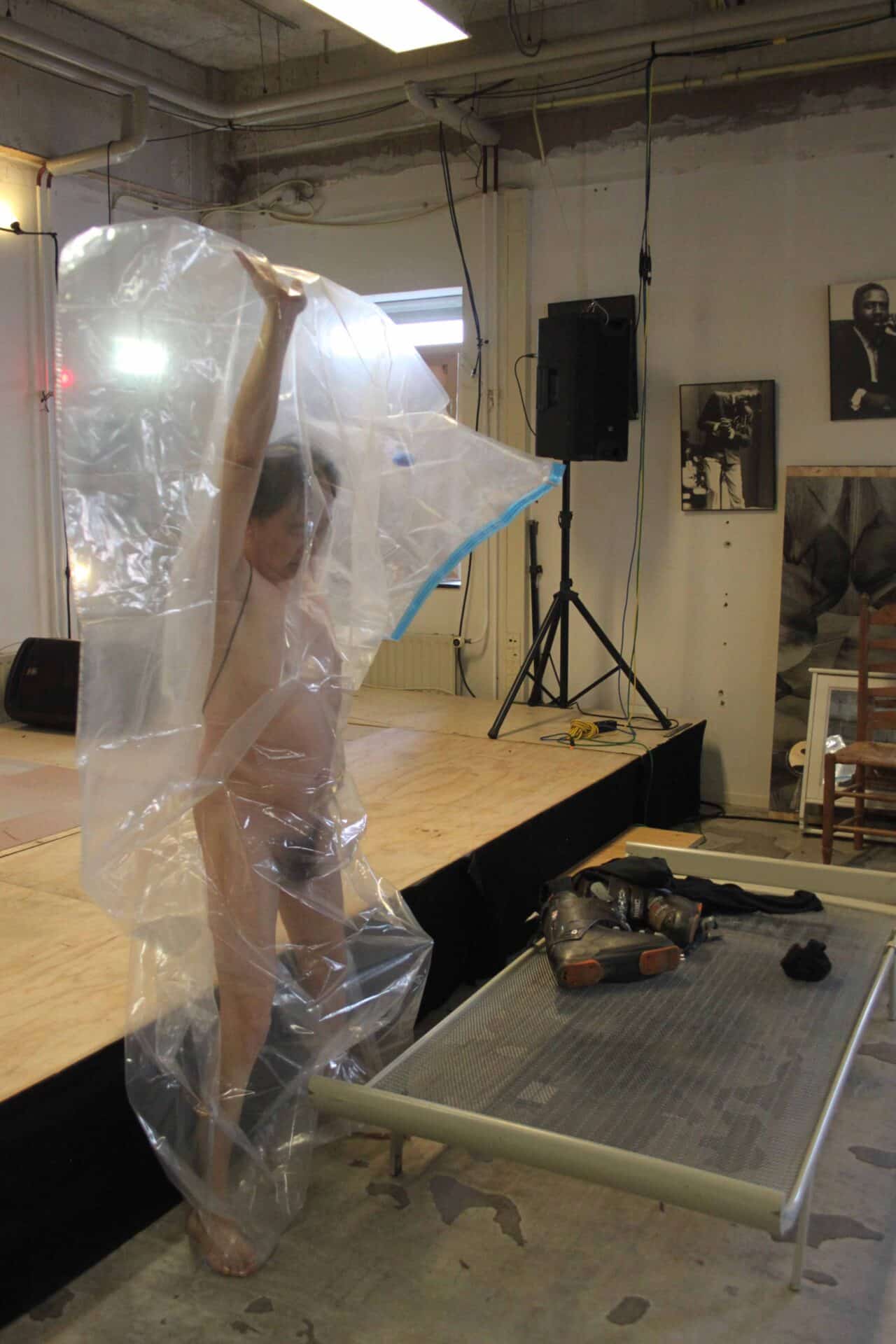
After the collapse, Mukarno removes the breathing mask and ski boots. What follows is not simple undressing but symbolic shedding. He frees himself from material protection and enters vulnerability. Removing layers becomes an act of purification. He proceeds to undress completely, leaving the clothing behind as remnants of identity.
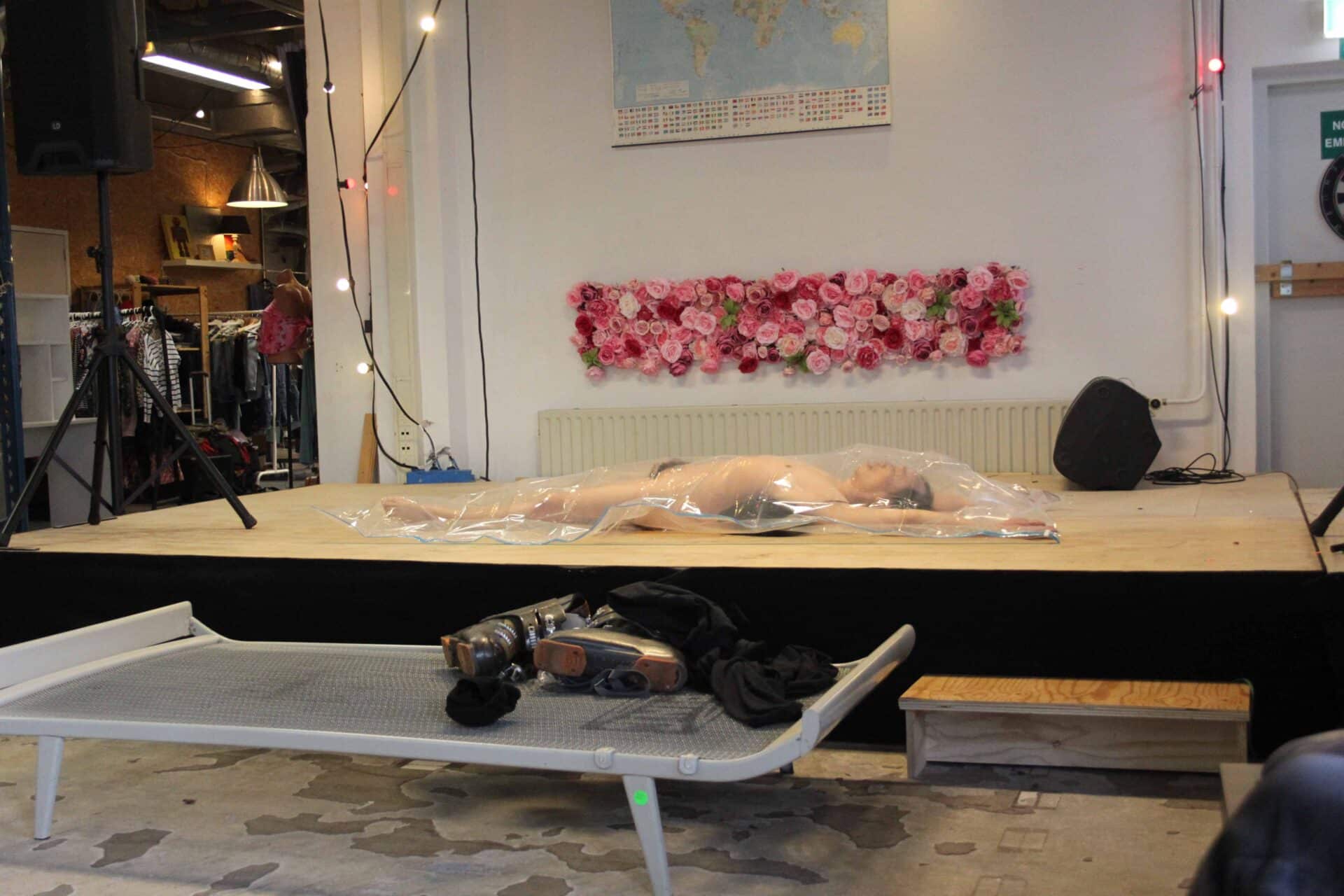
In performance art, nudity often carries multiple meanings. Here, it is neither provocation nor spectacle—it symbolizes honesty, simplicity, and rebirth. The body stands as the final truth after labor, exhaustion, and survival. As Mukarno remains exposed, he transitions toward transformation.
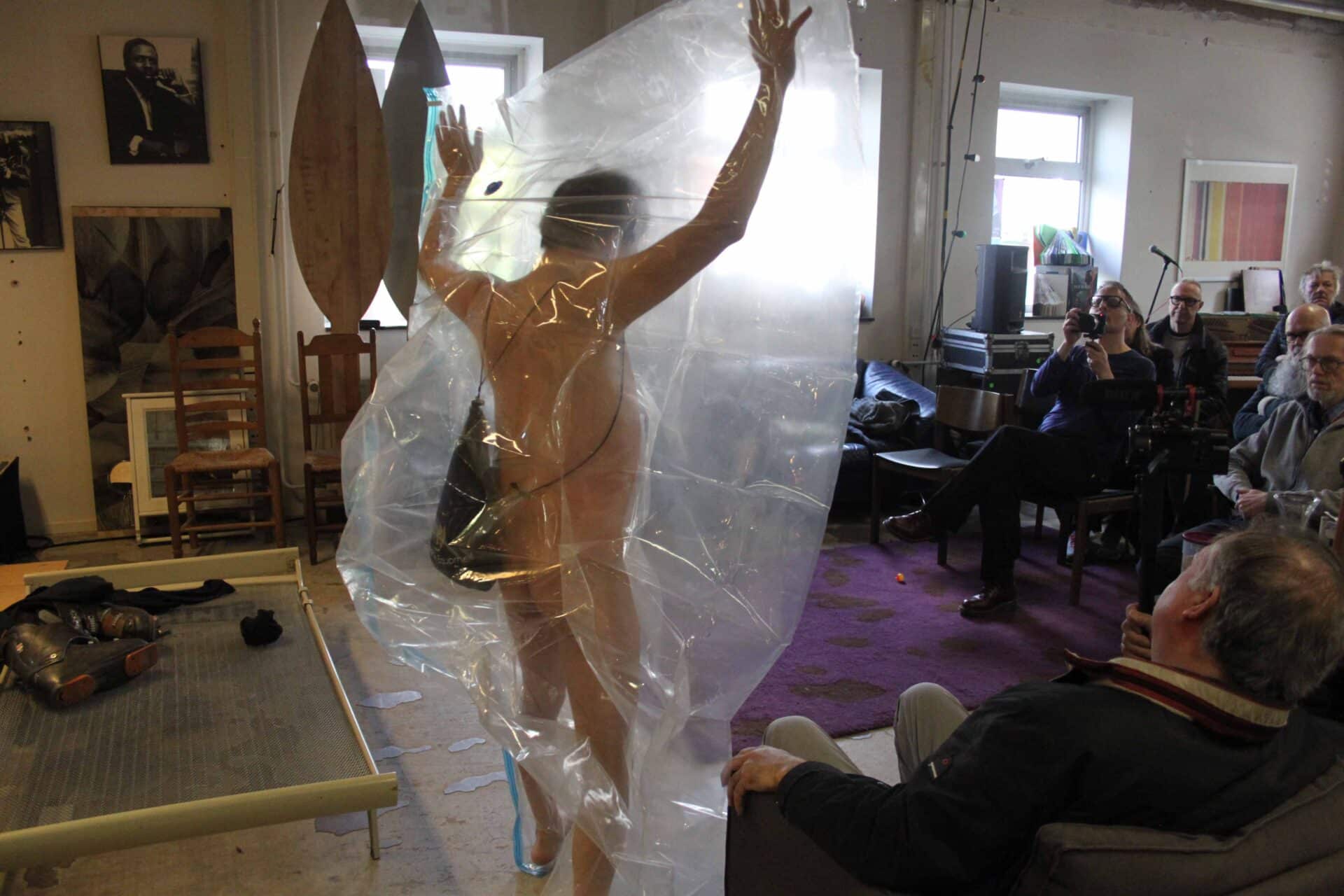
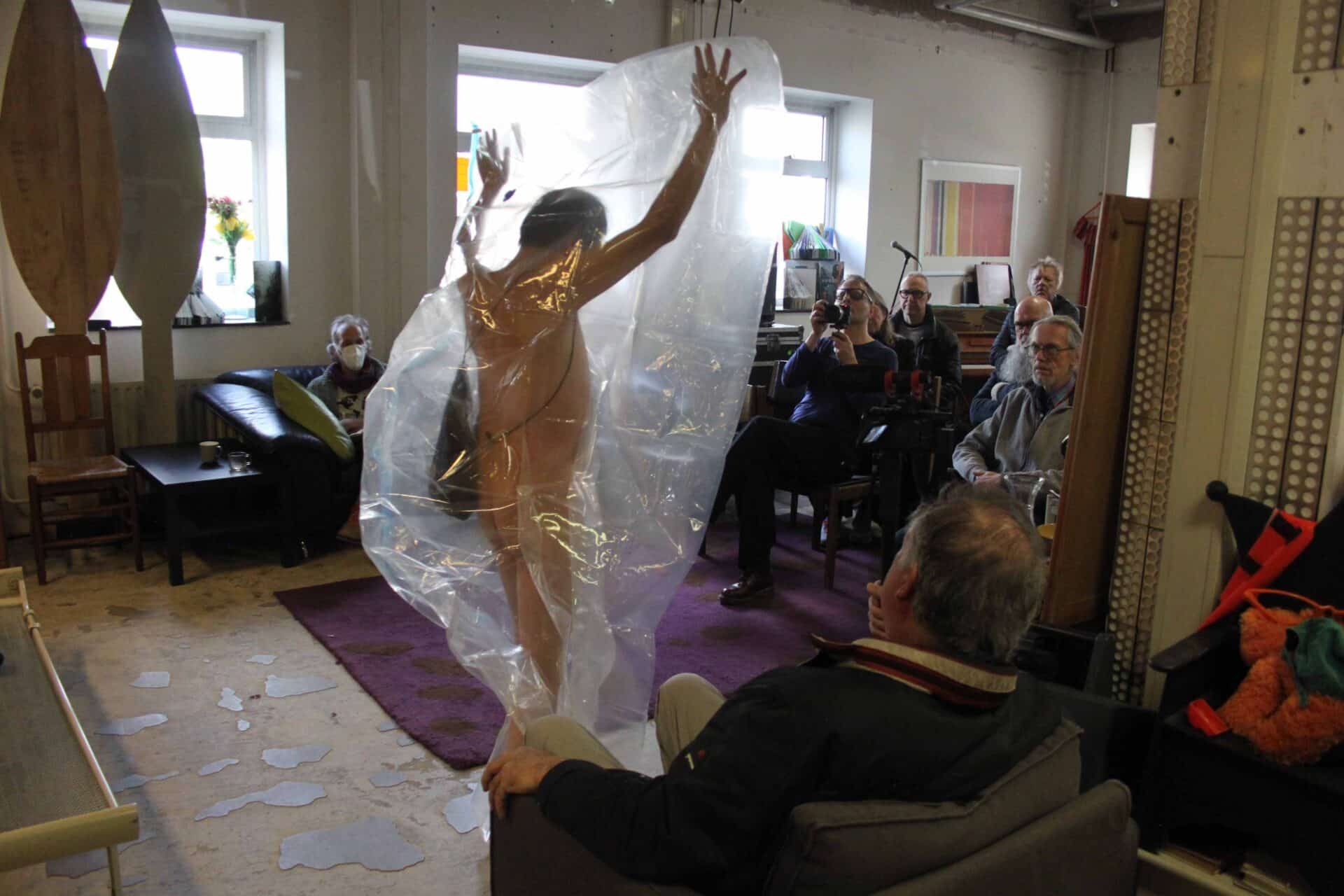
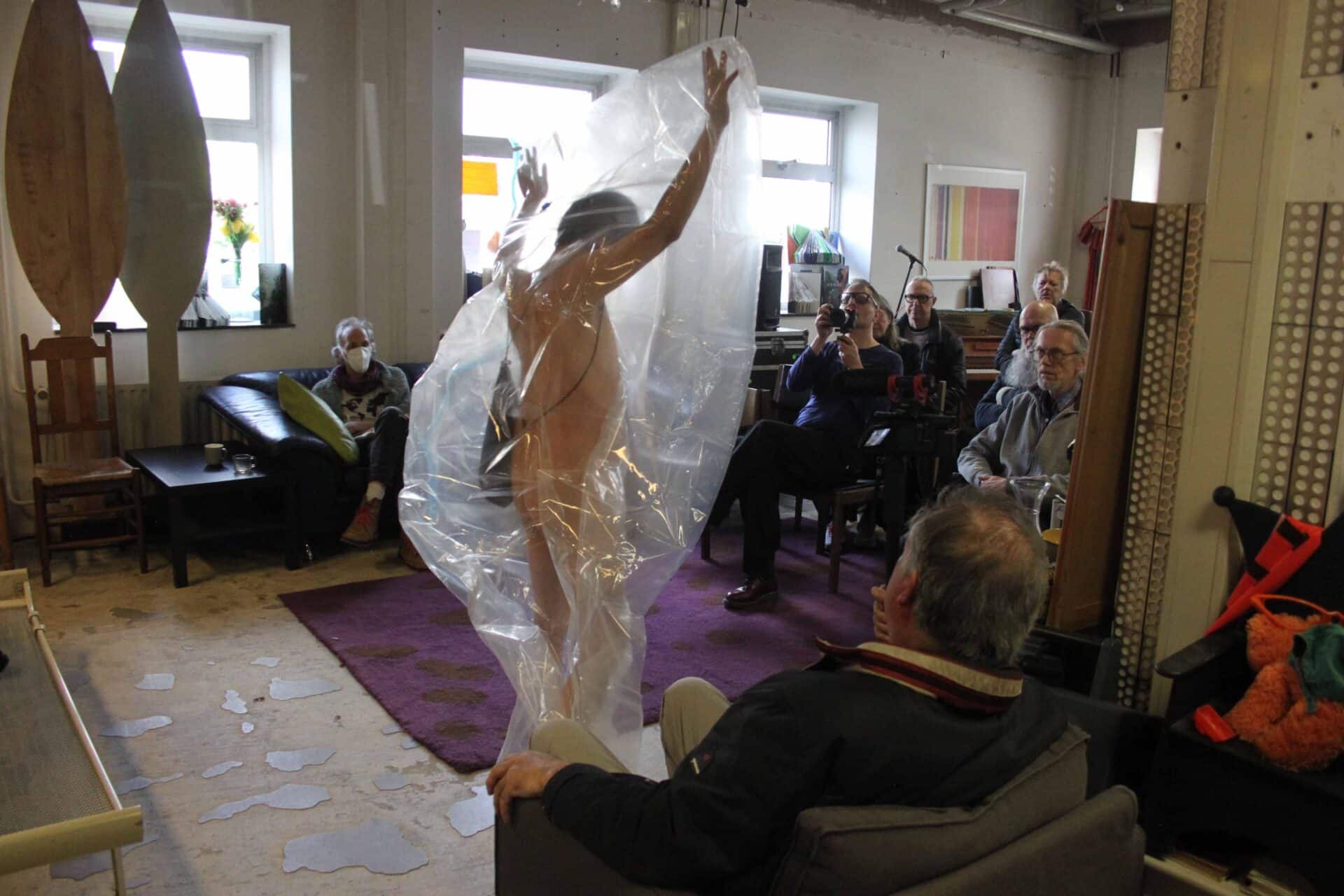
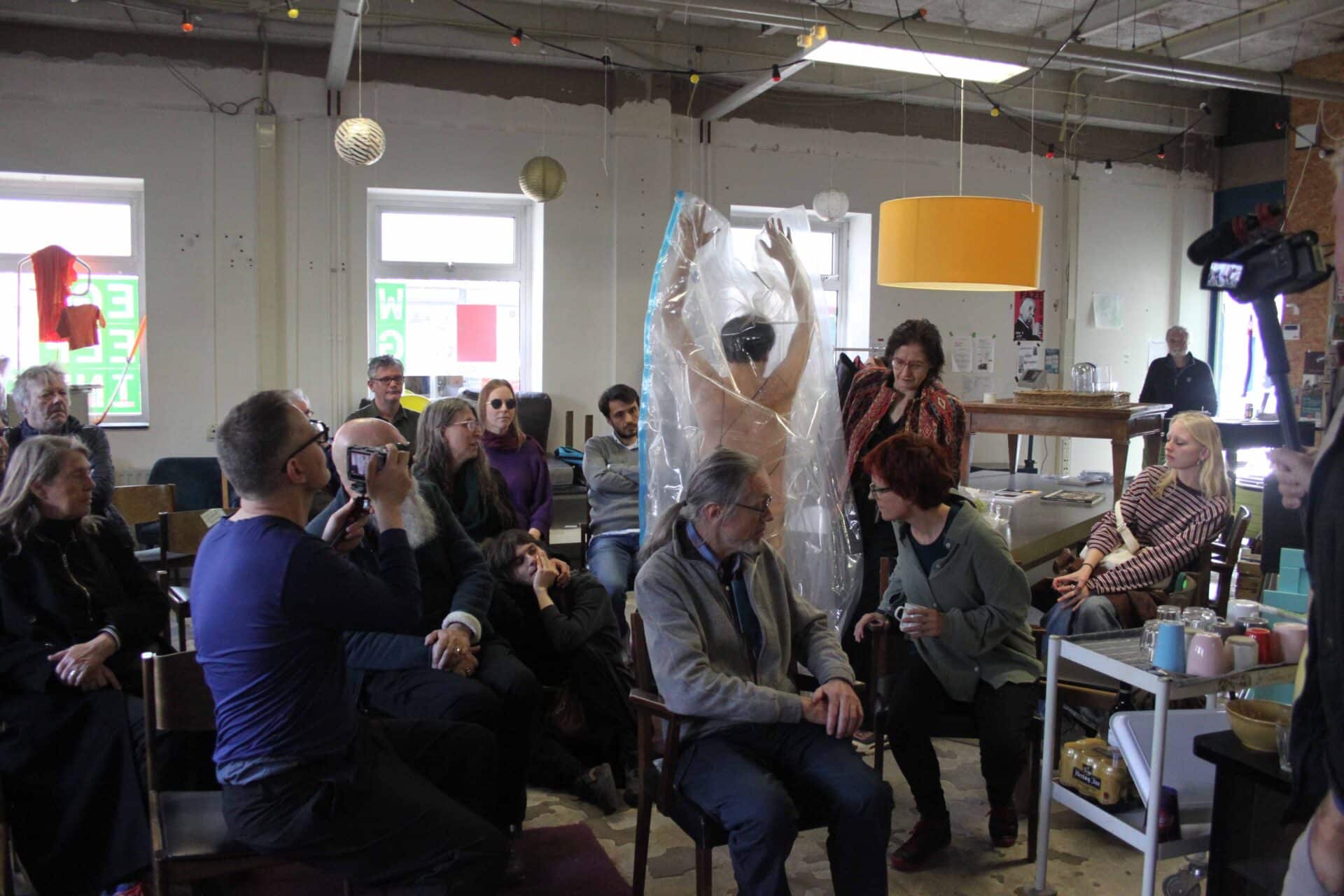
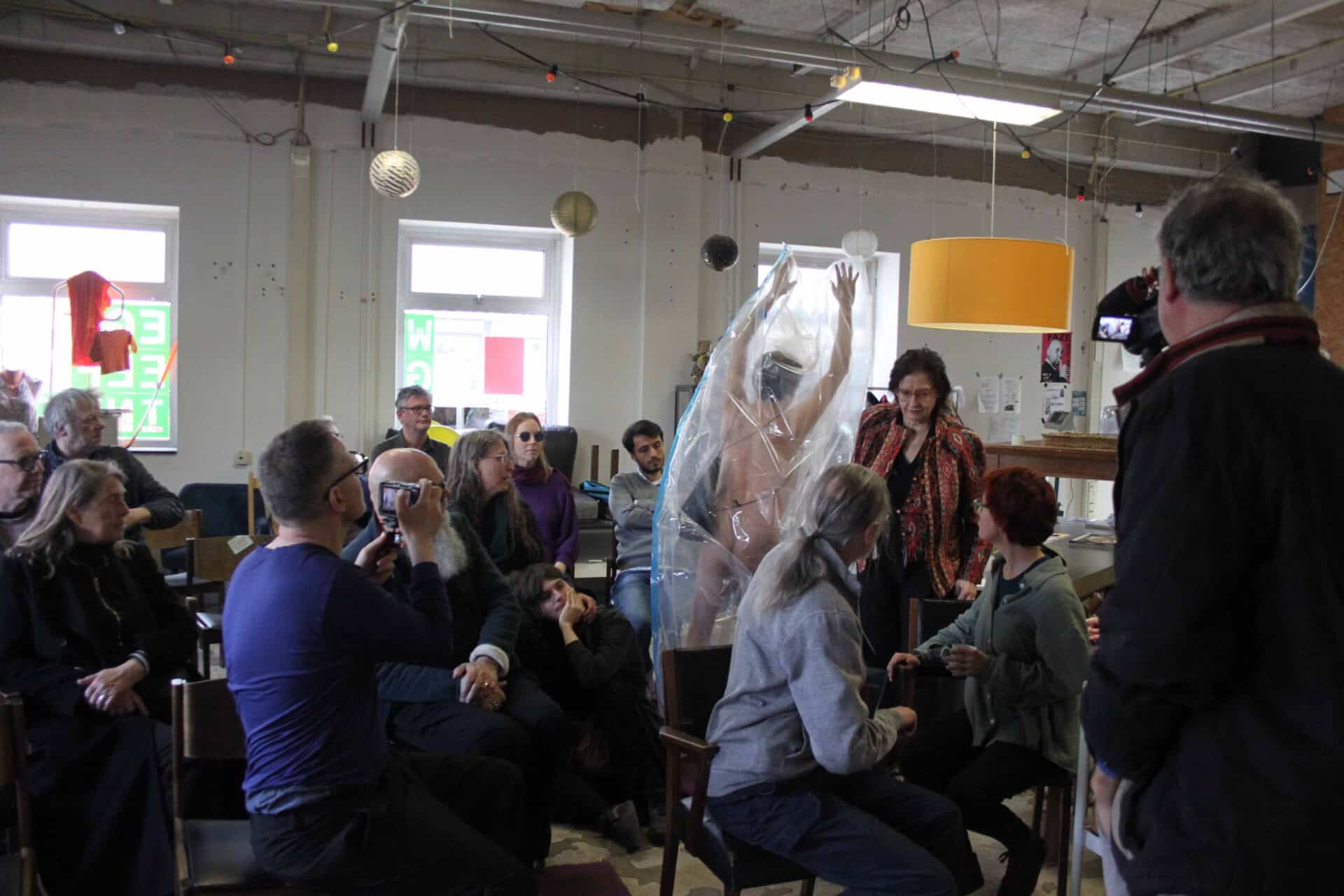
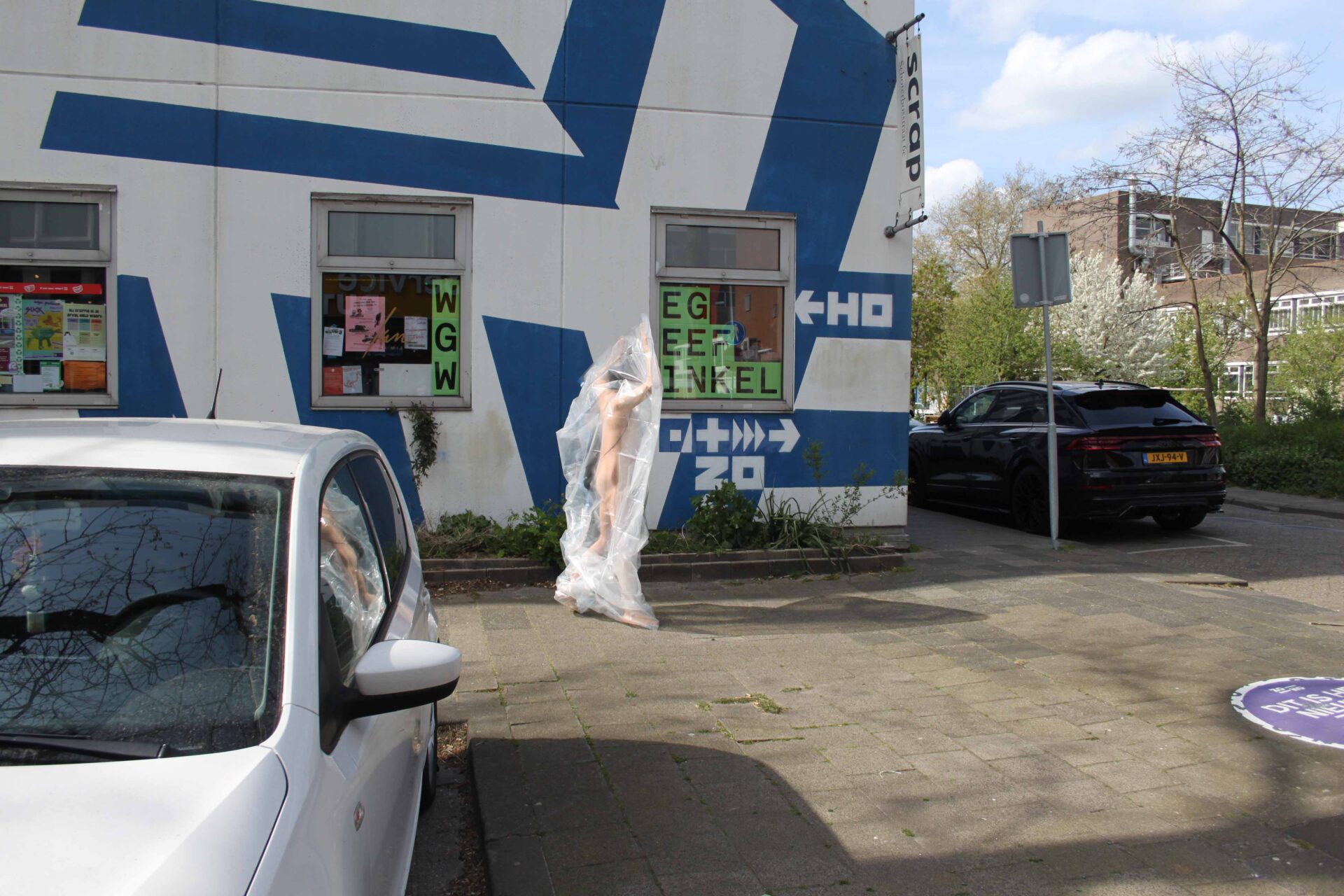
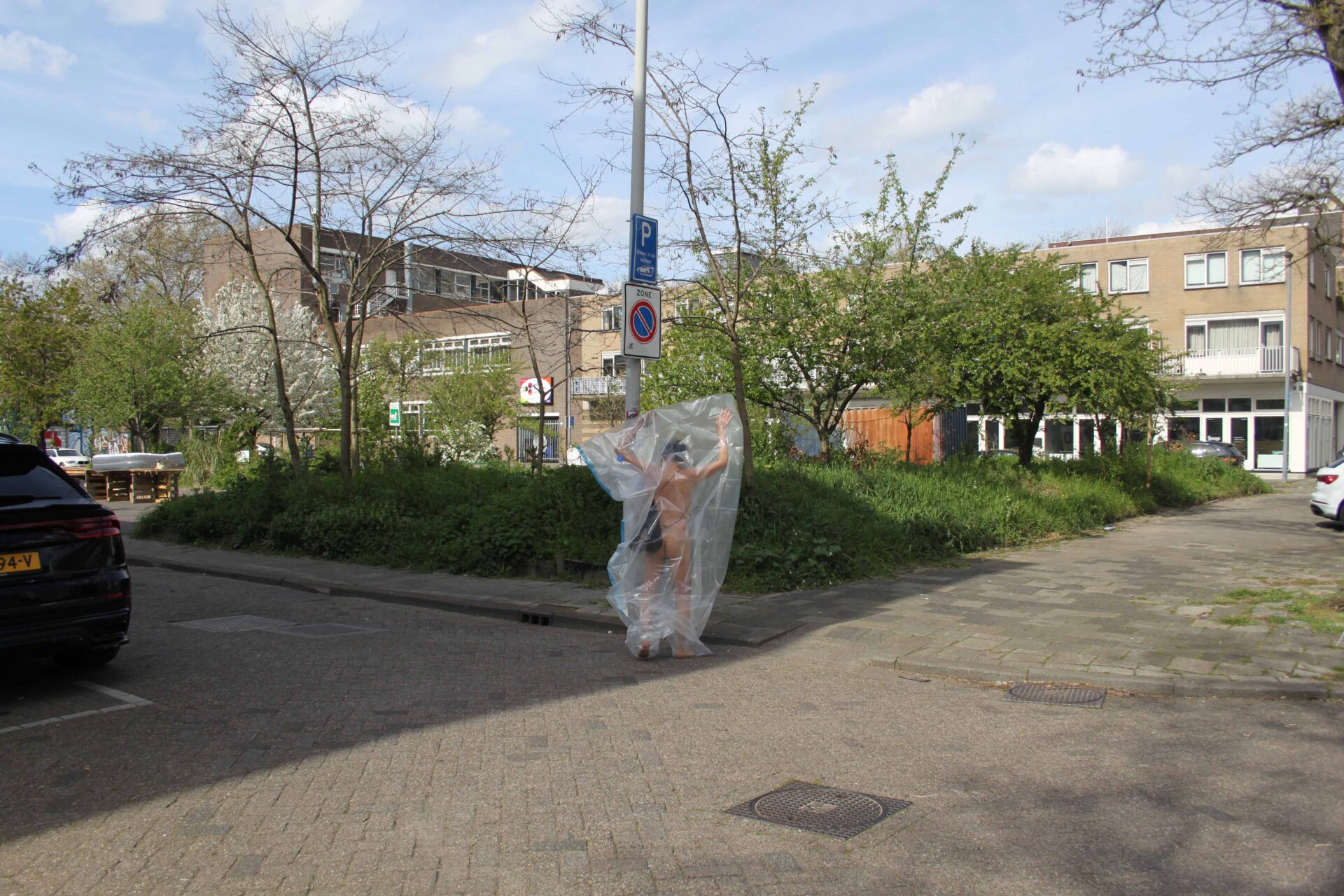
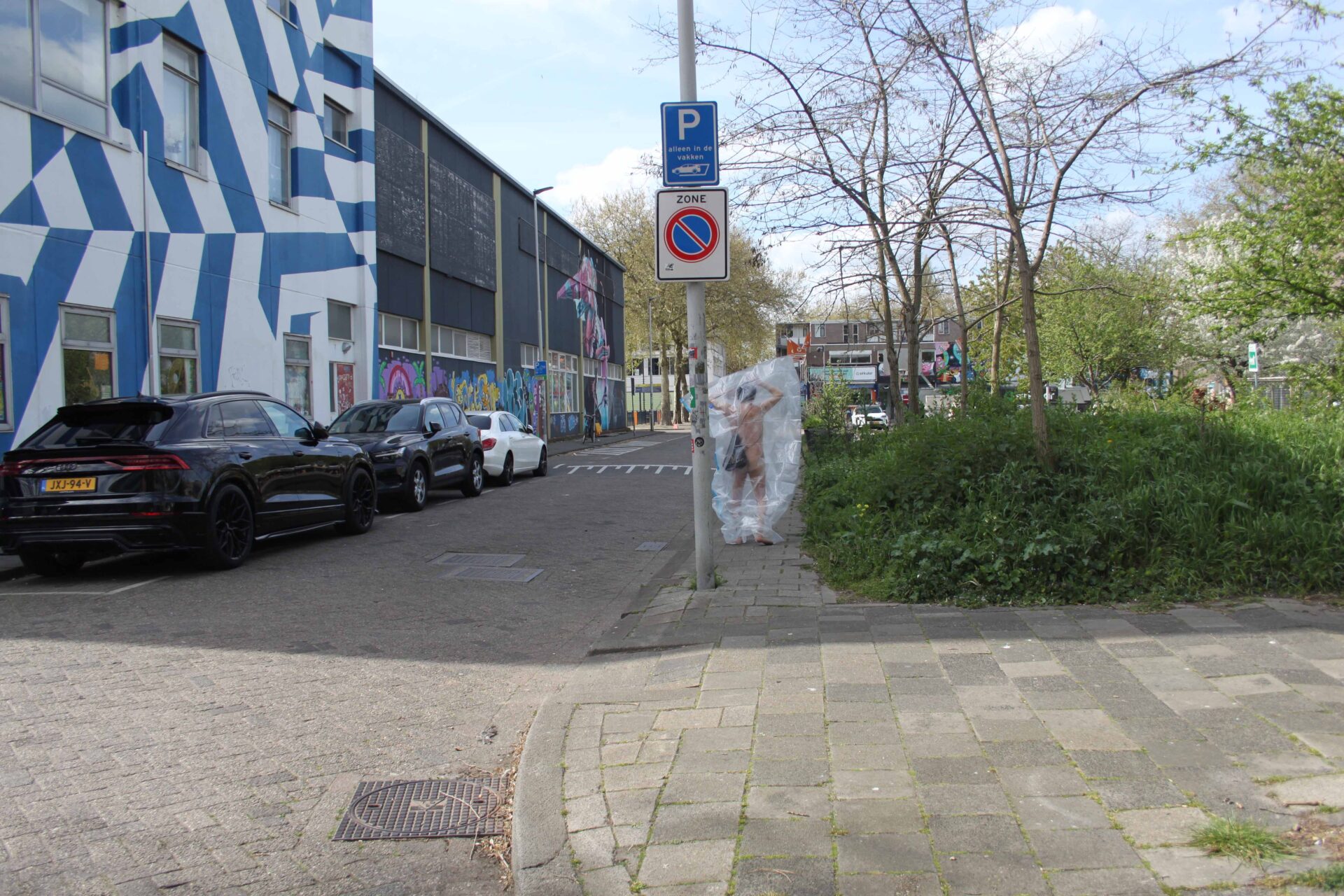
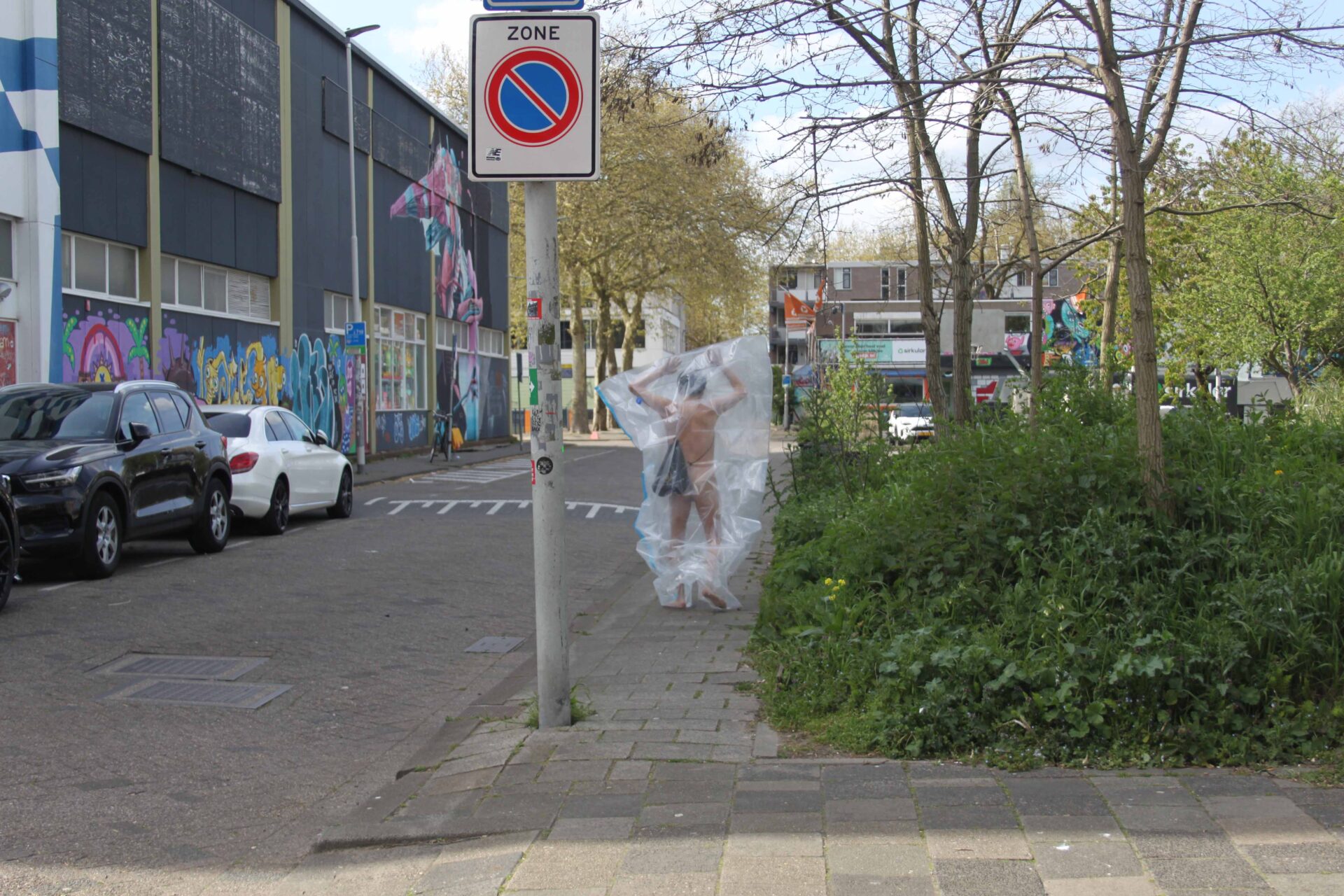
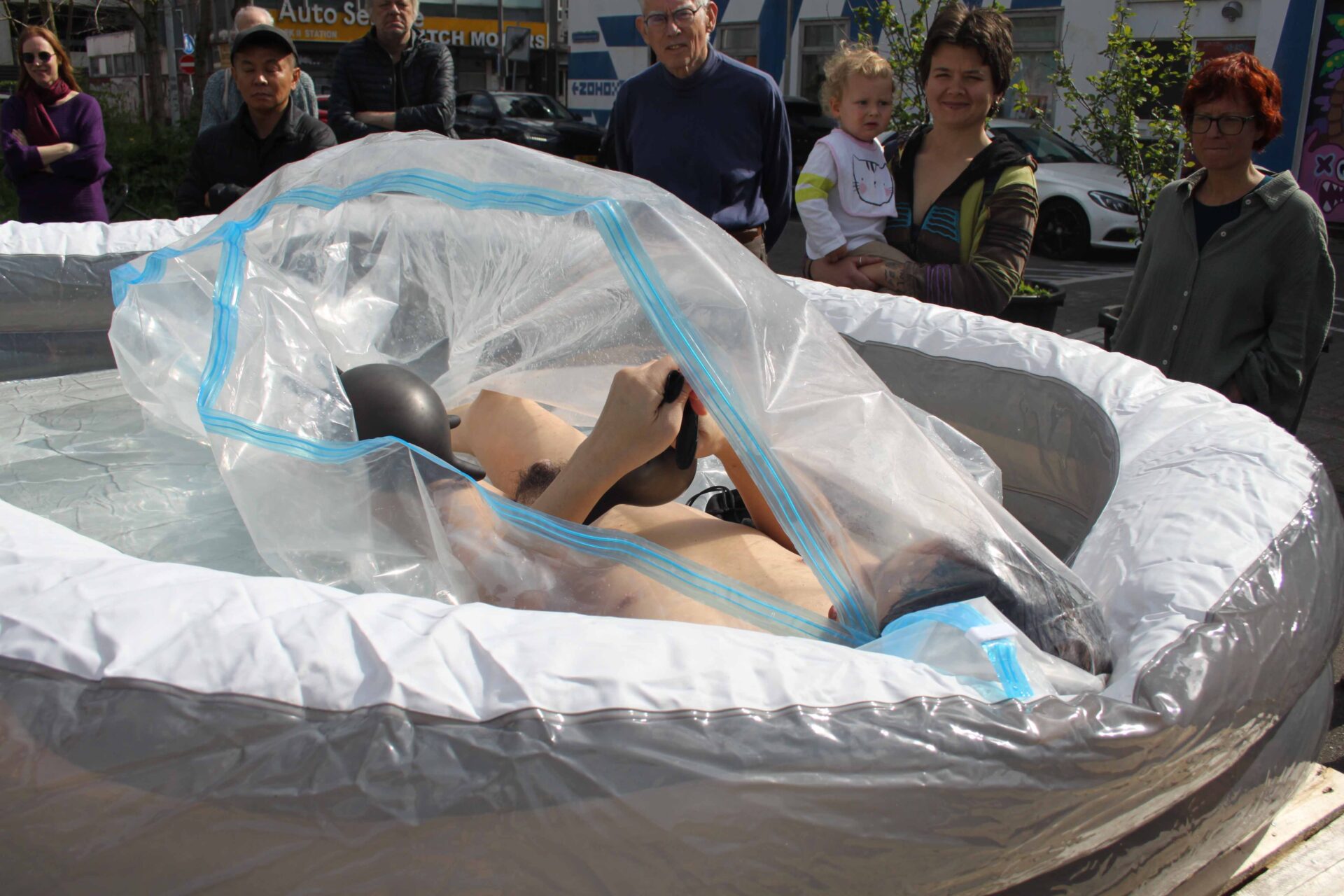
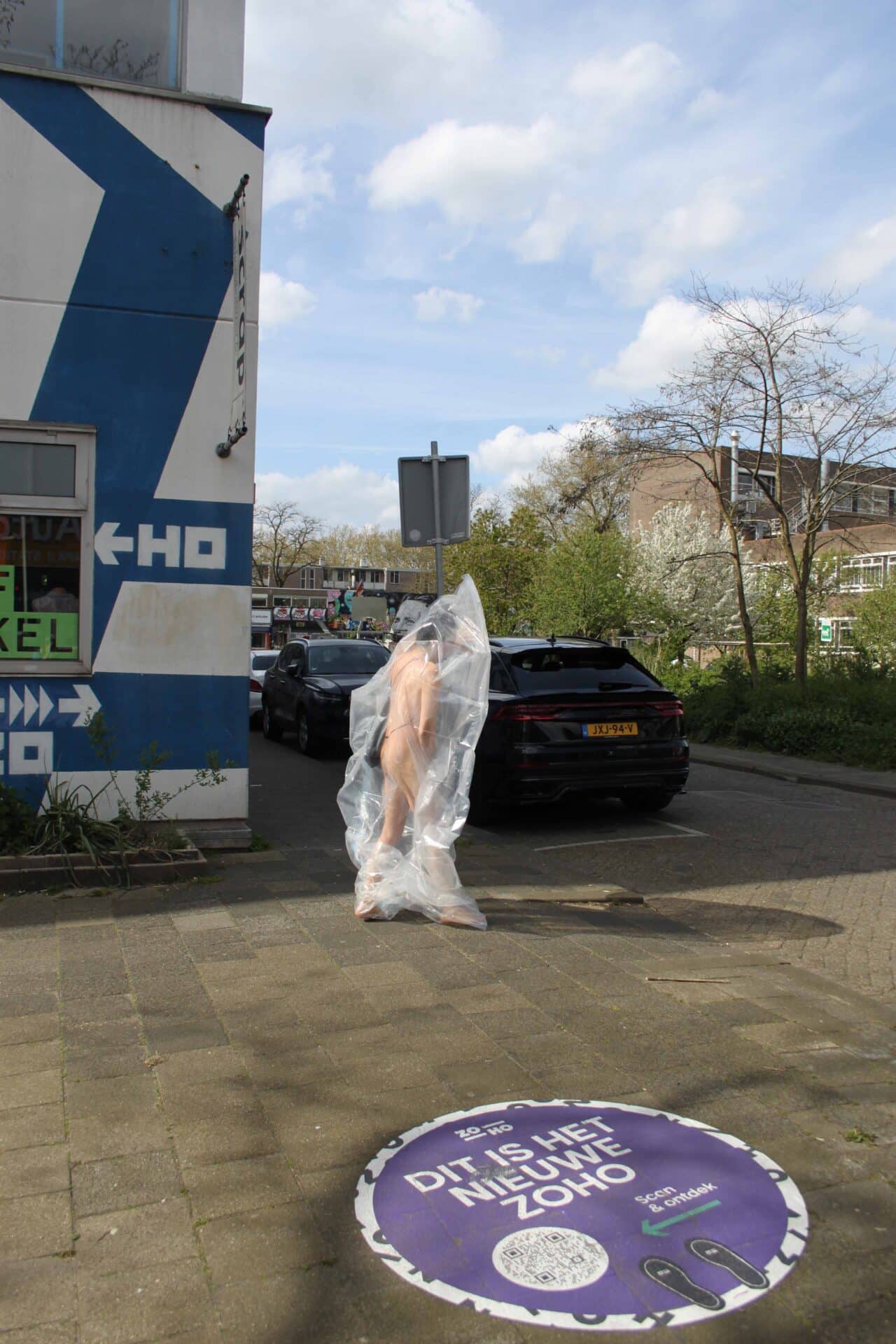
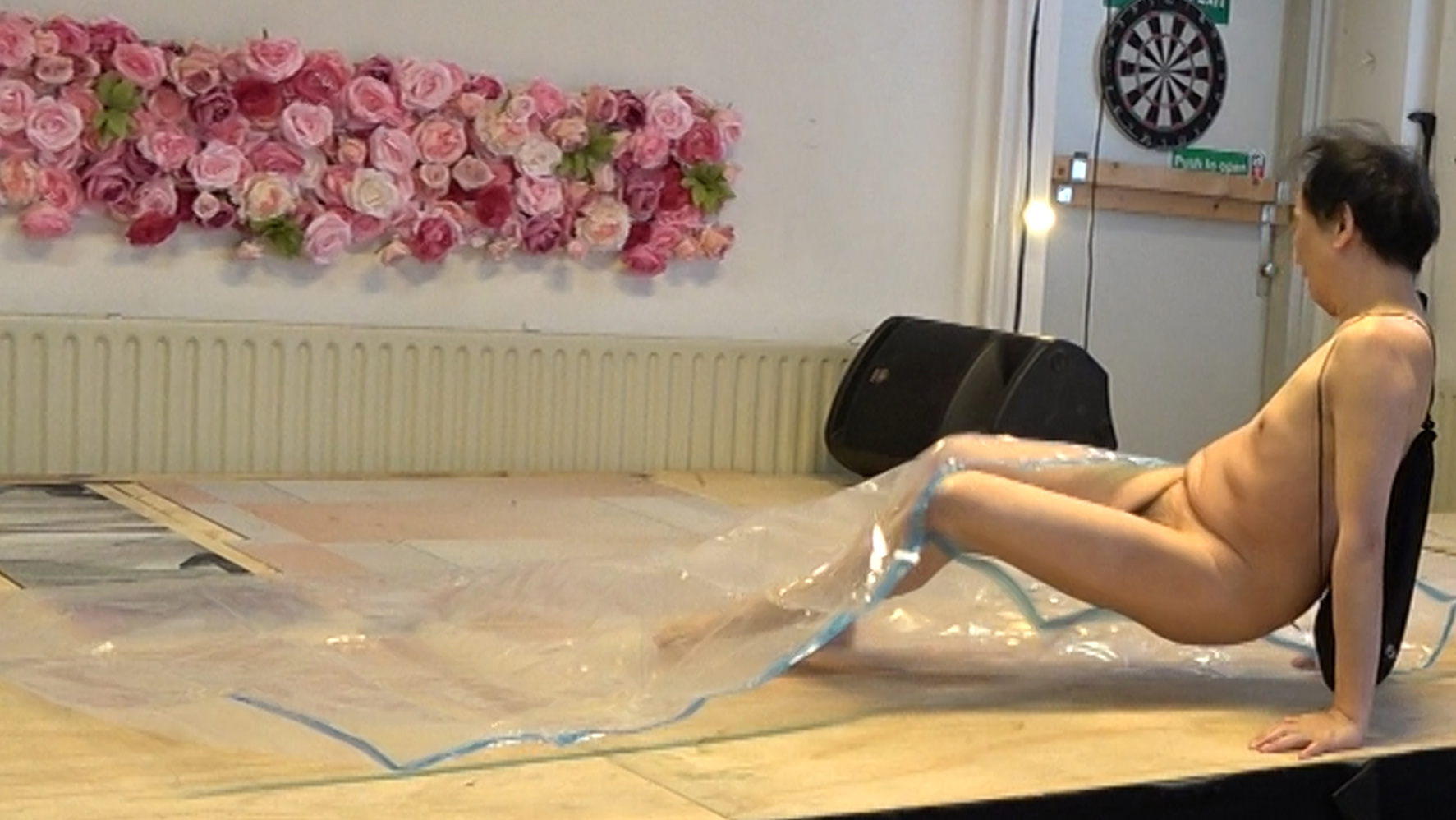
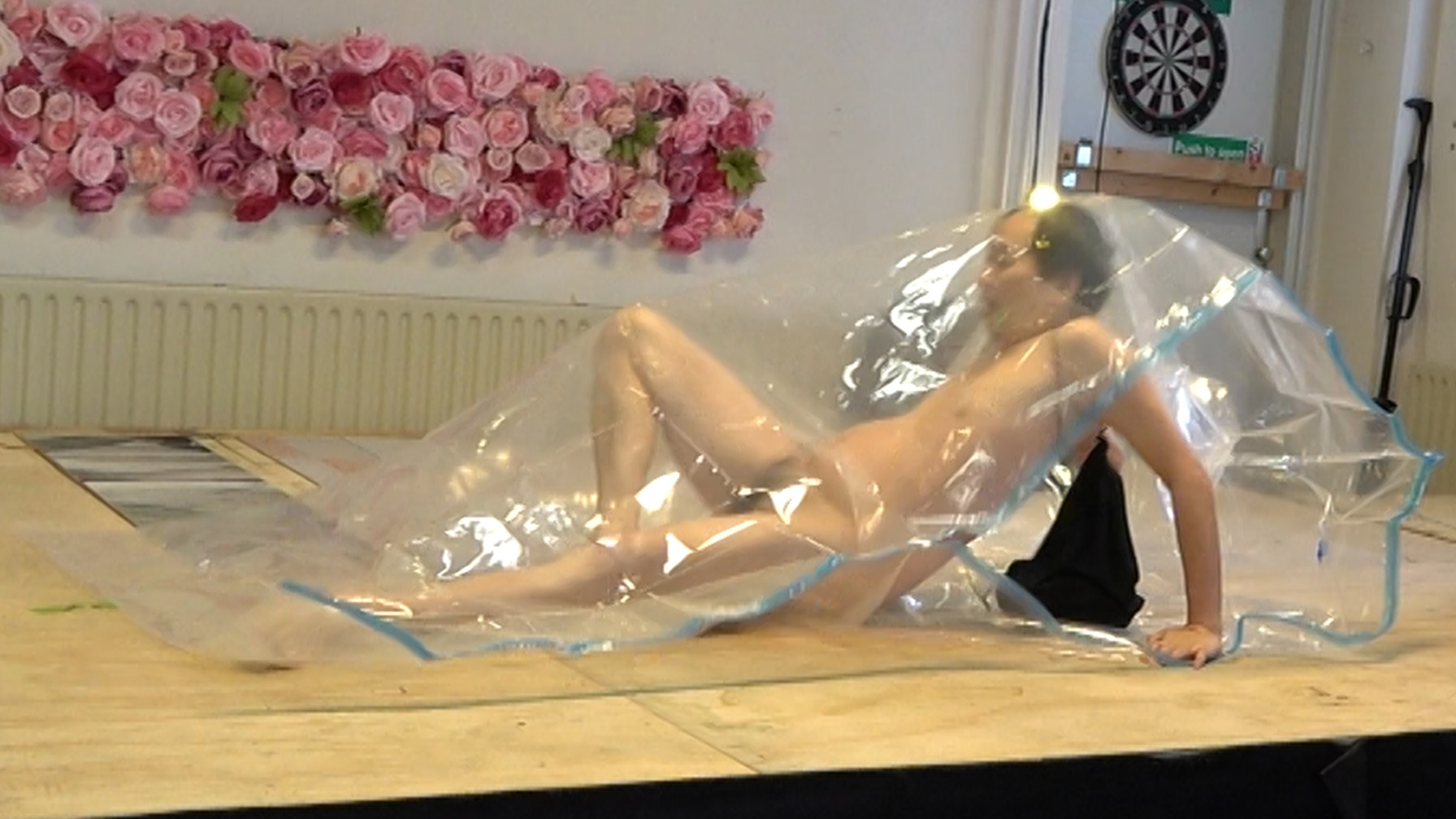
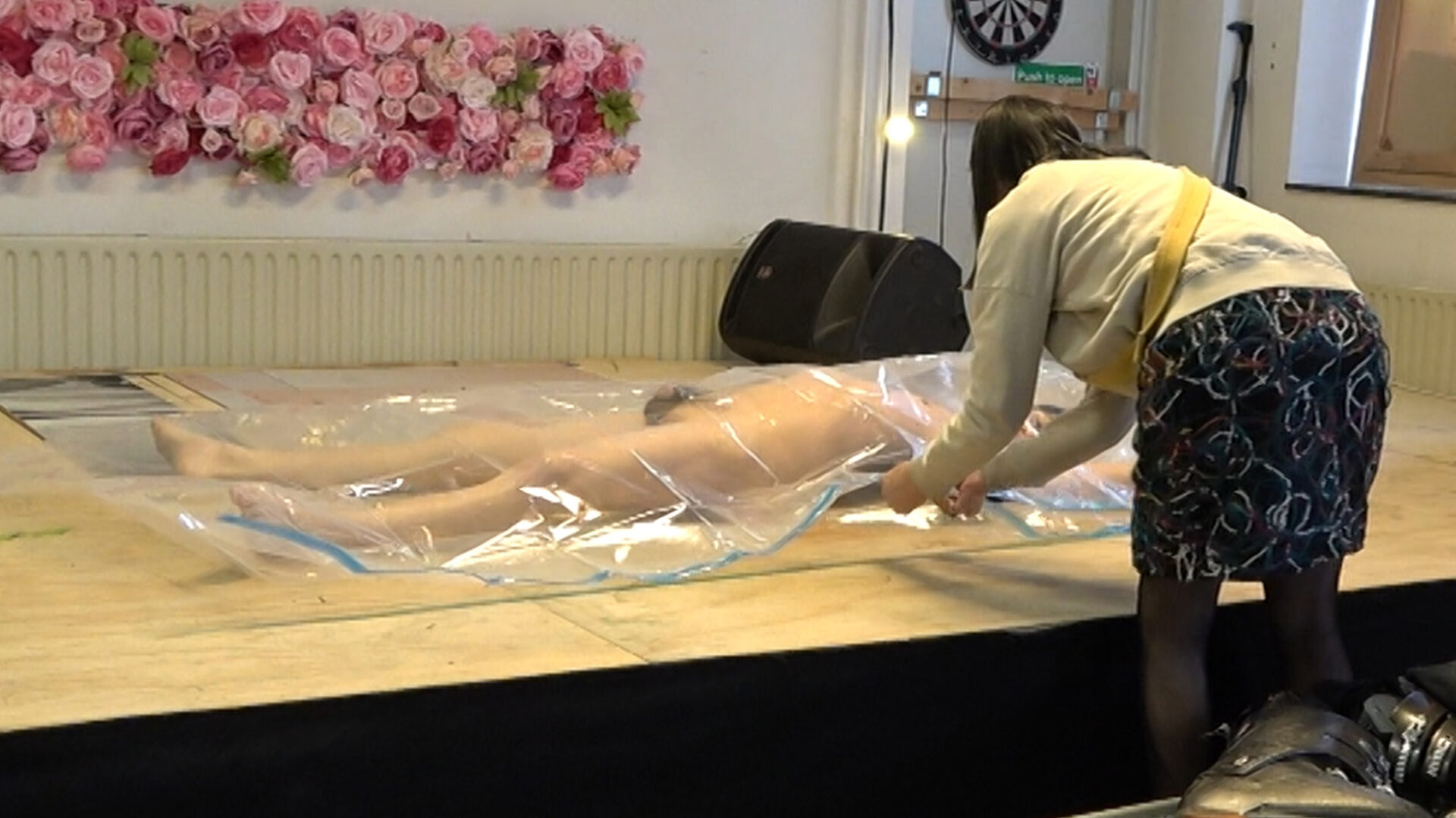
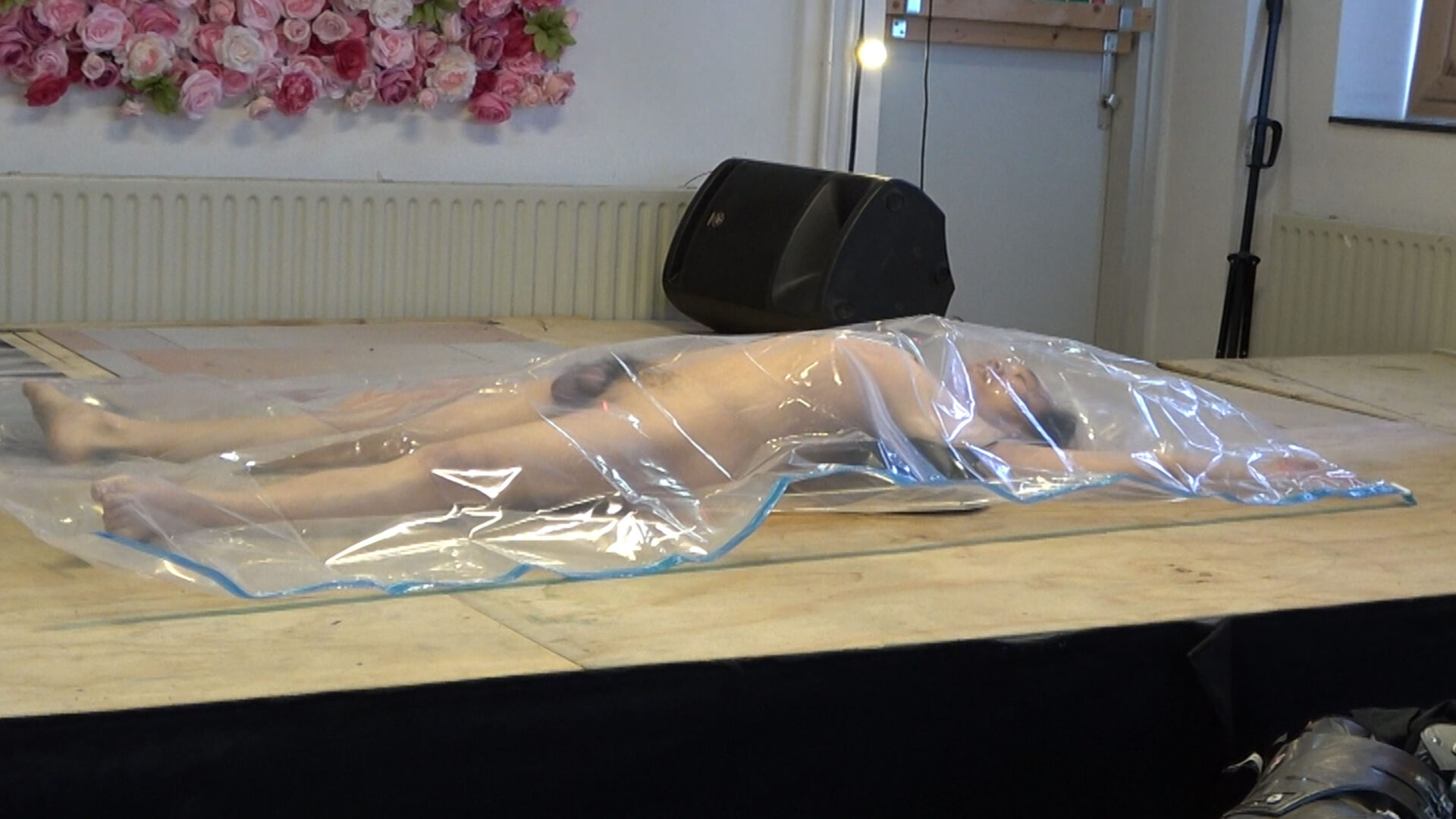
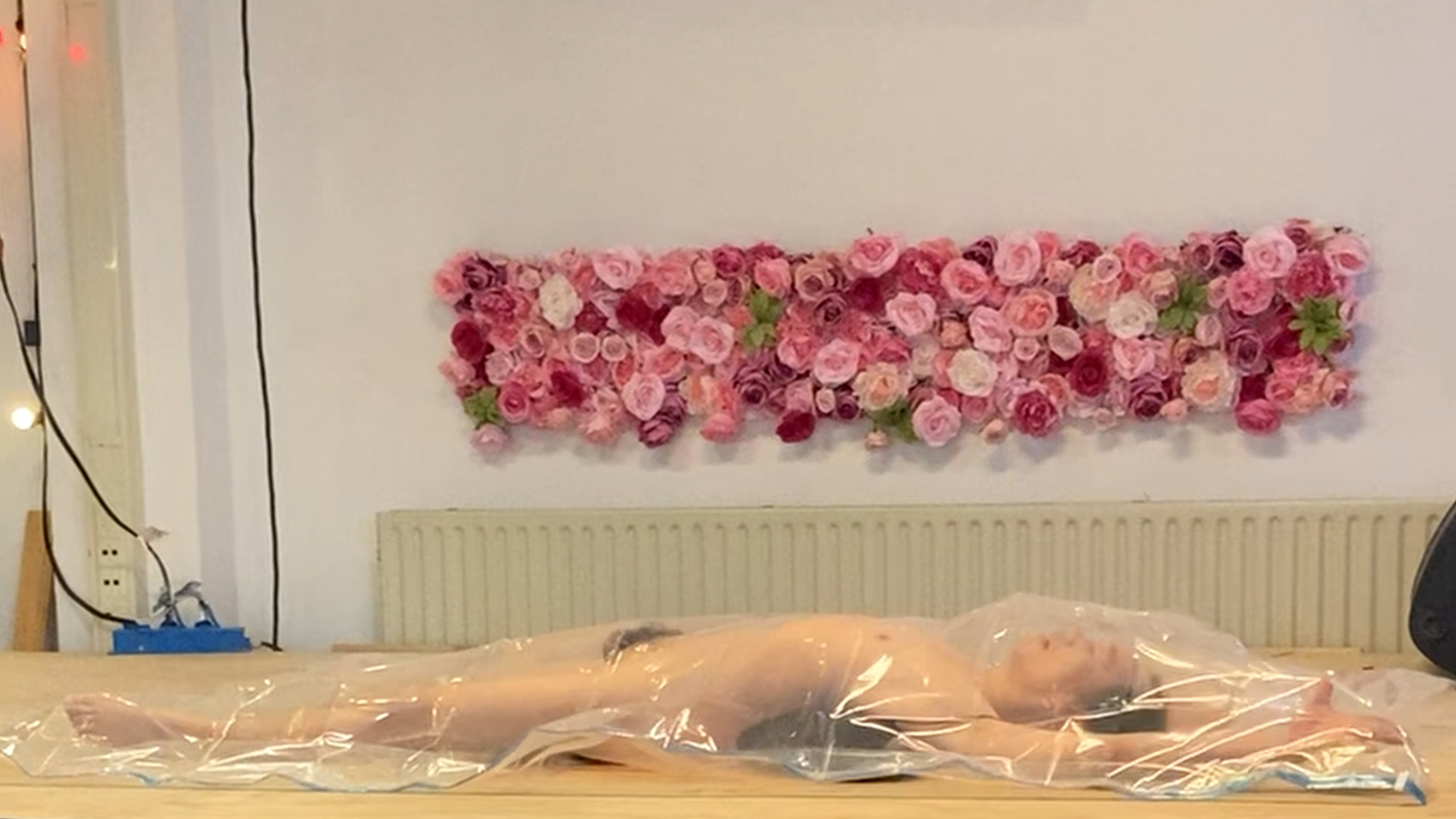
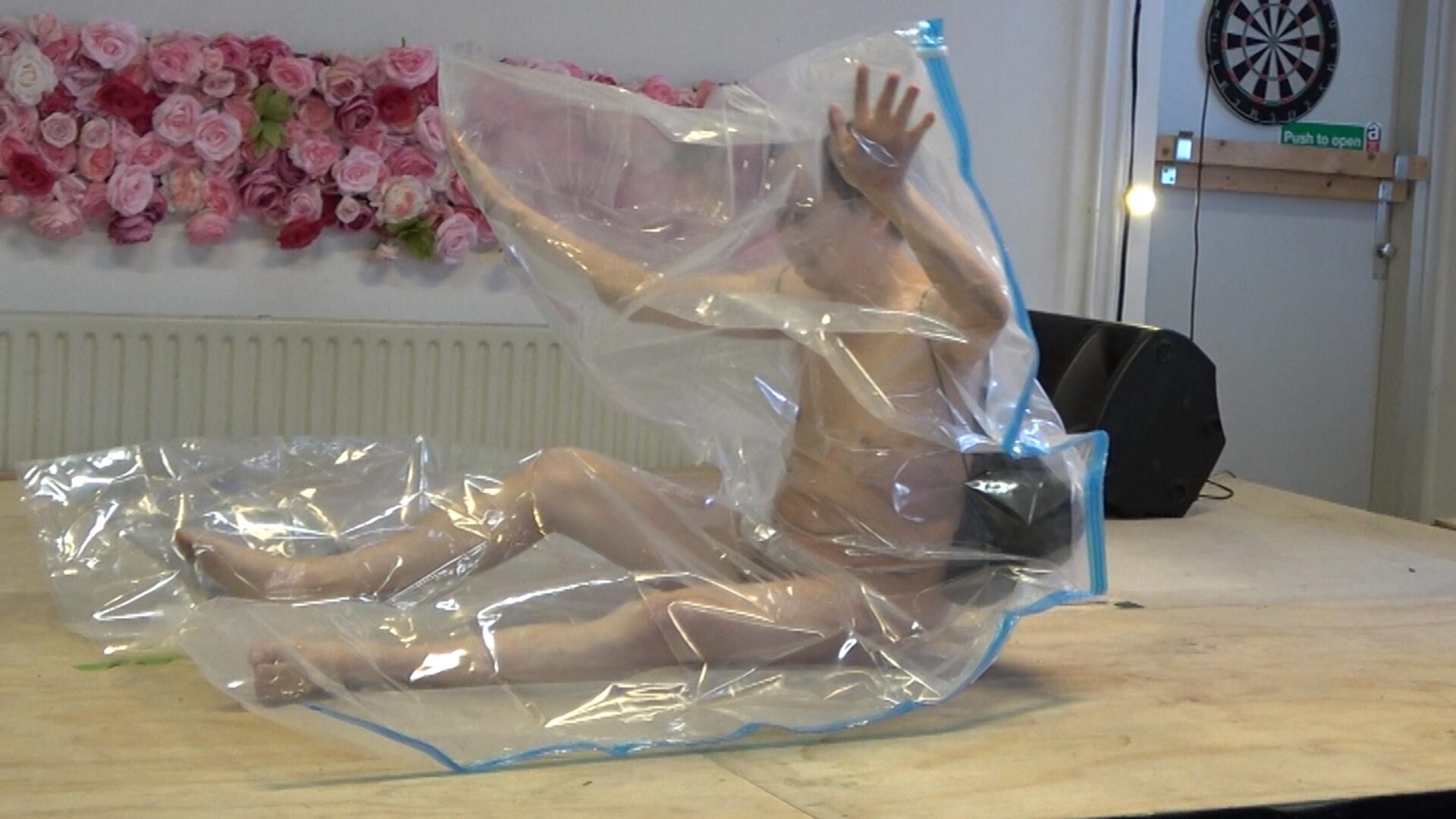
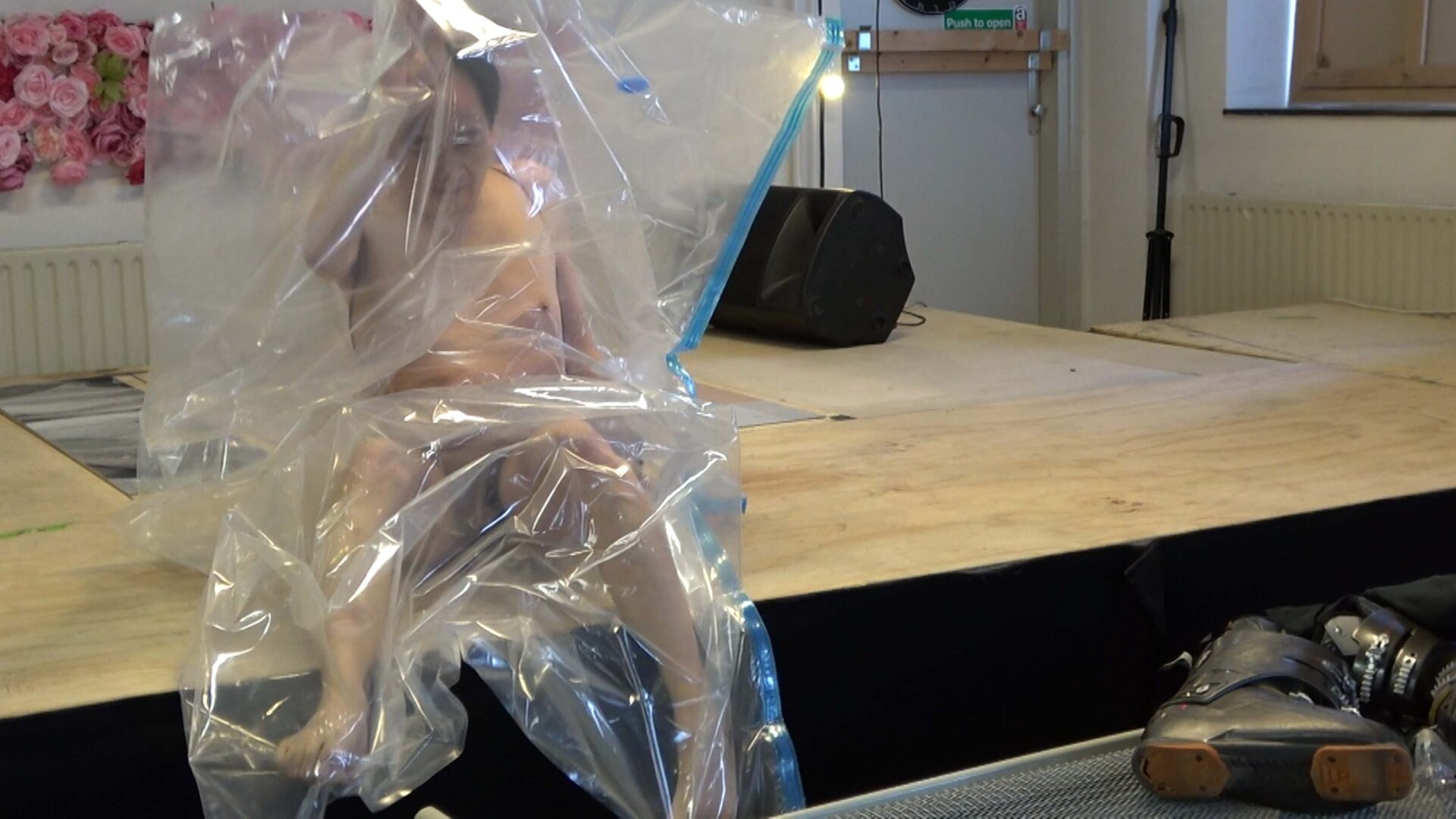
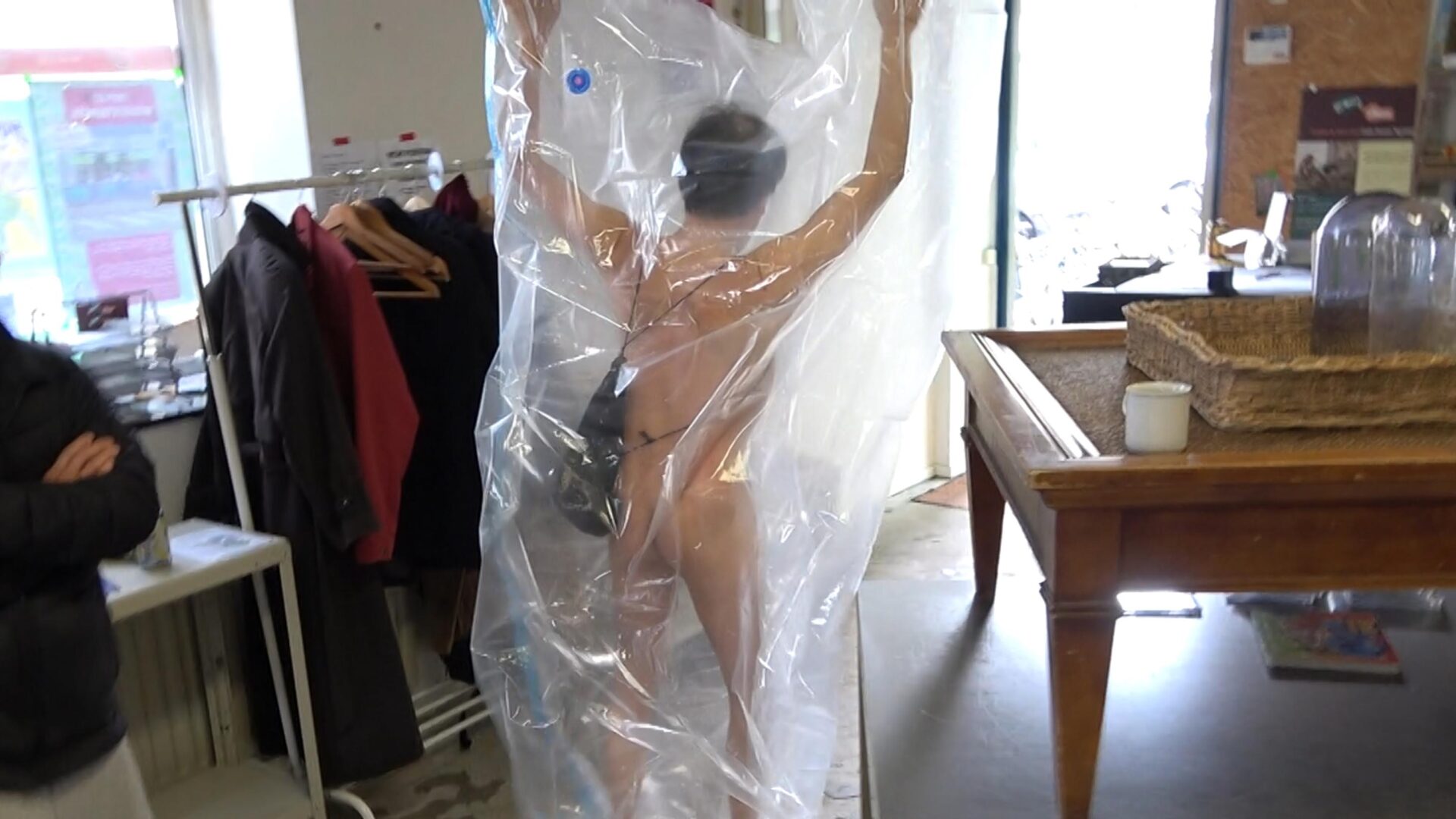
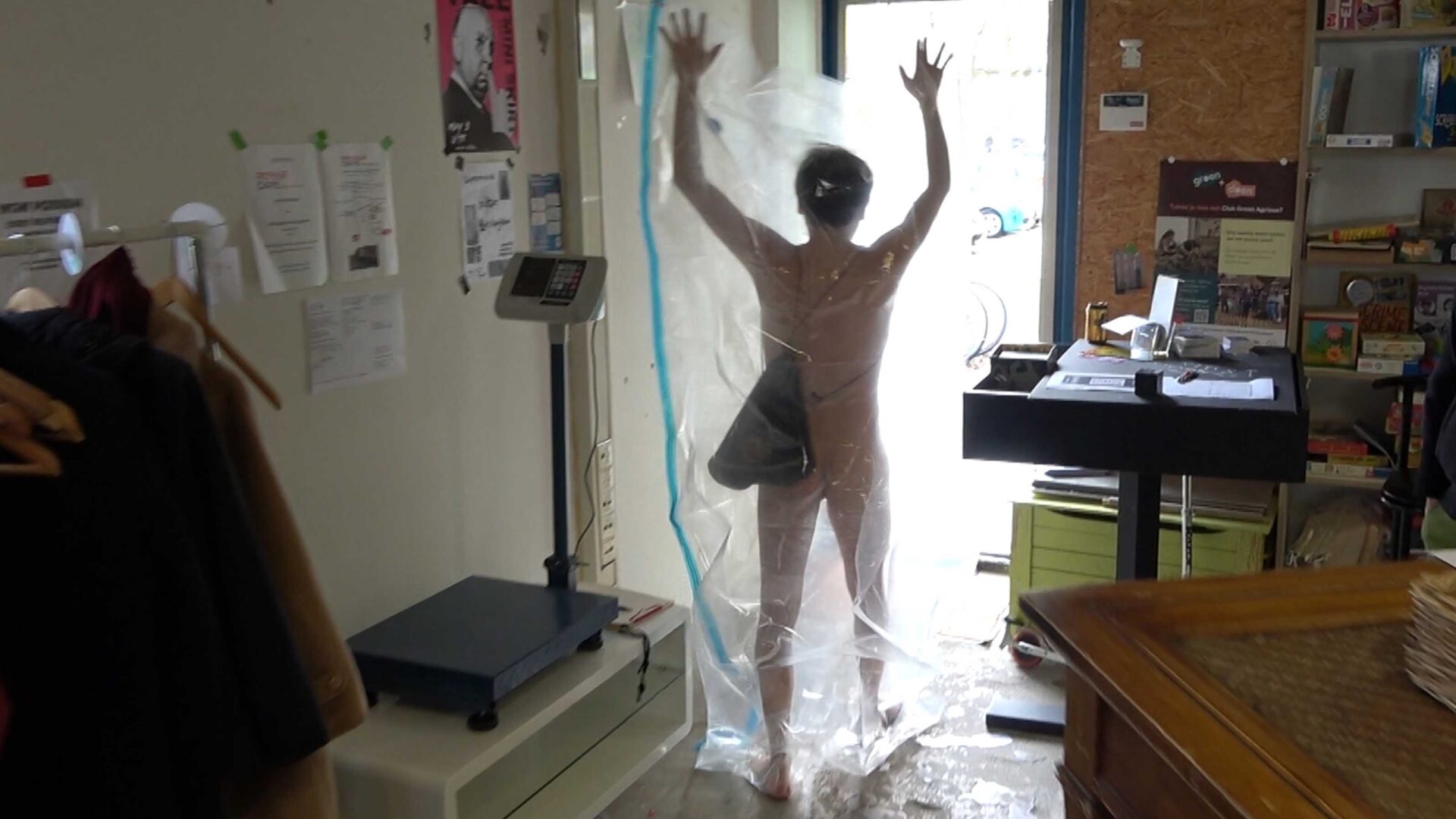
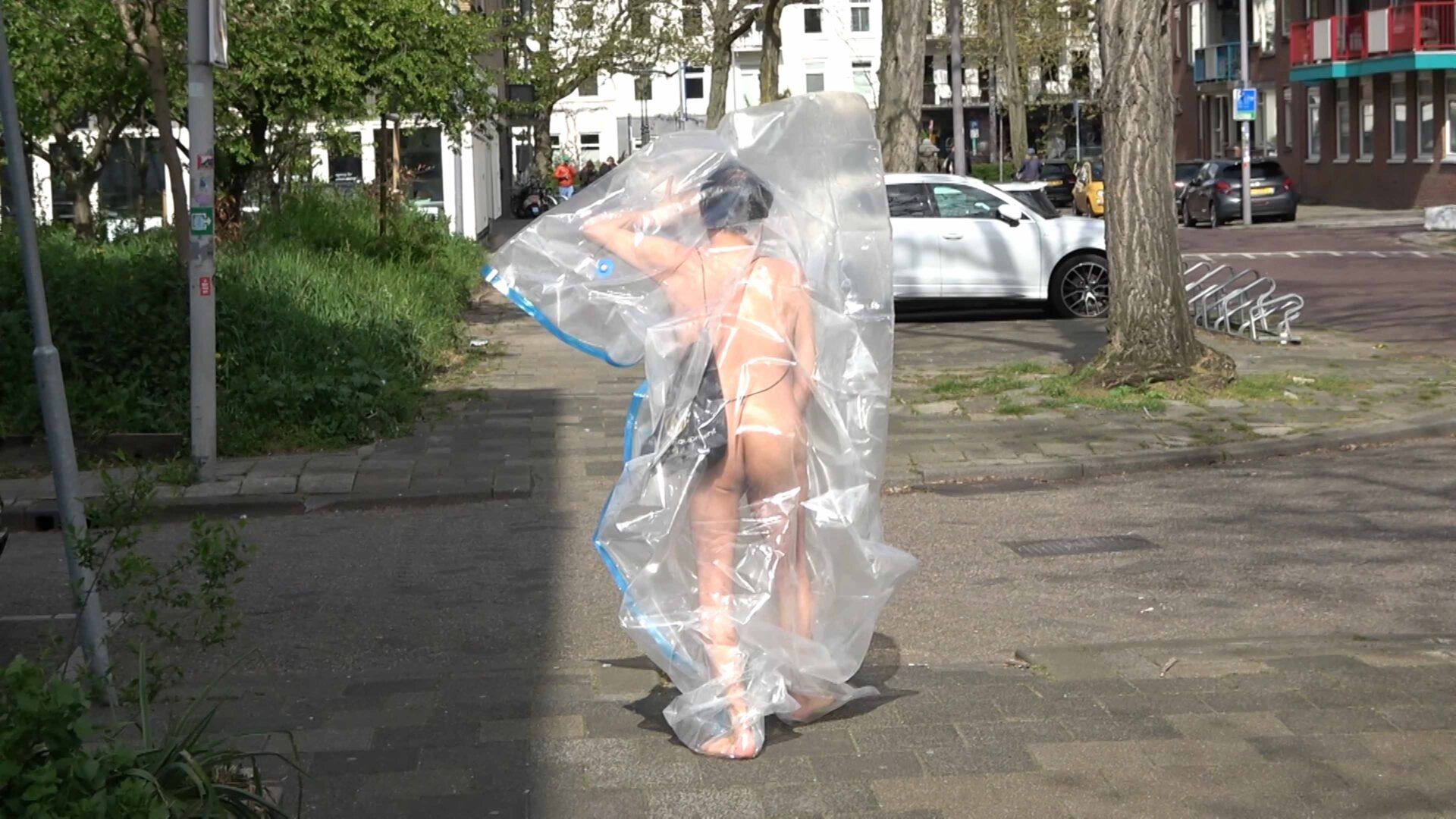
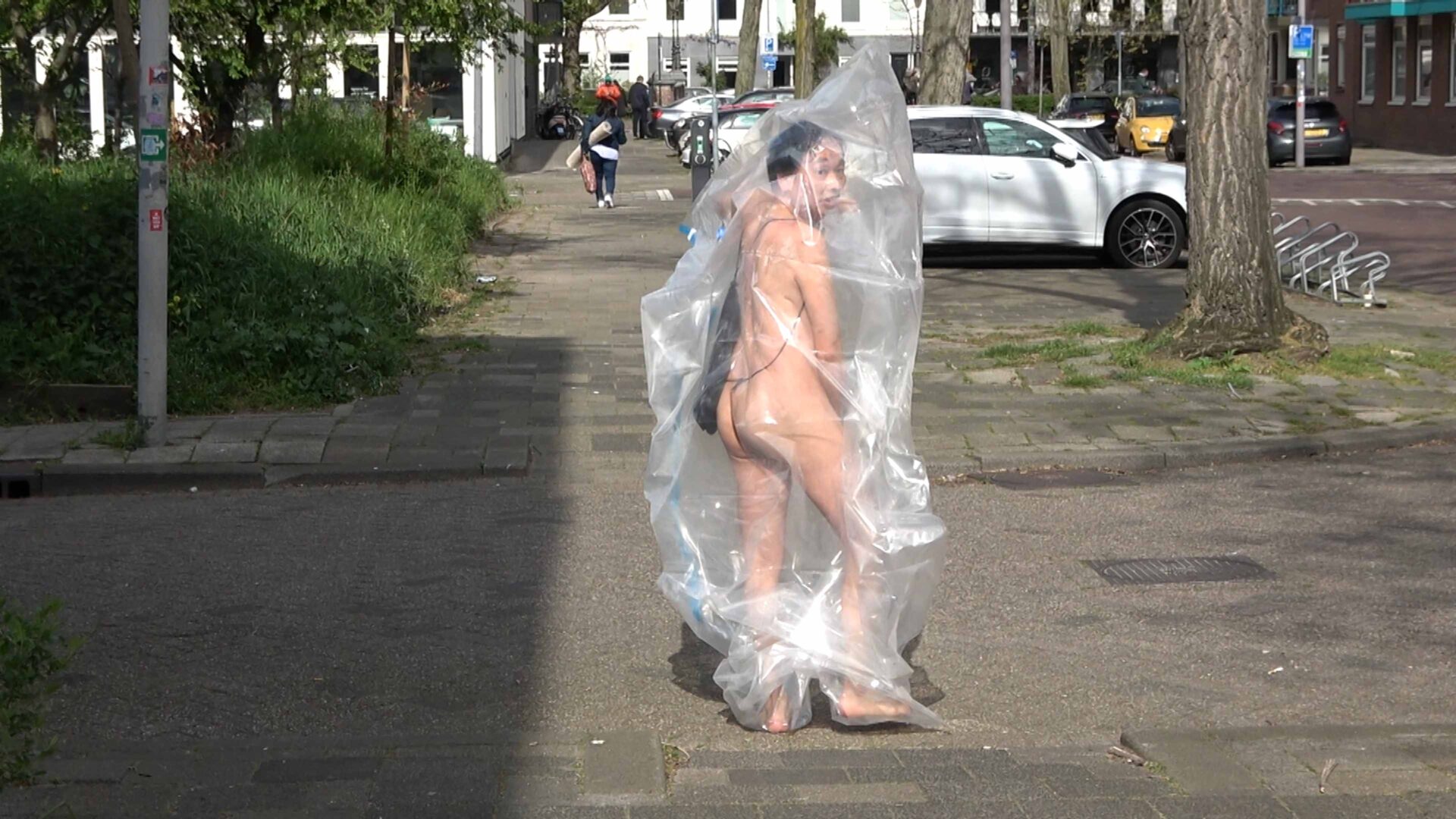
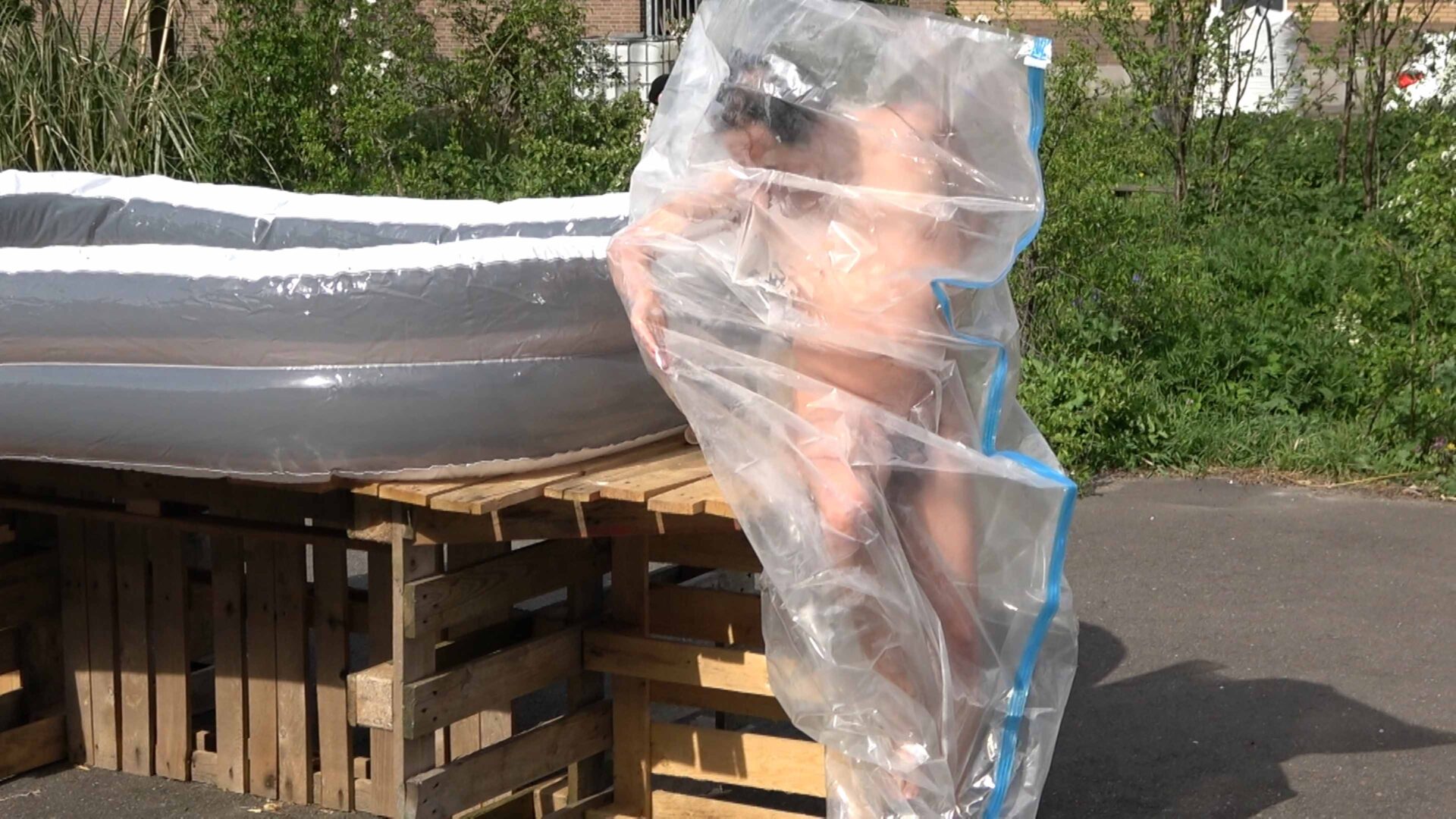
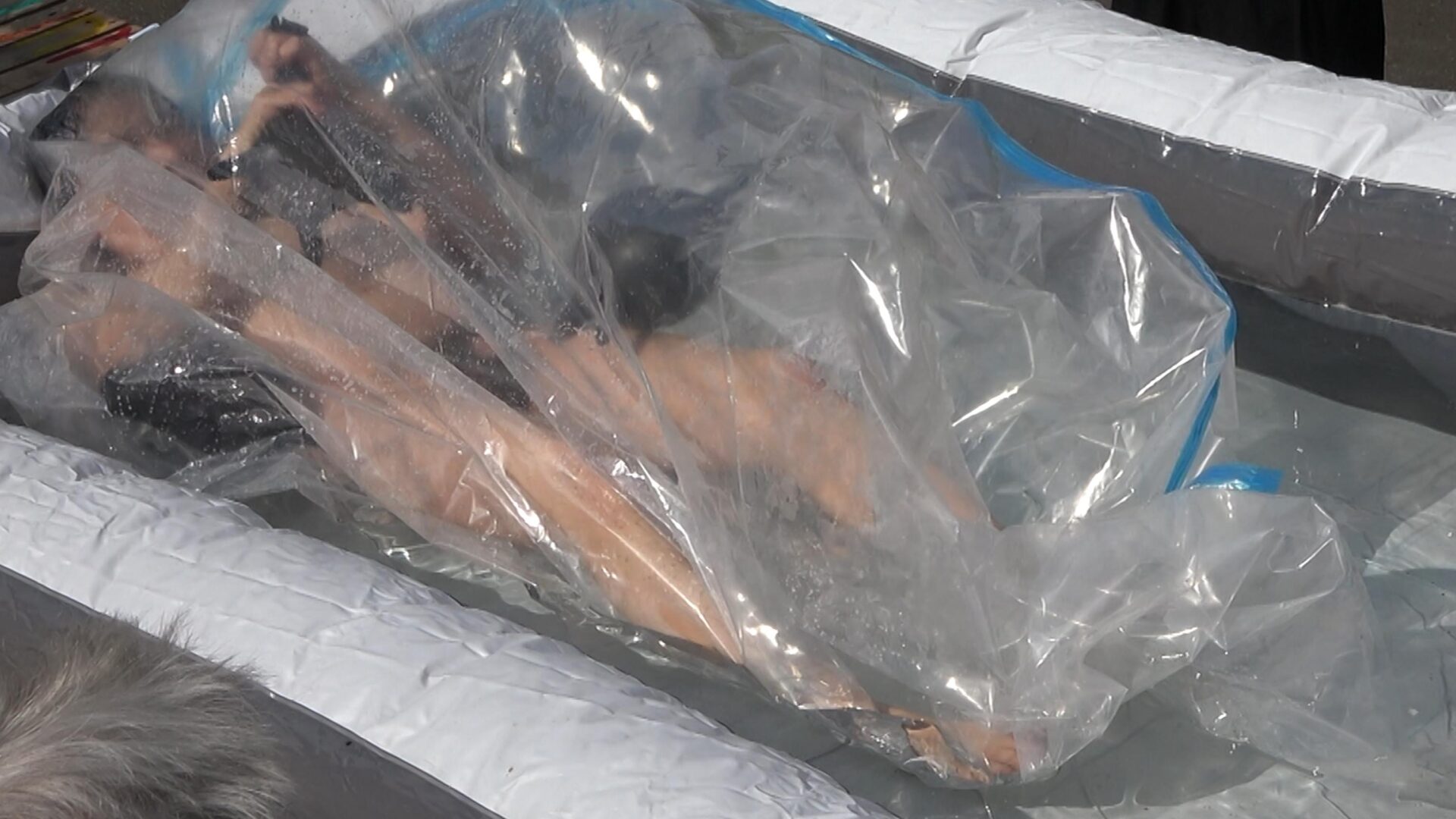
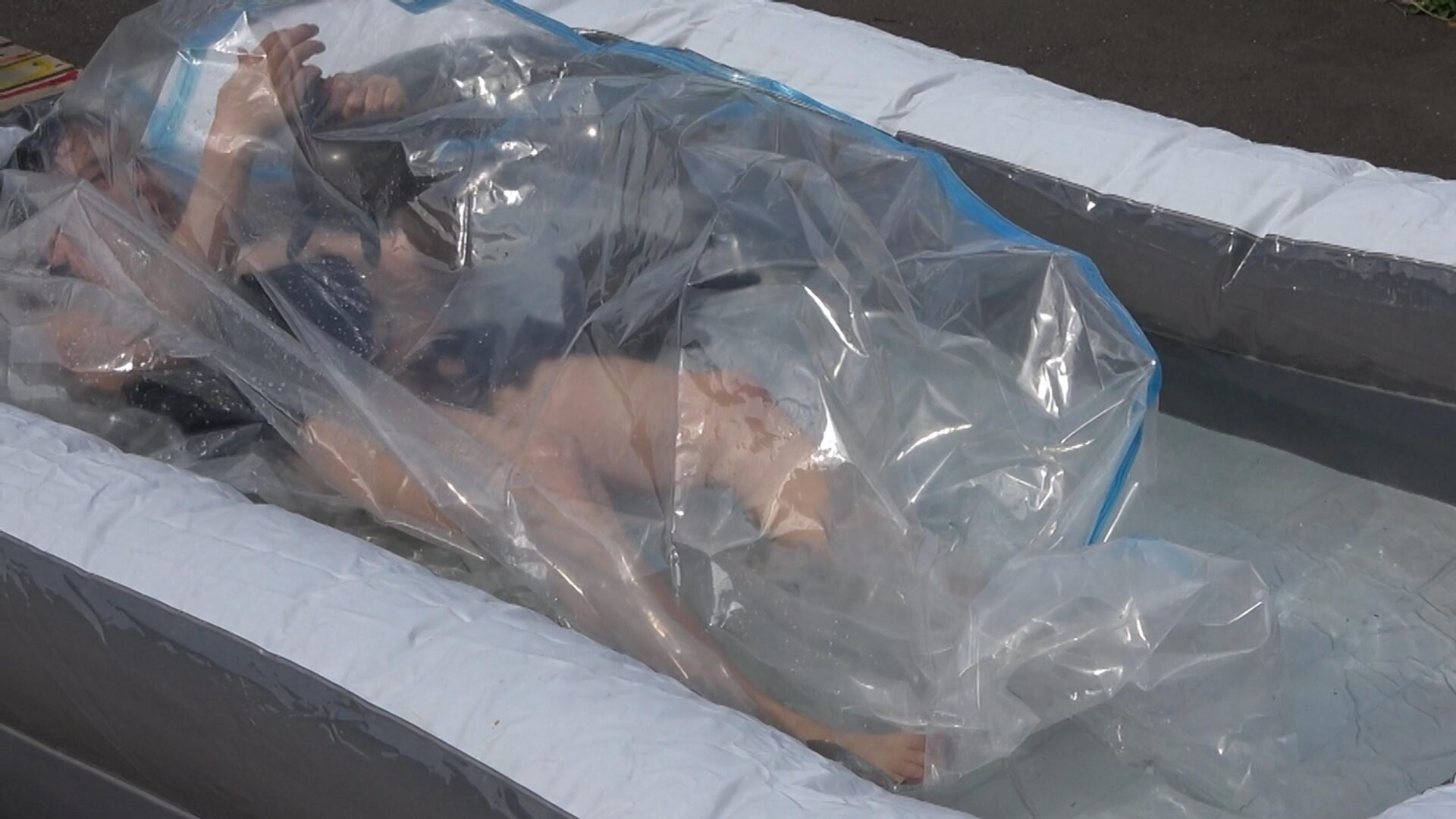
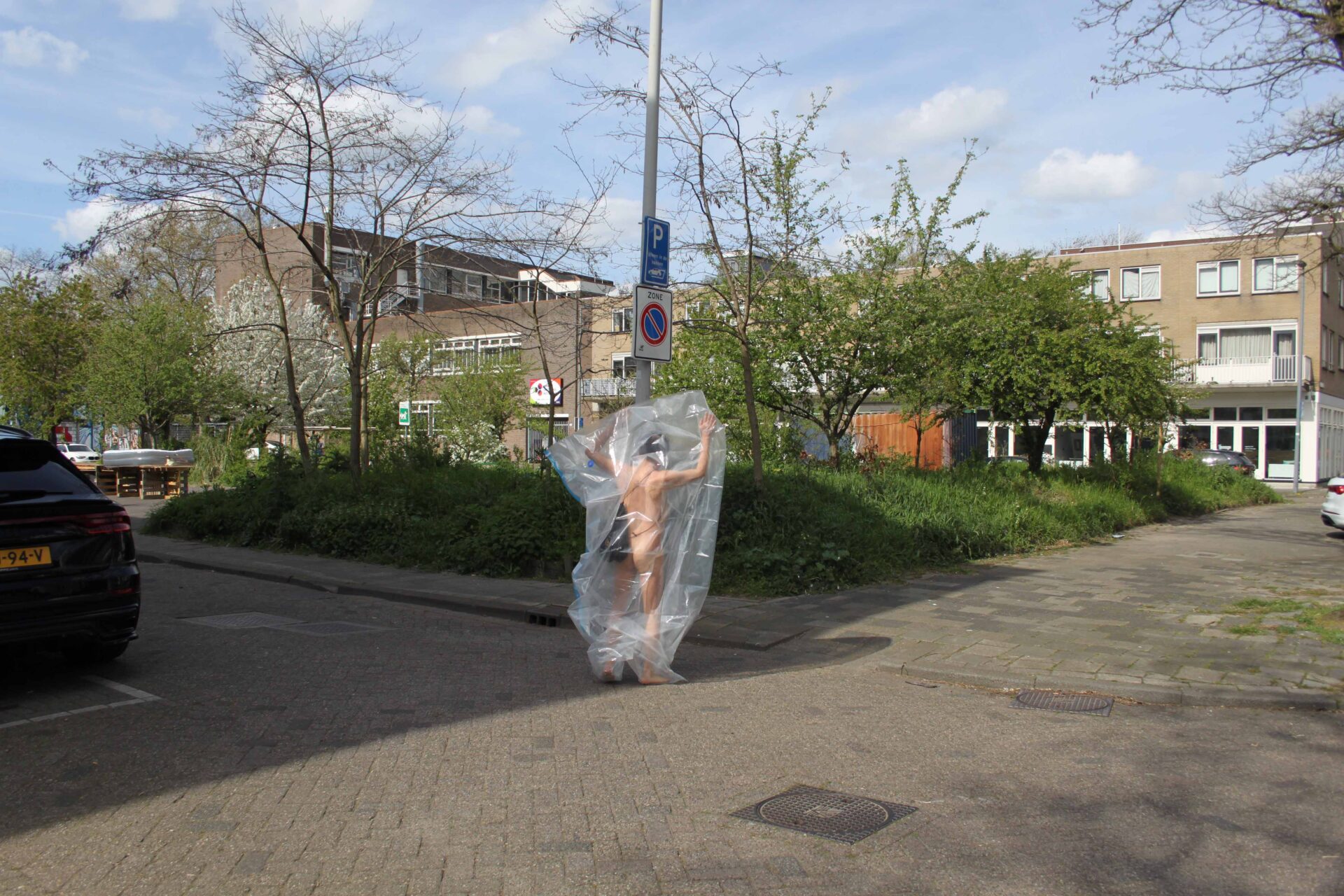
The next movement alters the atmosphere: he enters a large, transparent plastic bag. It wraps around him entirely, sealing him inside. This bag becomes what Mukarno calls the “membrane of birth”—a metaphor for the womb. Within the thin walls, every breath sounds closer, every movement appears suspended. The audience witnesses rebirth as both concept and physical state.
Procession to the Outside
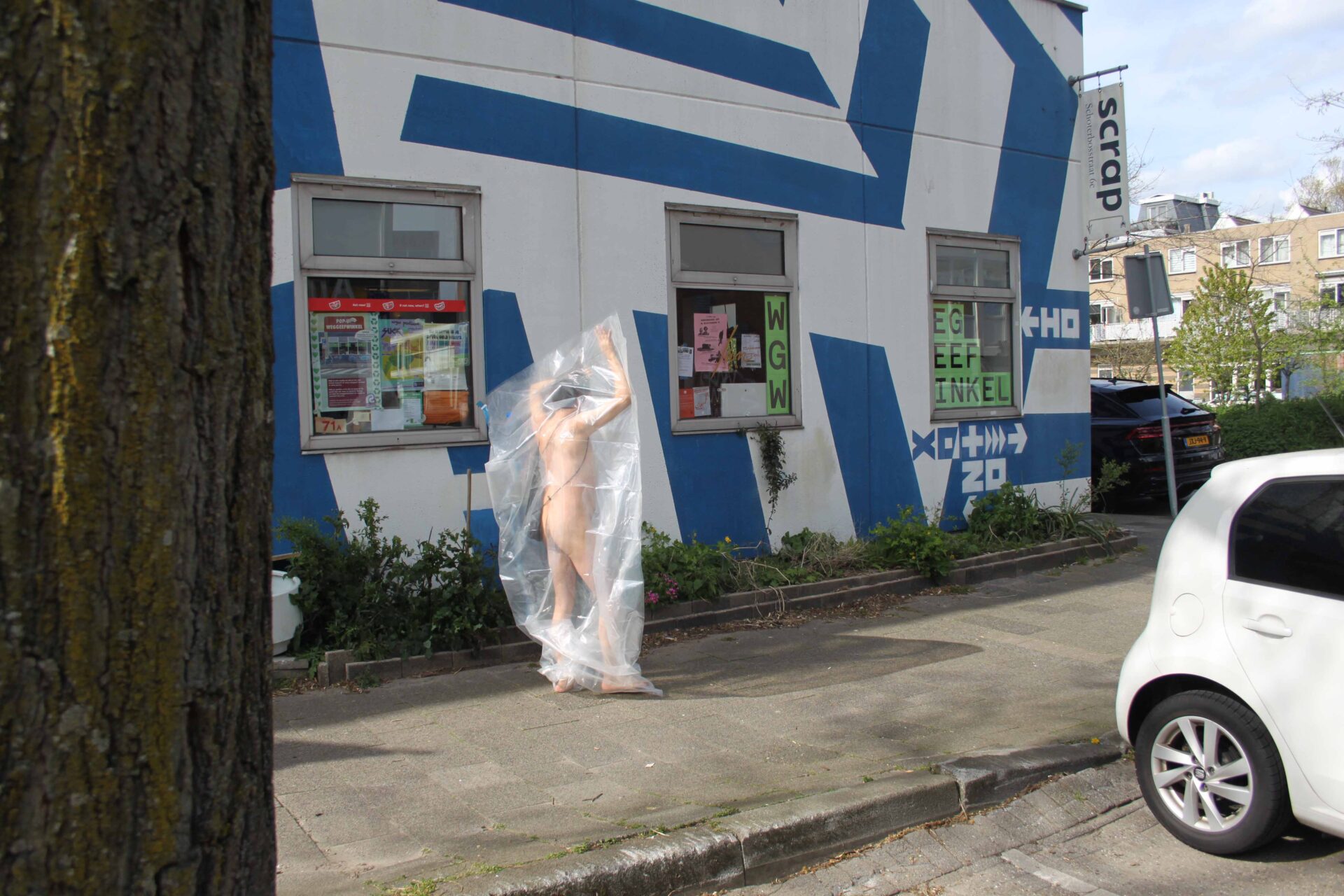
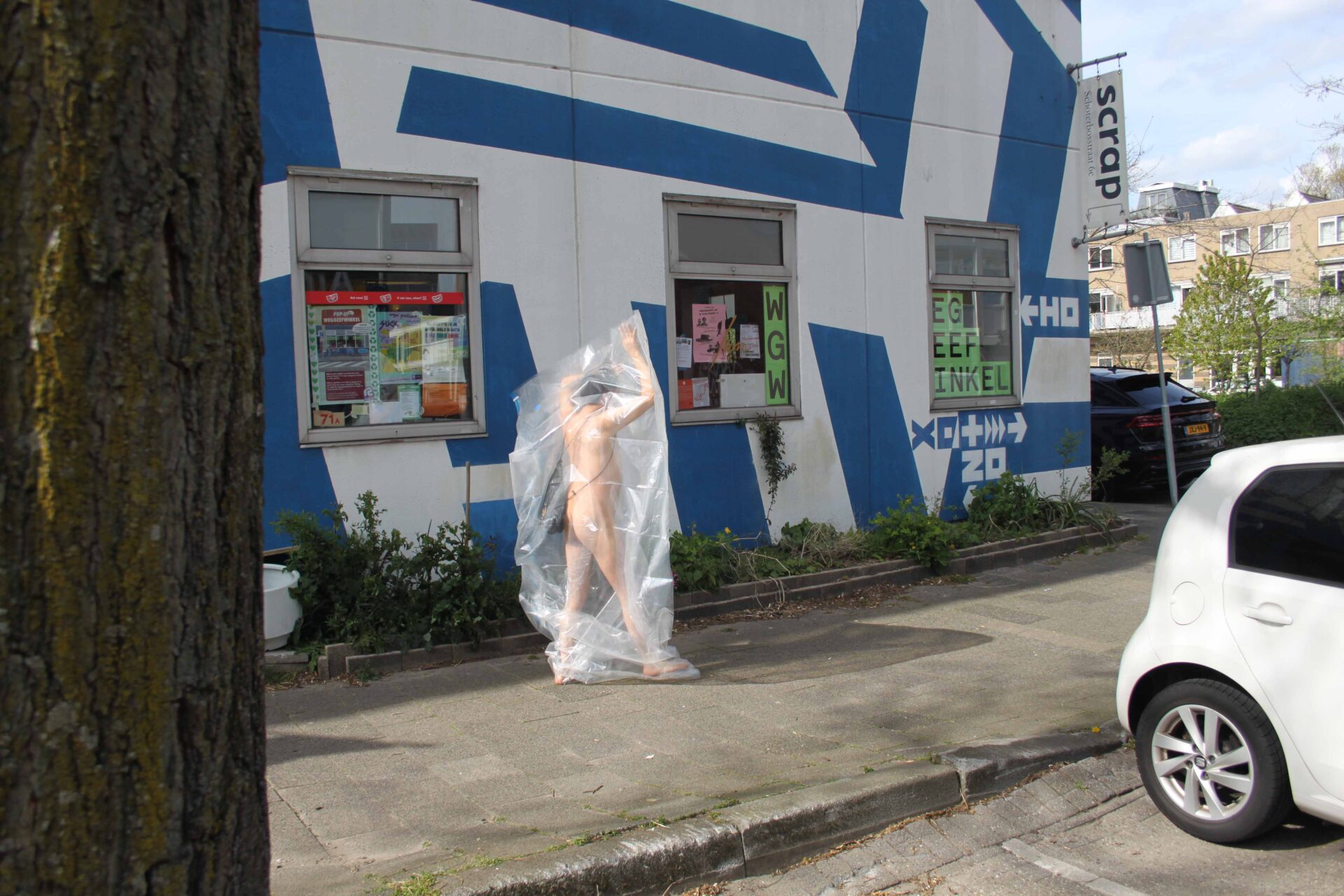
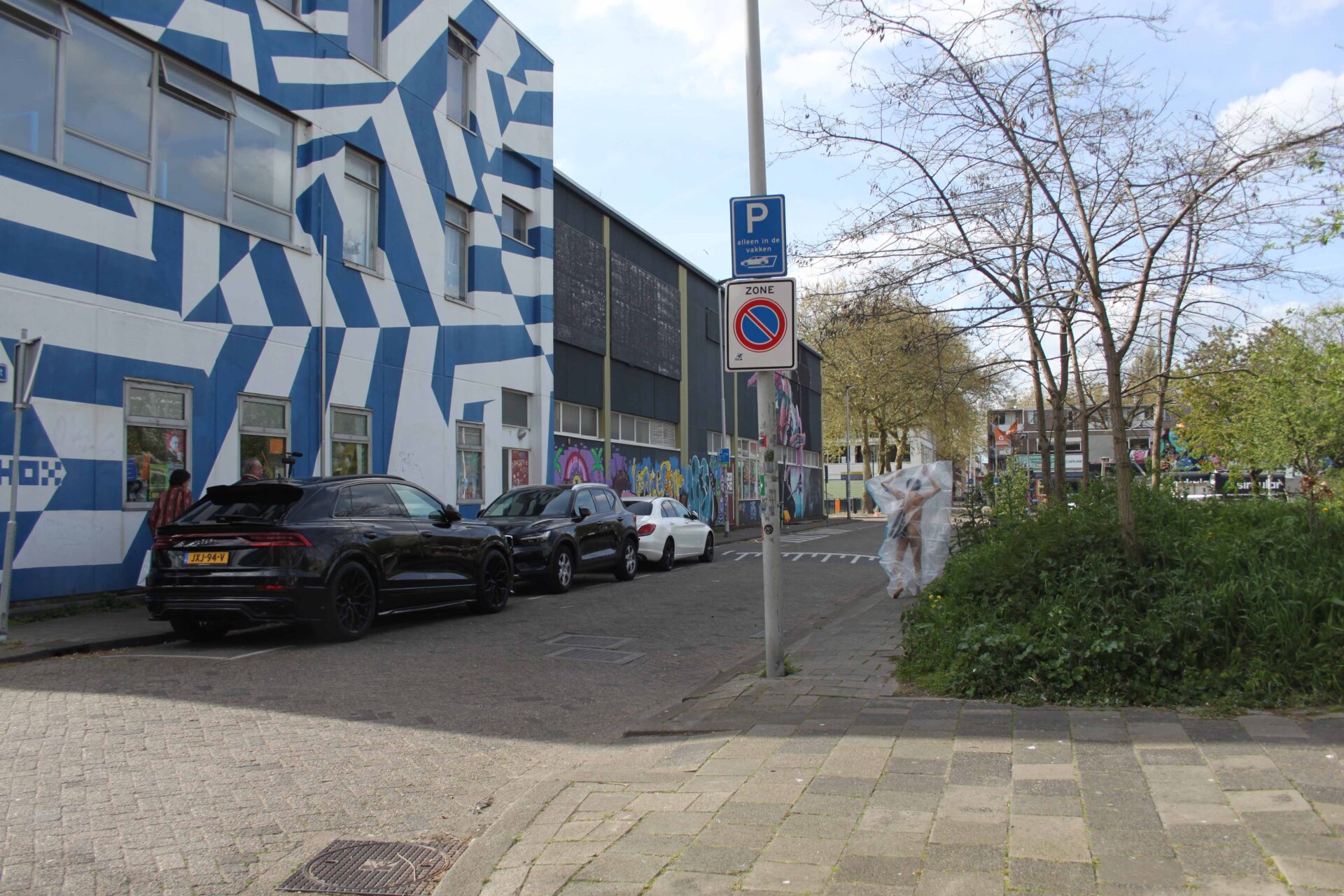
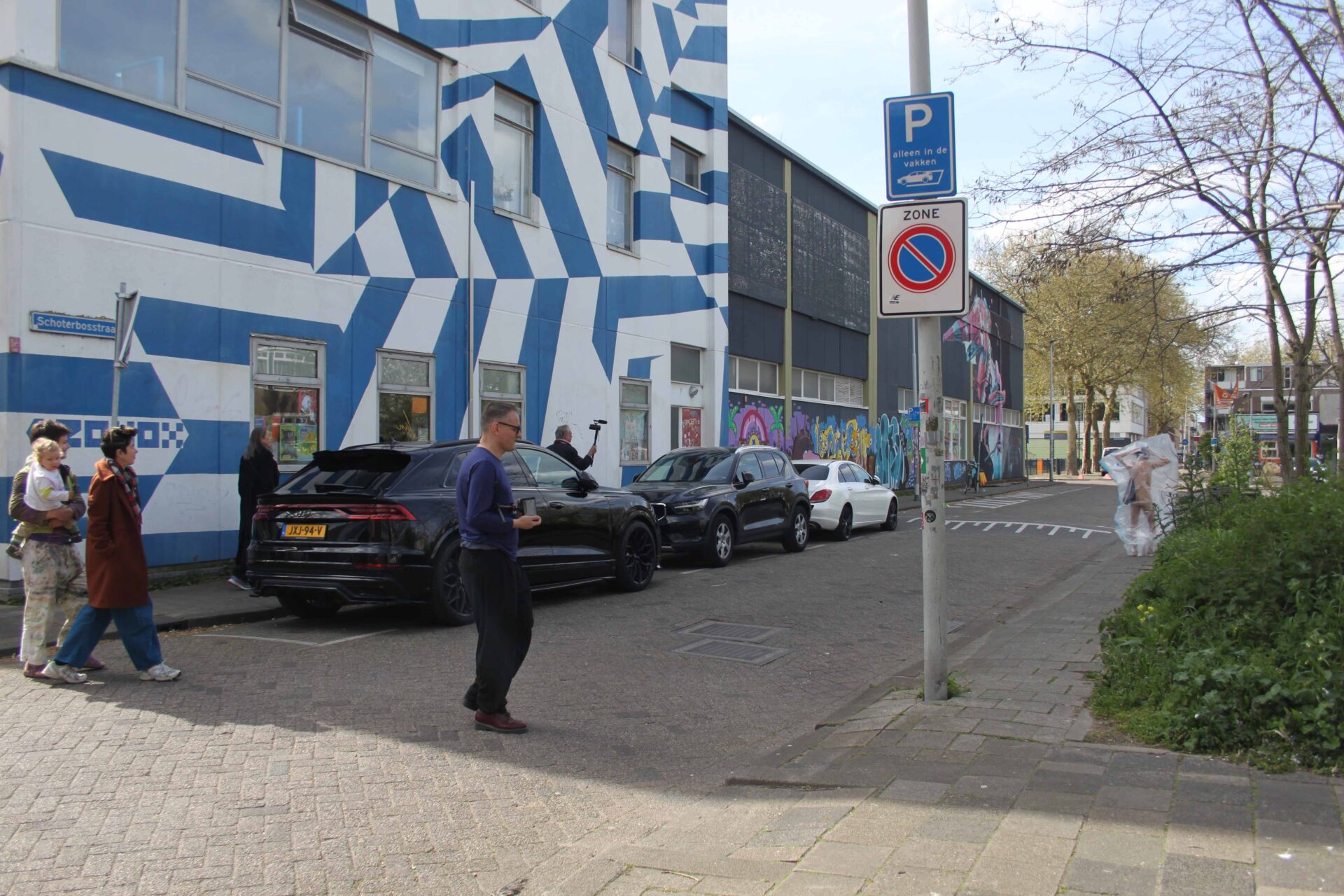
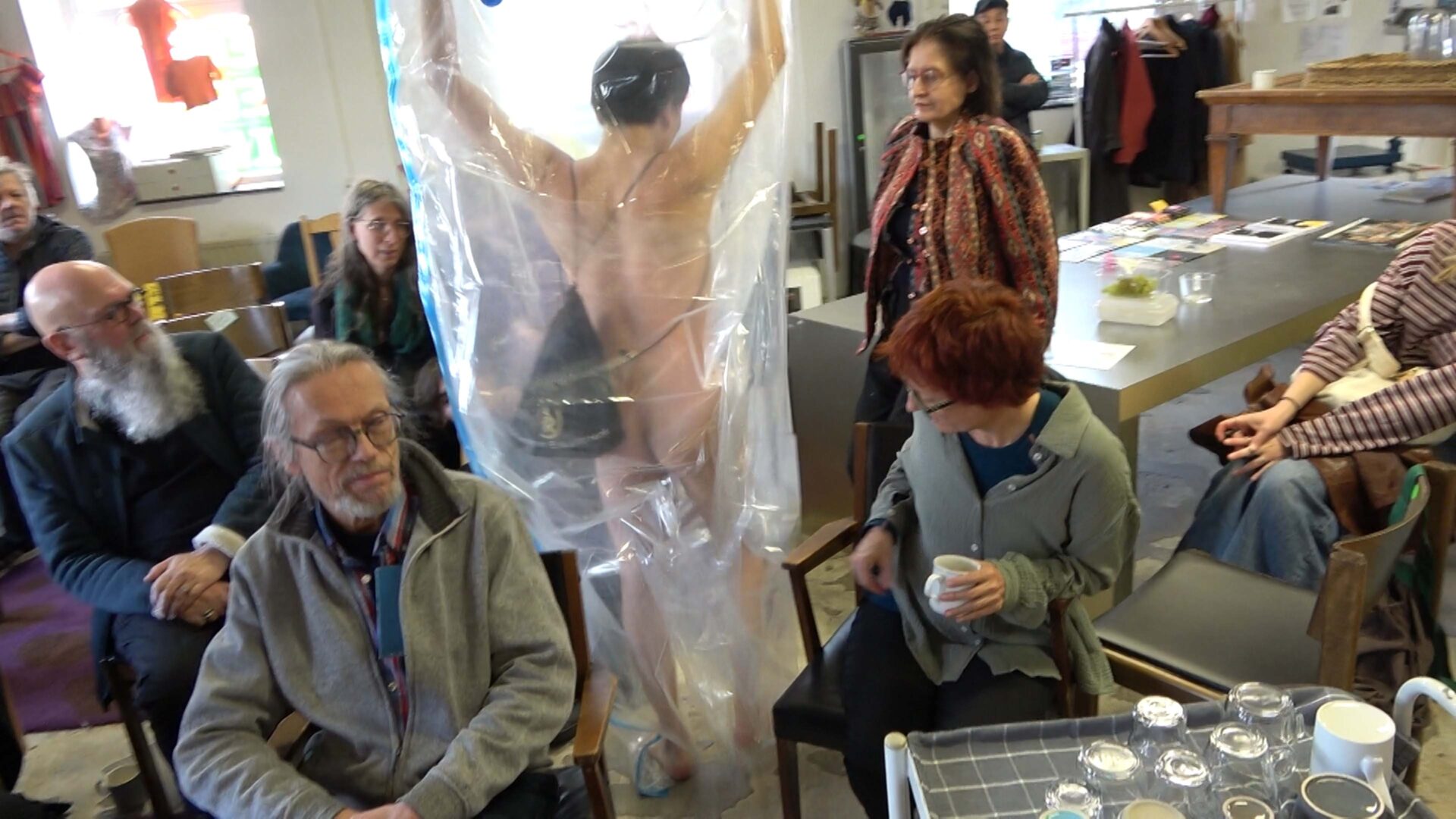
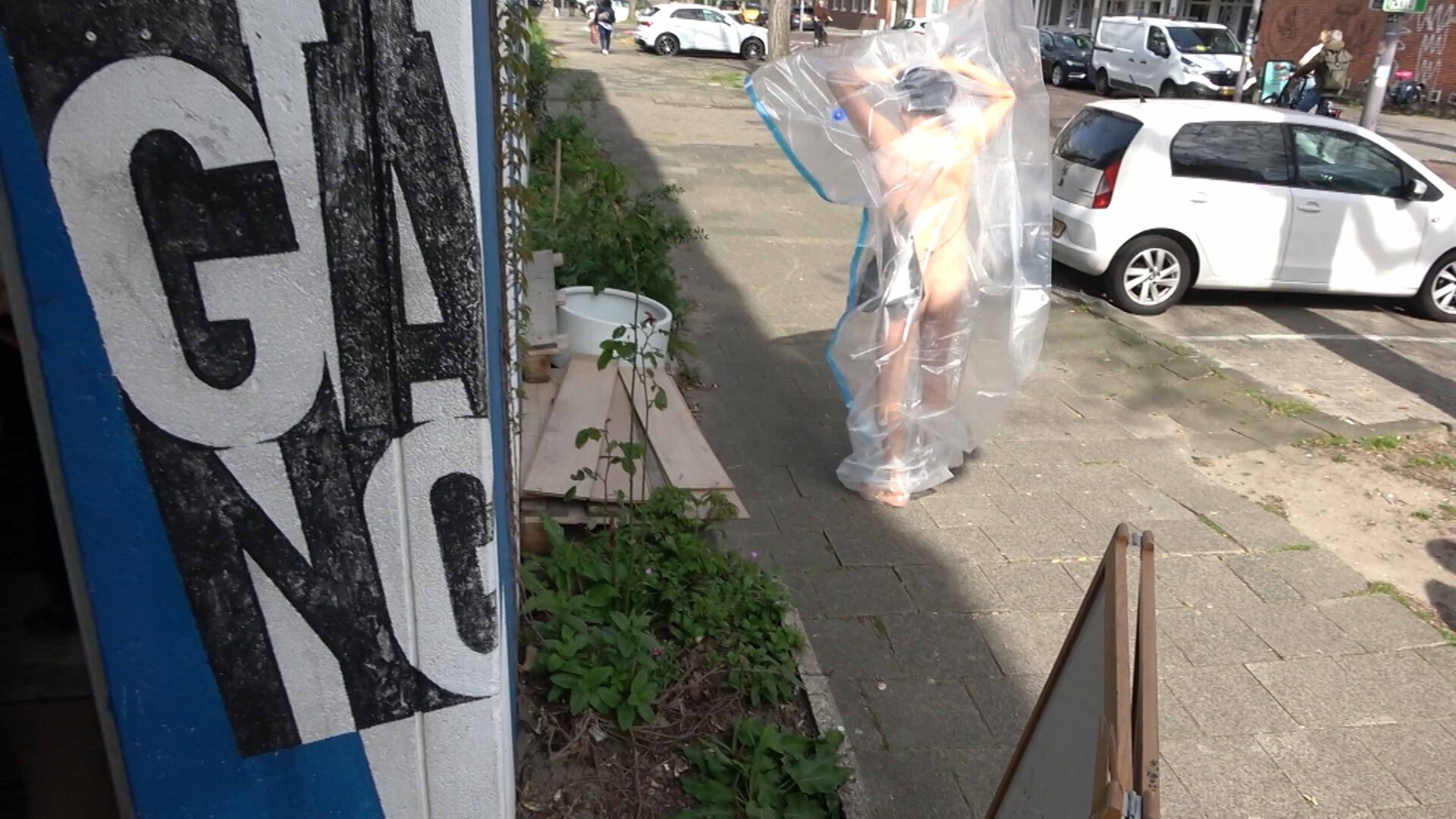
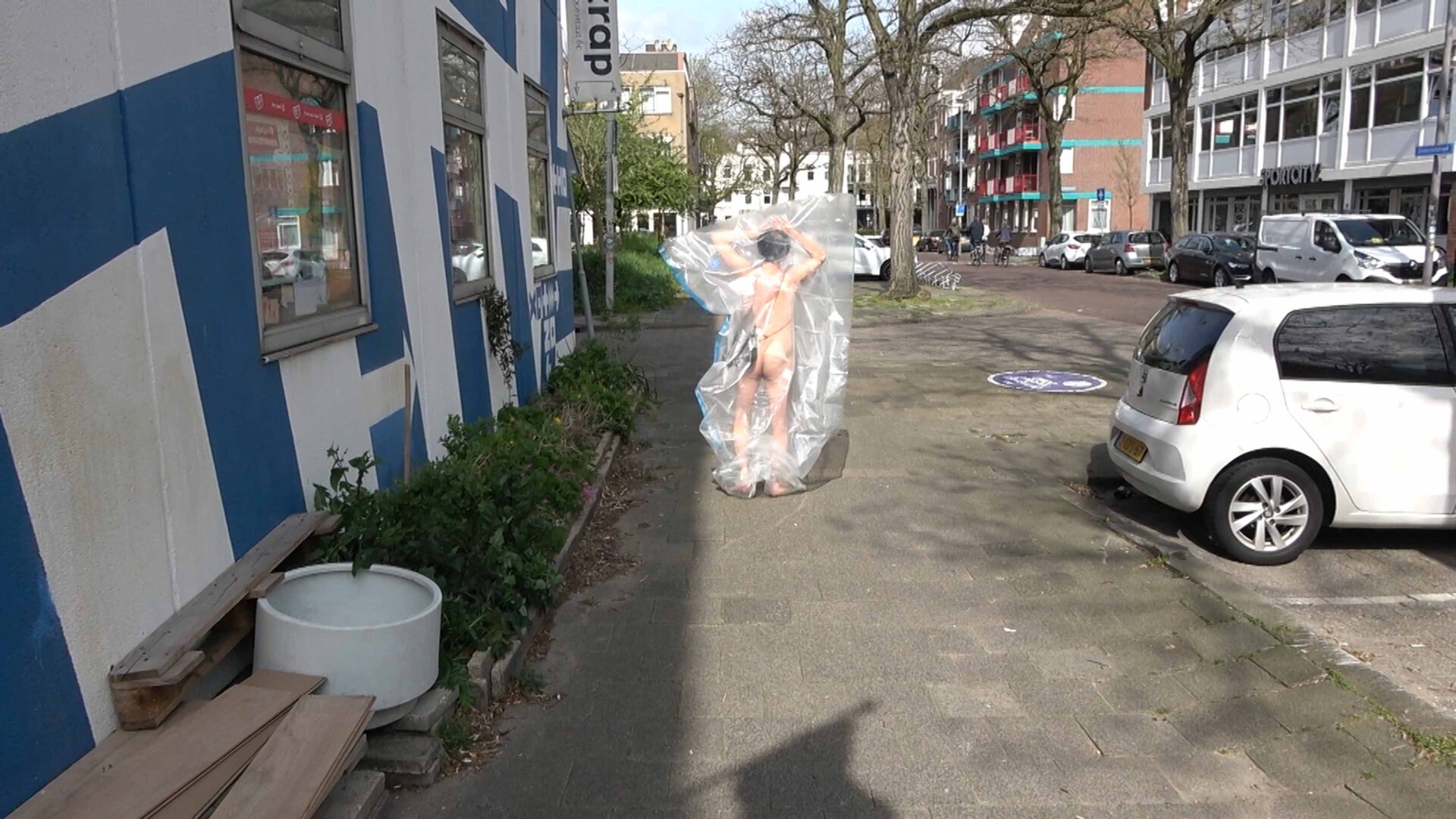
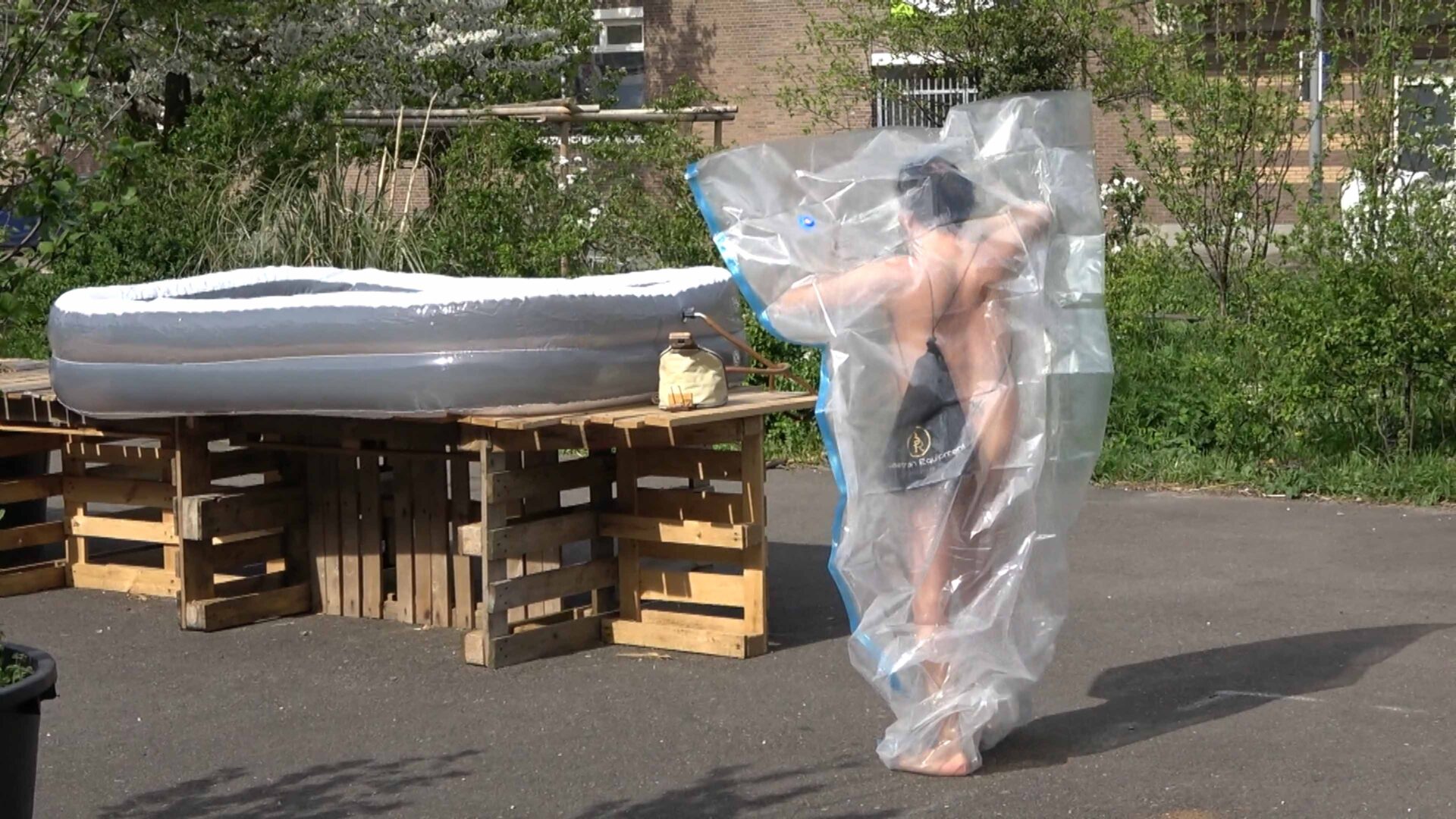
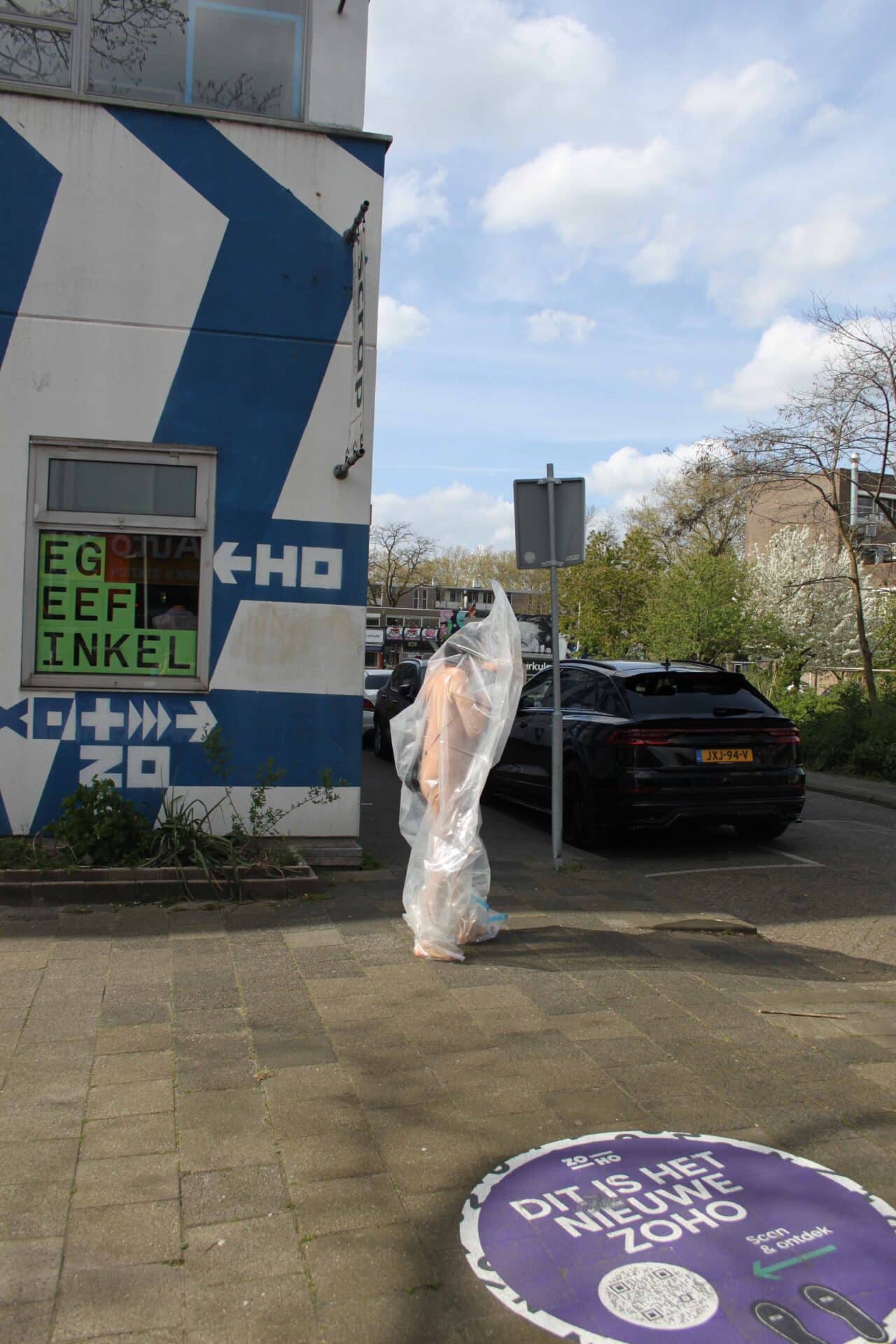
Mukarno does not remain in isolation. Wrapped in the plastic membrane, he begins to walk outward. The act turns into a slow procession, leaving the performance space behind. Viewers follow, crossing thresholds from the interior to the exterior world. The movement blurs boundaries between performer and audience, between ritual and observation.
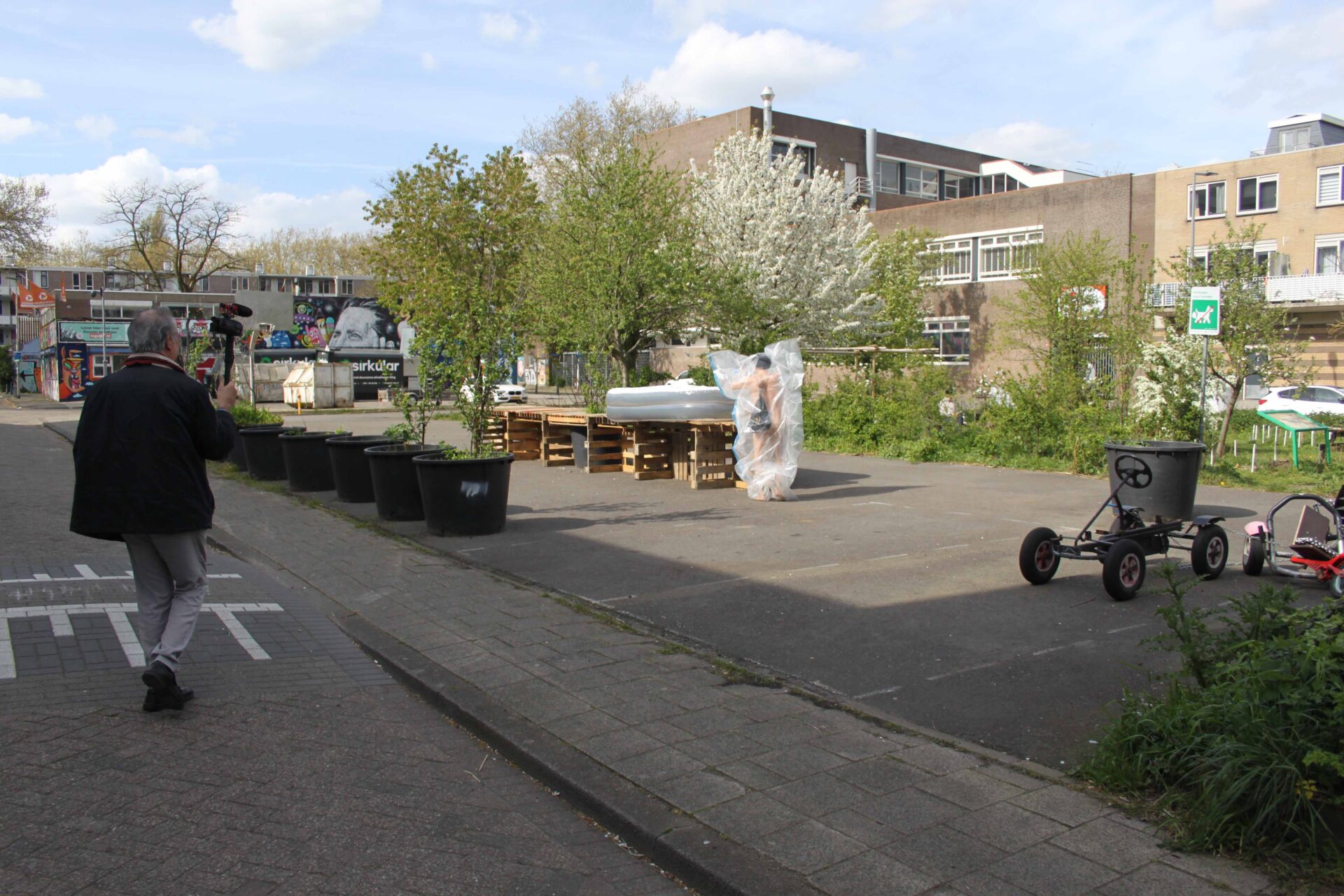
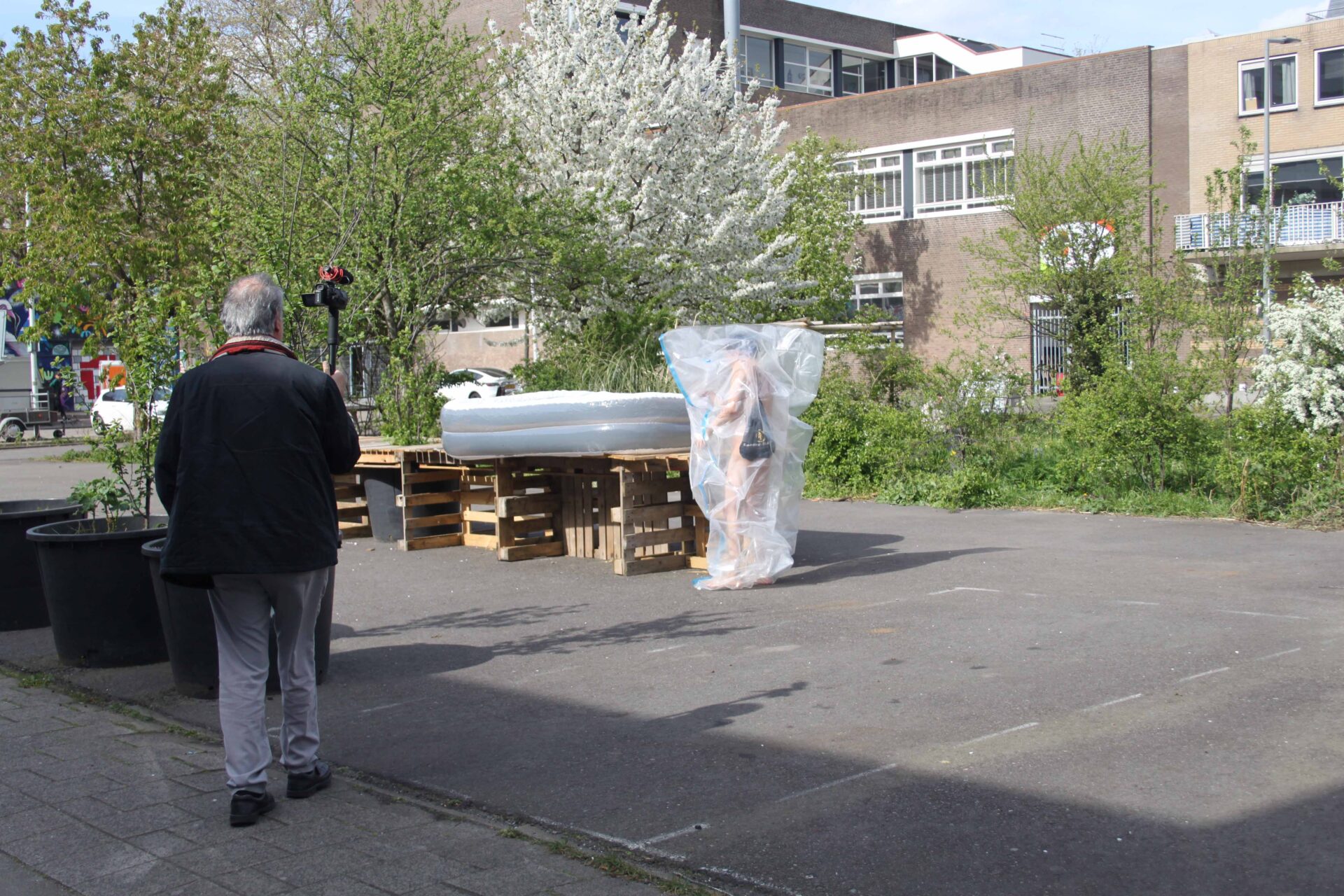
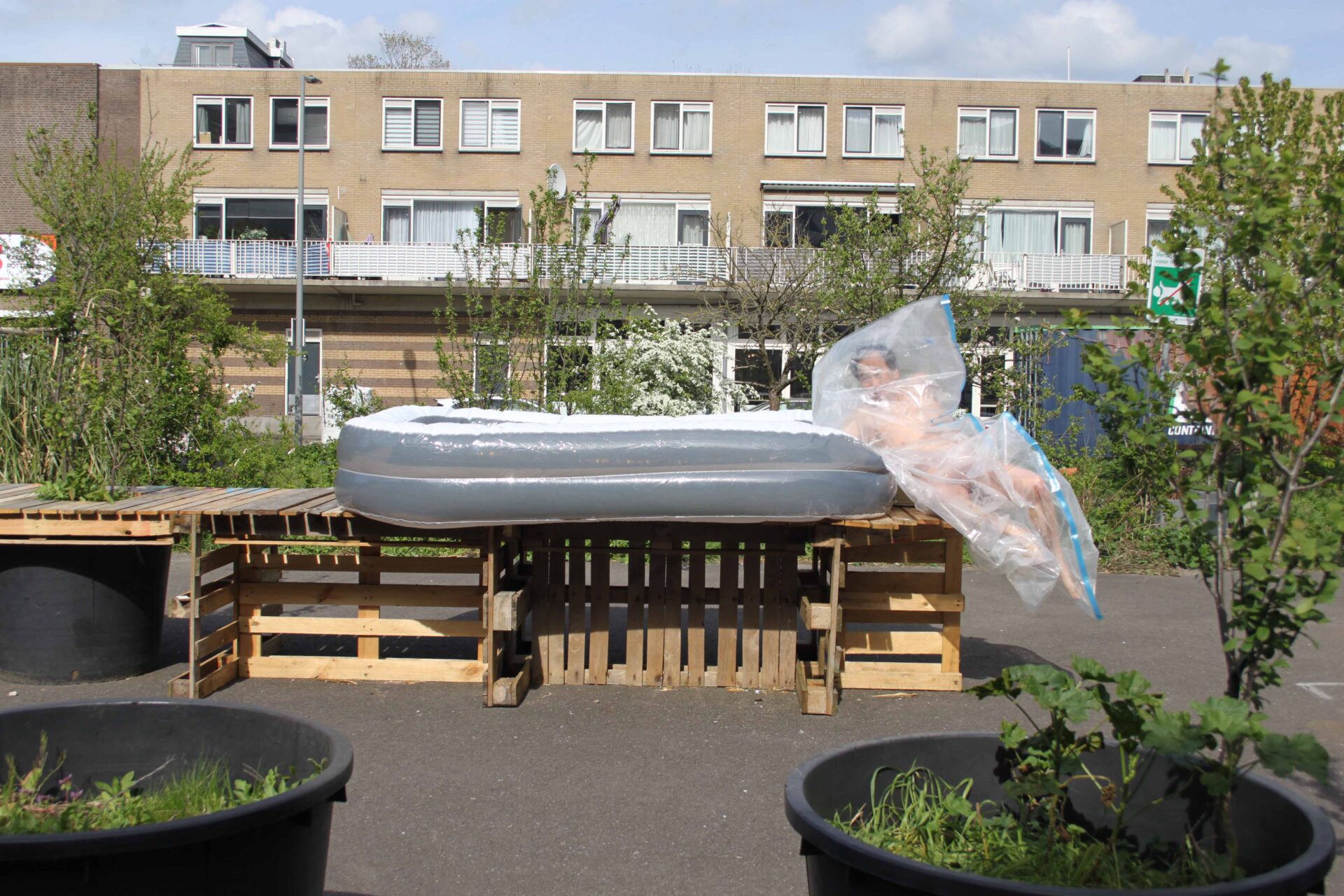
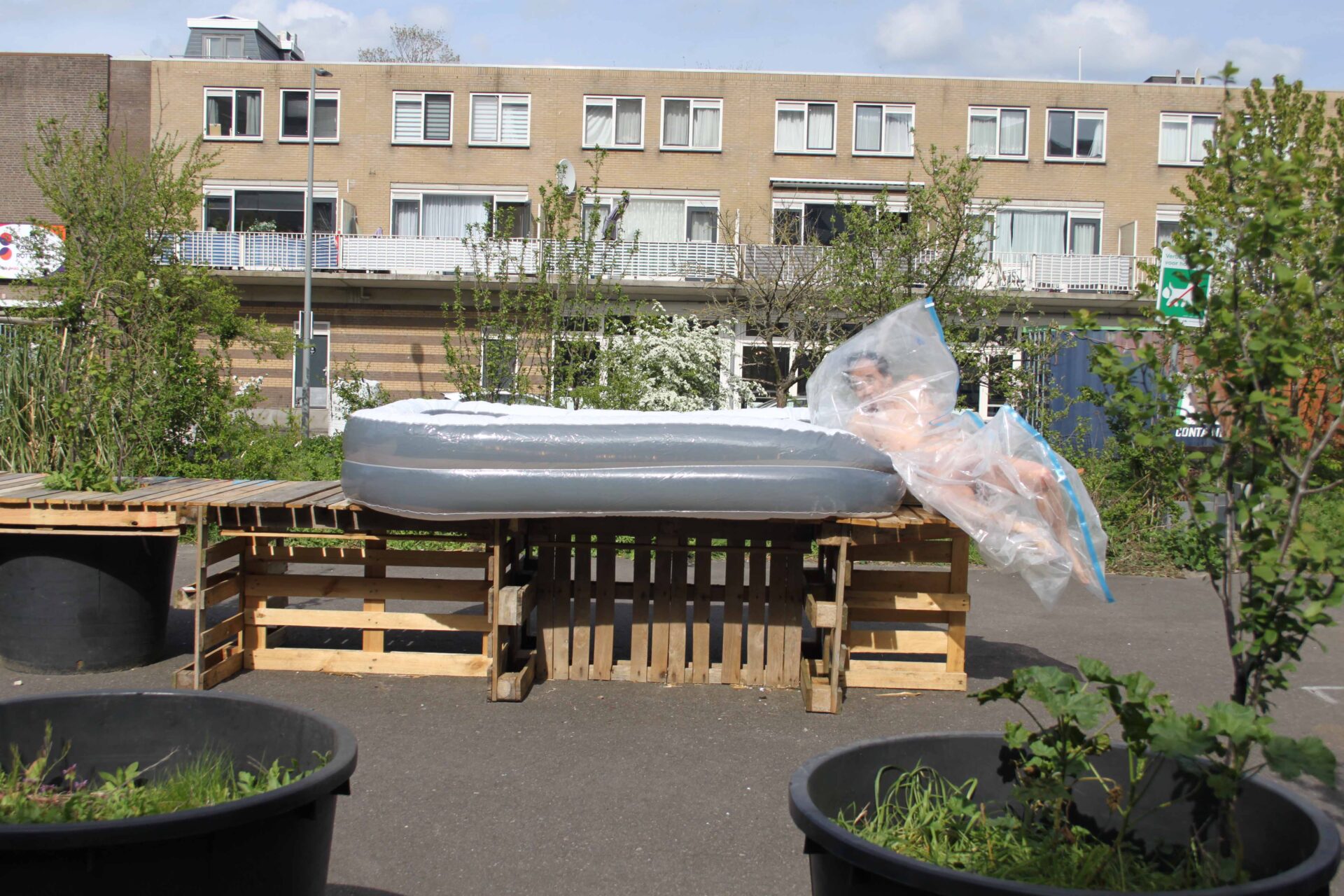
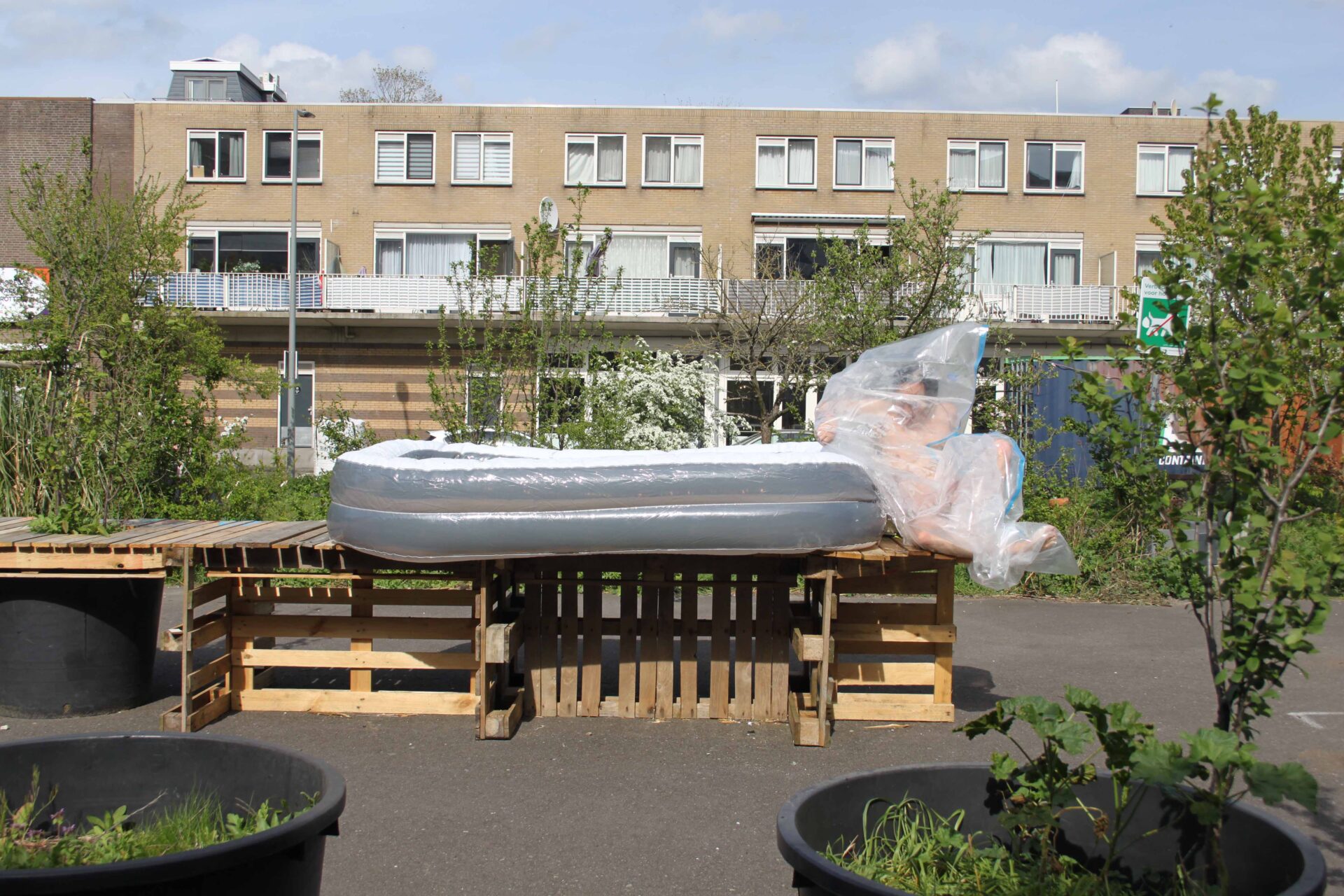
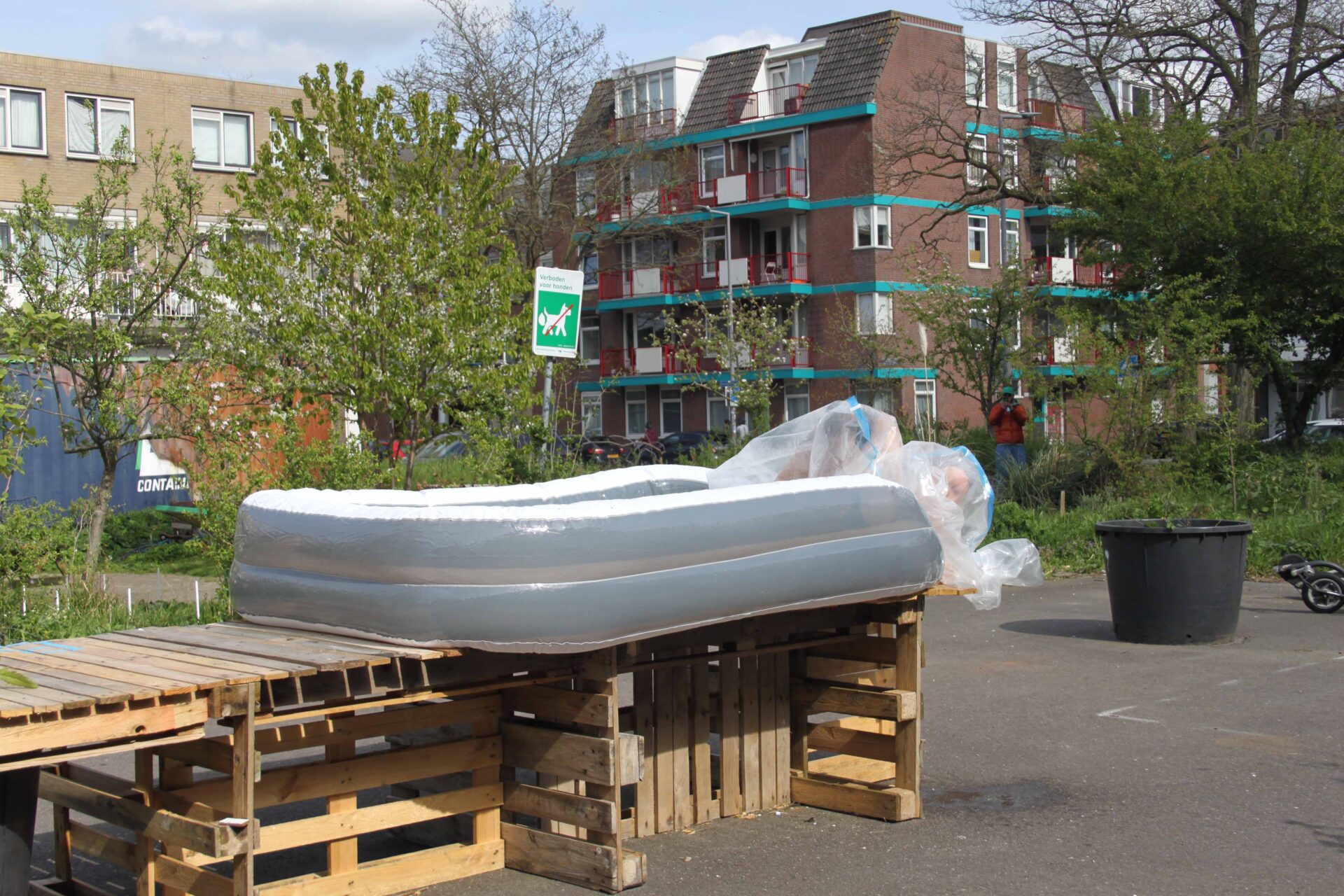
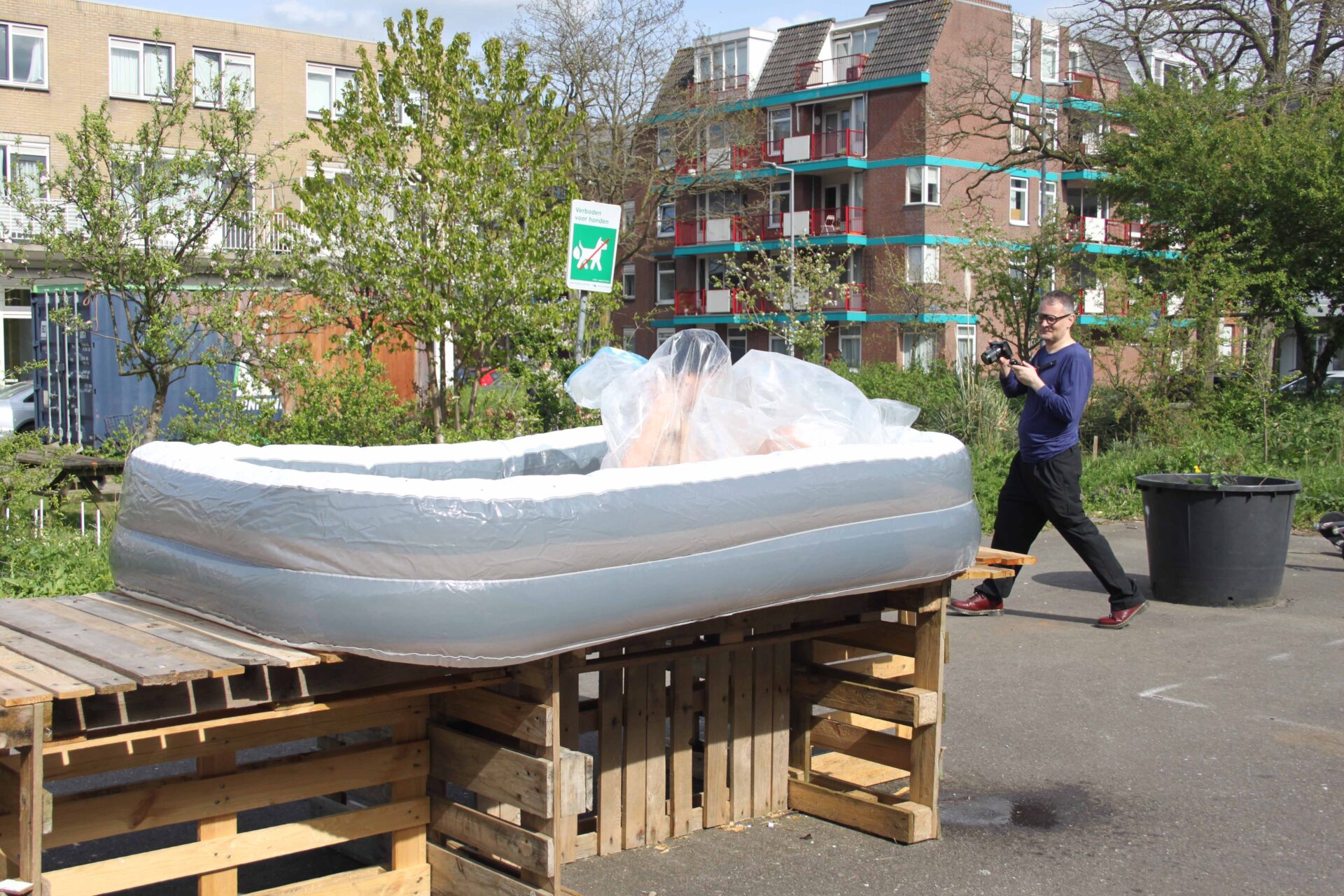
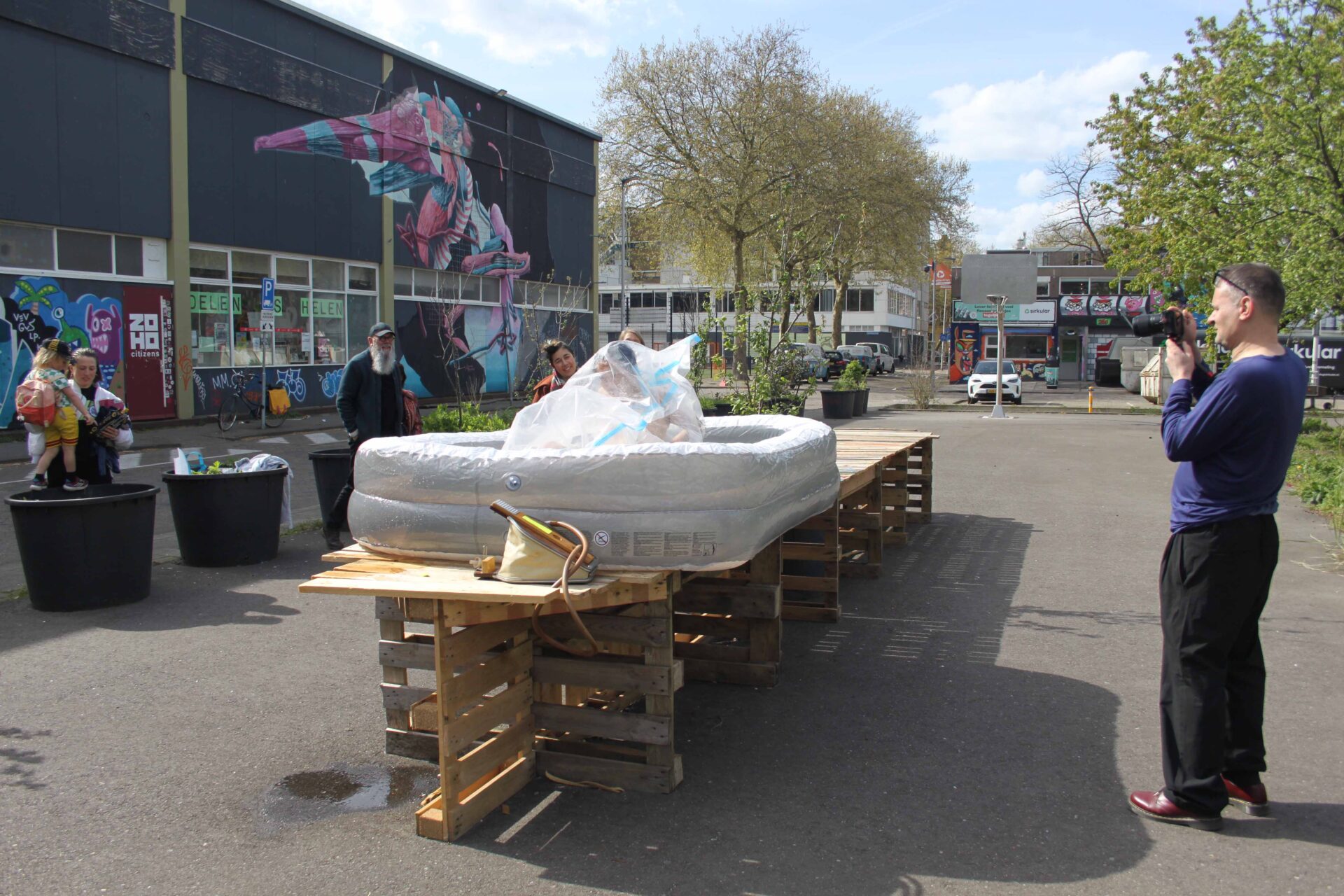
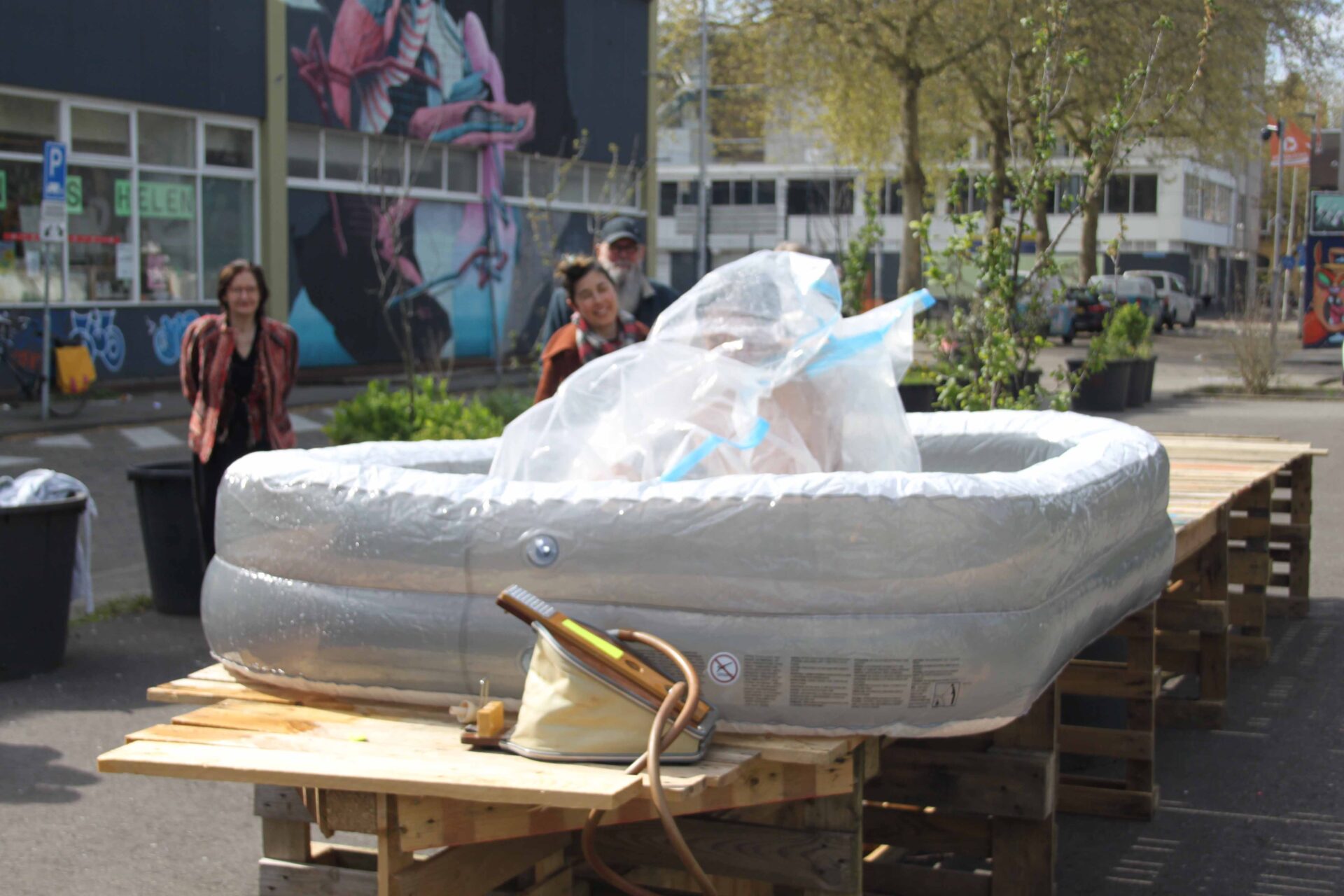
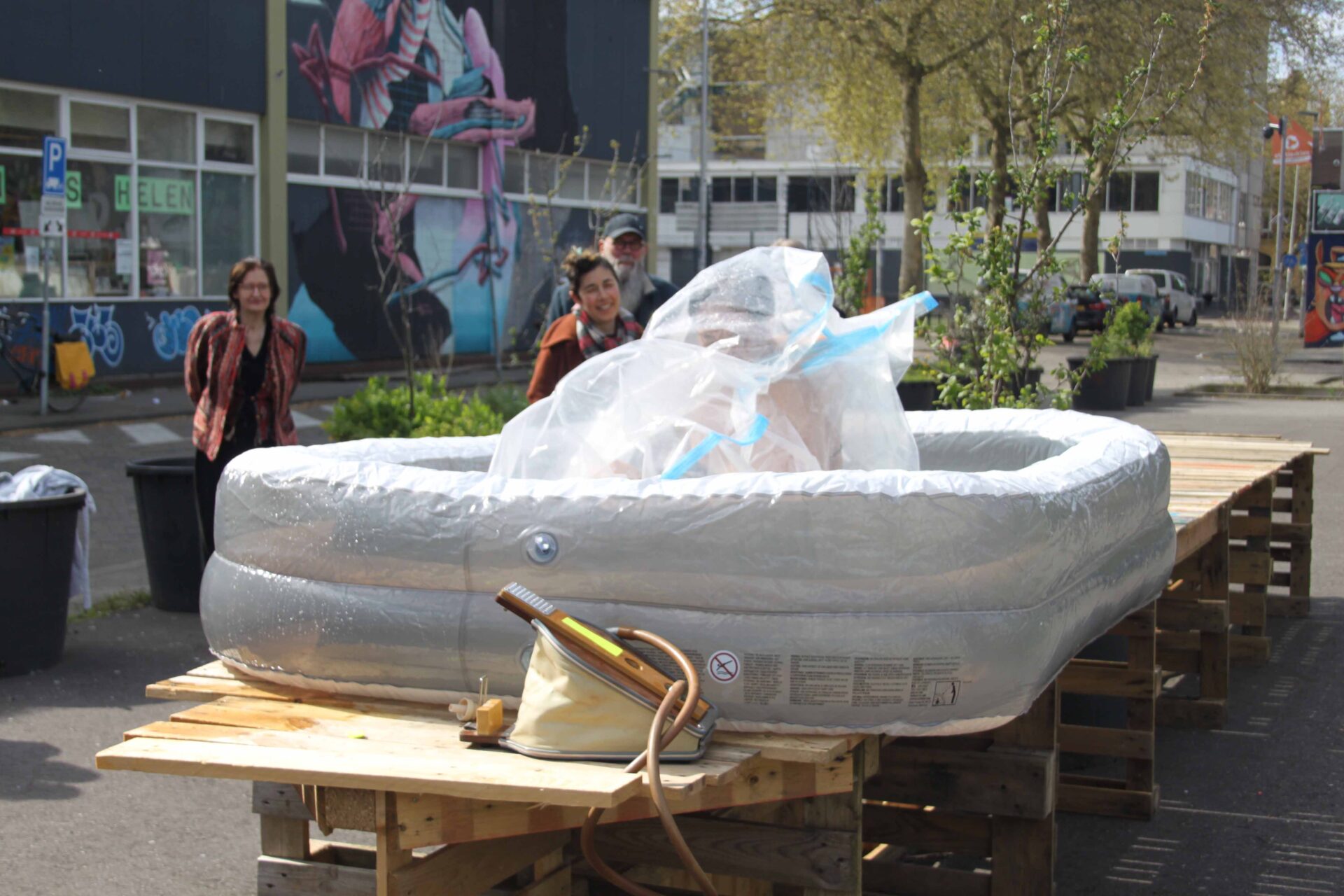
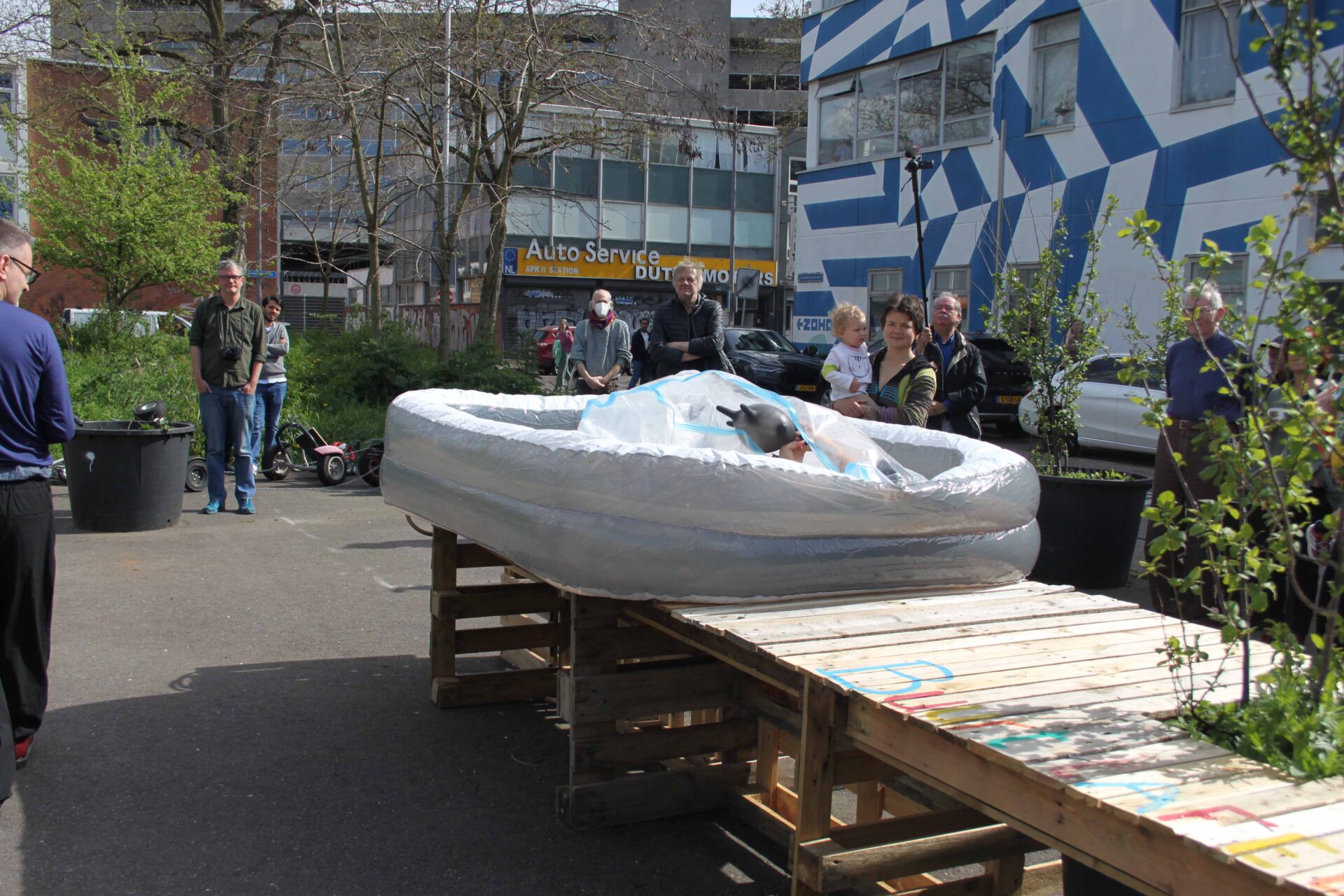
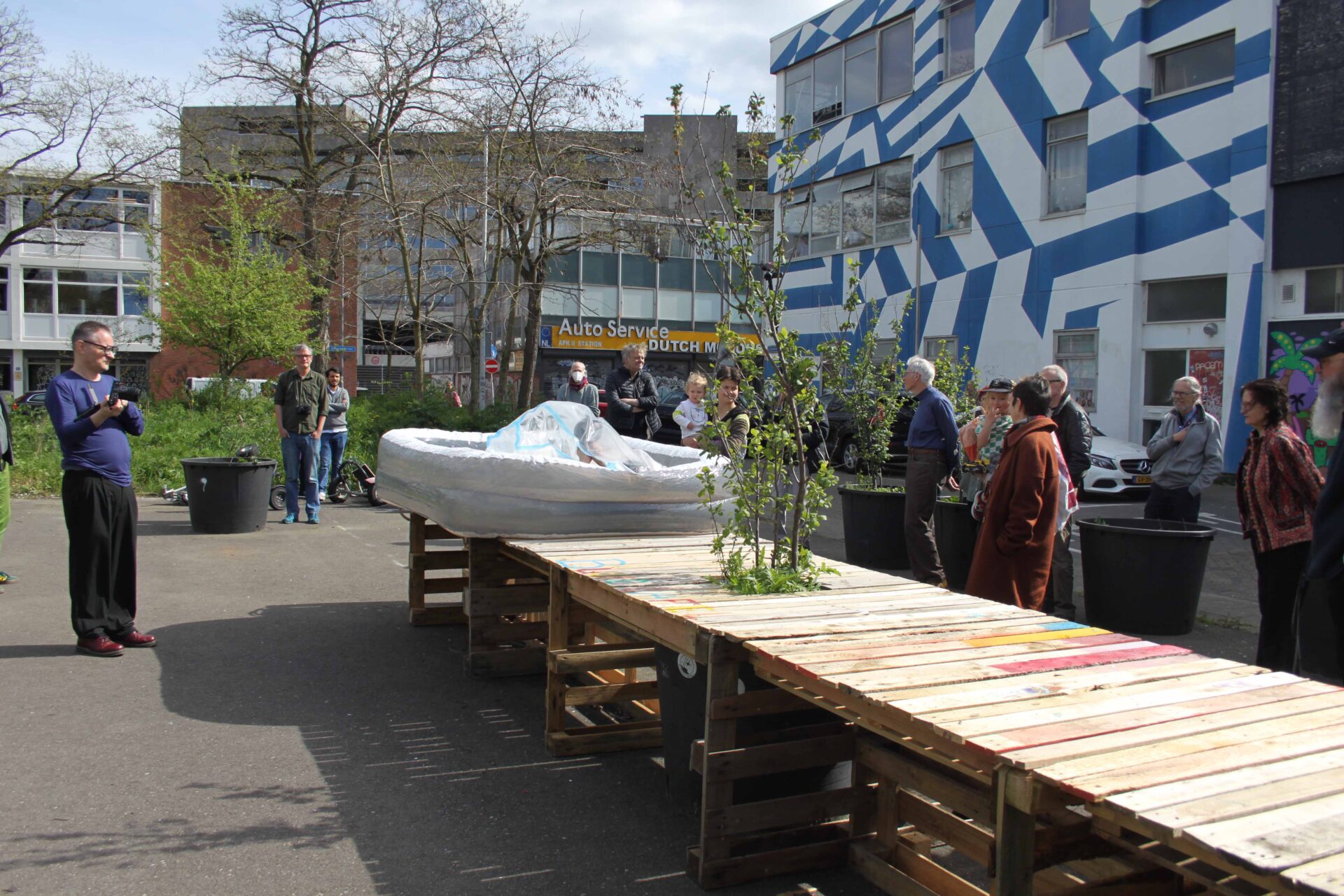
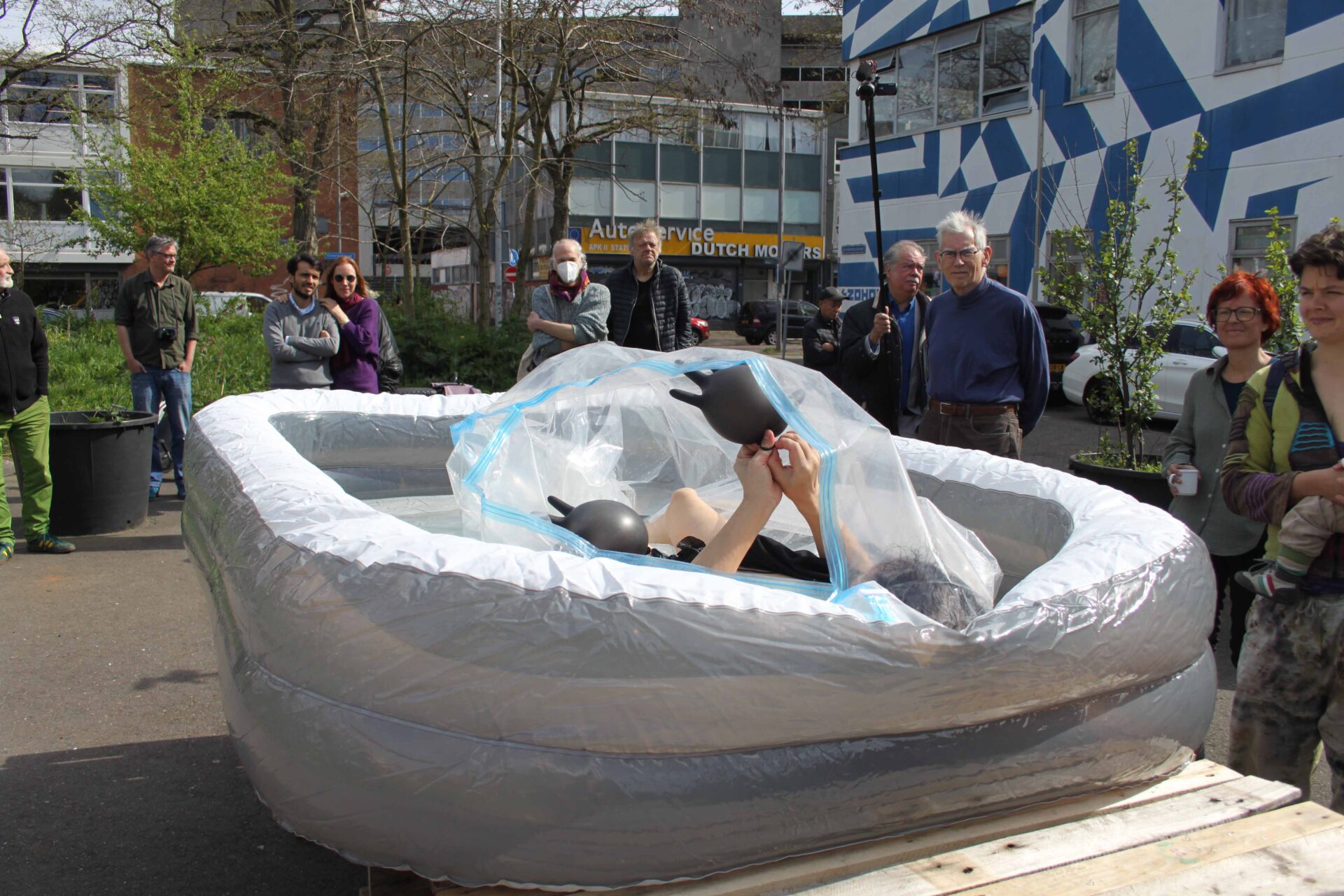
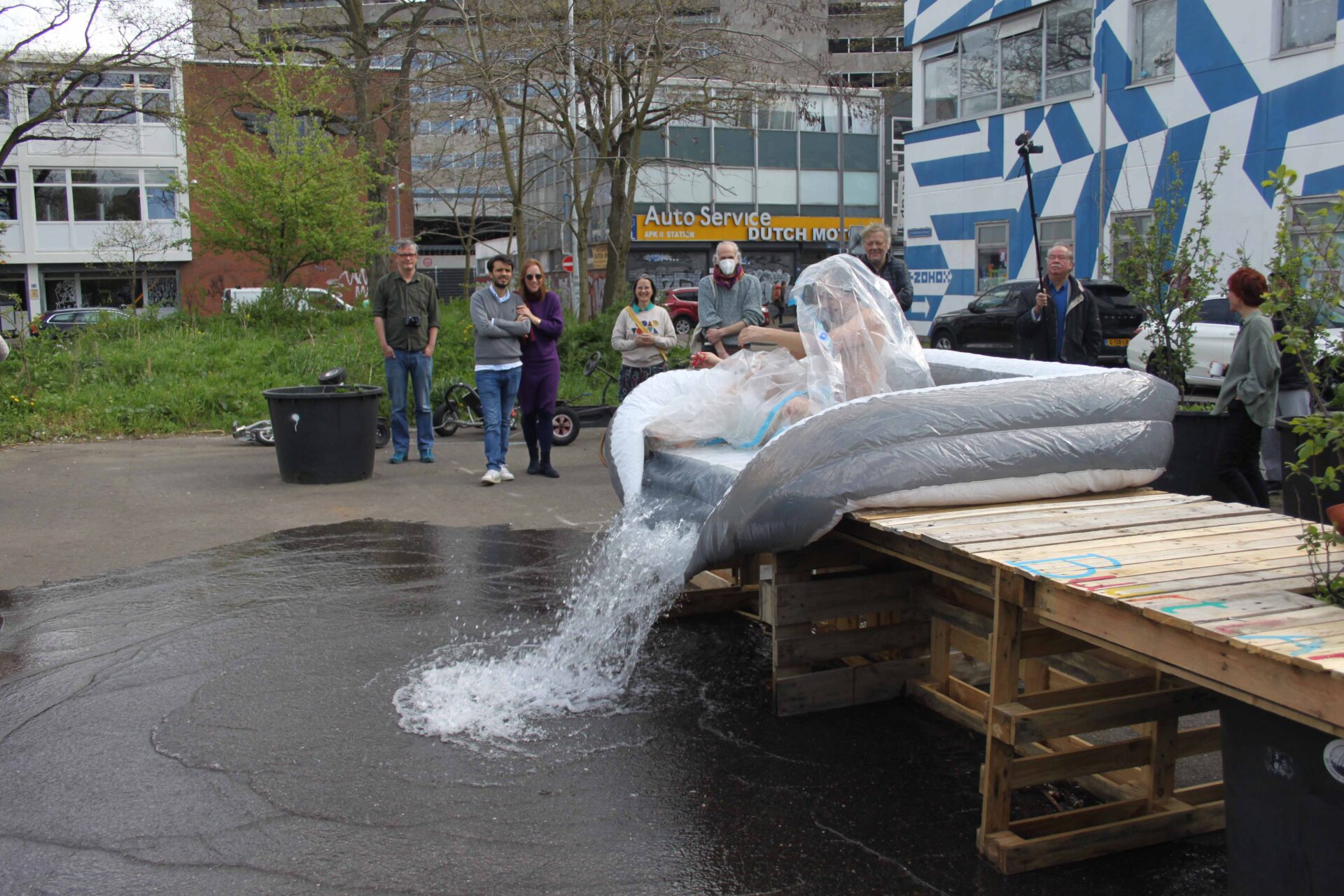
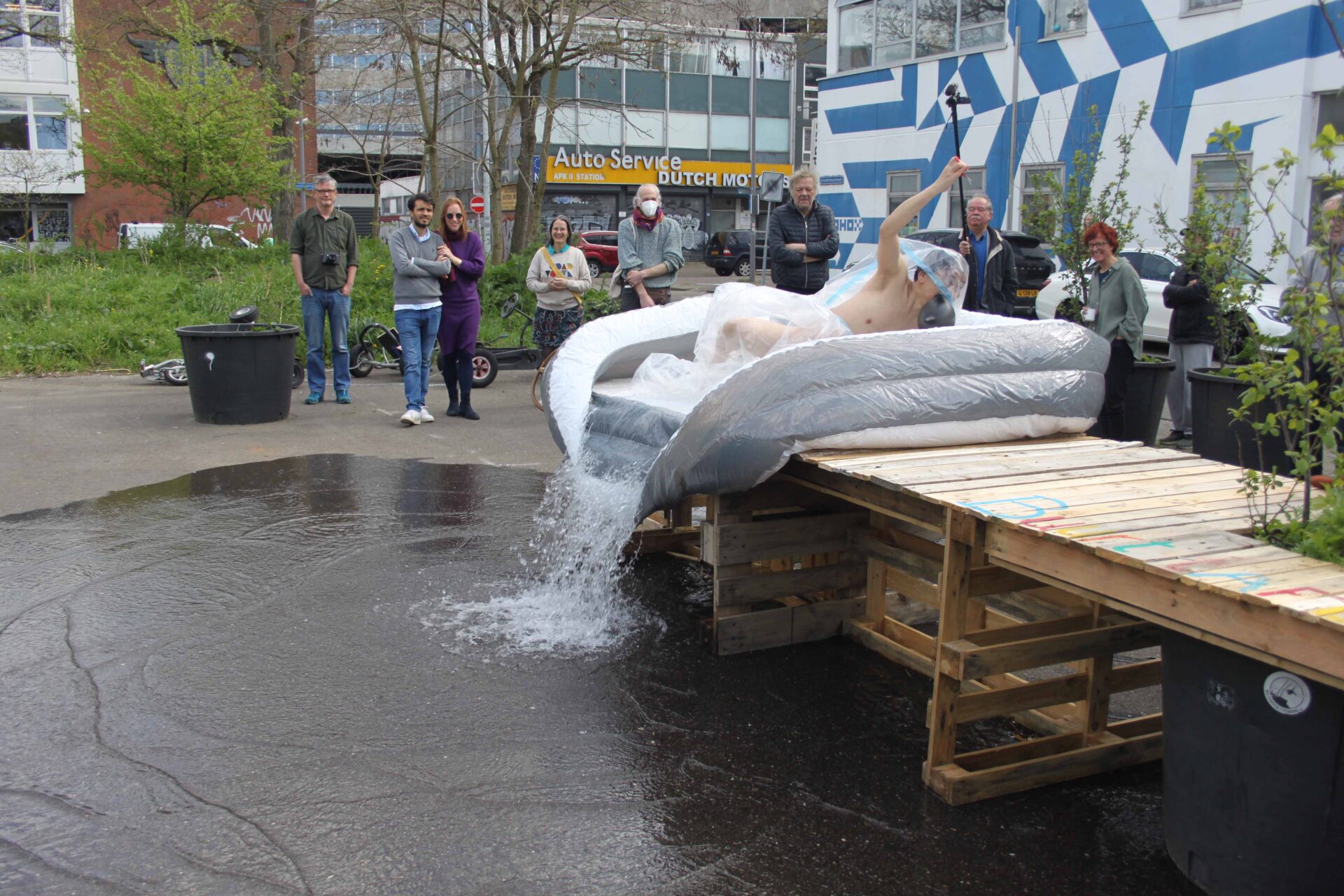
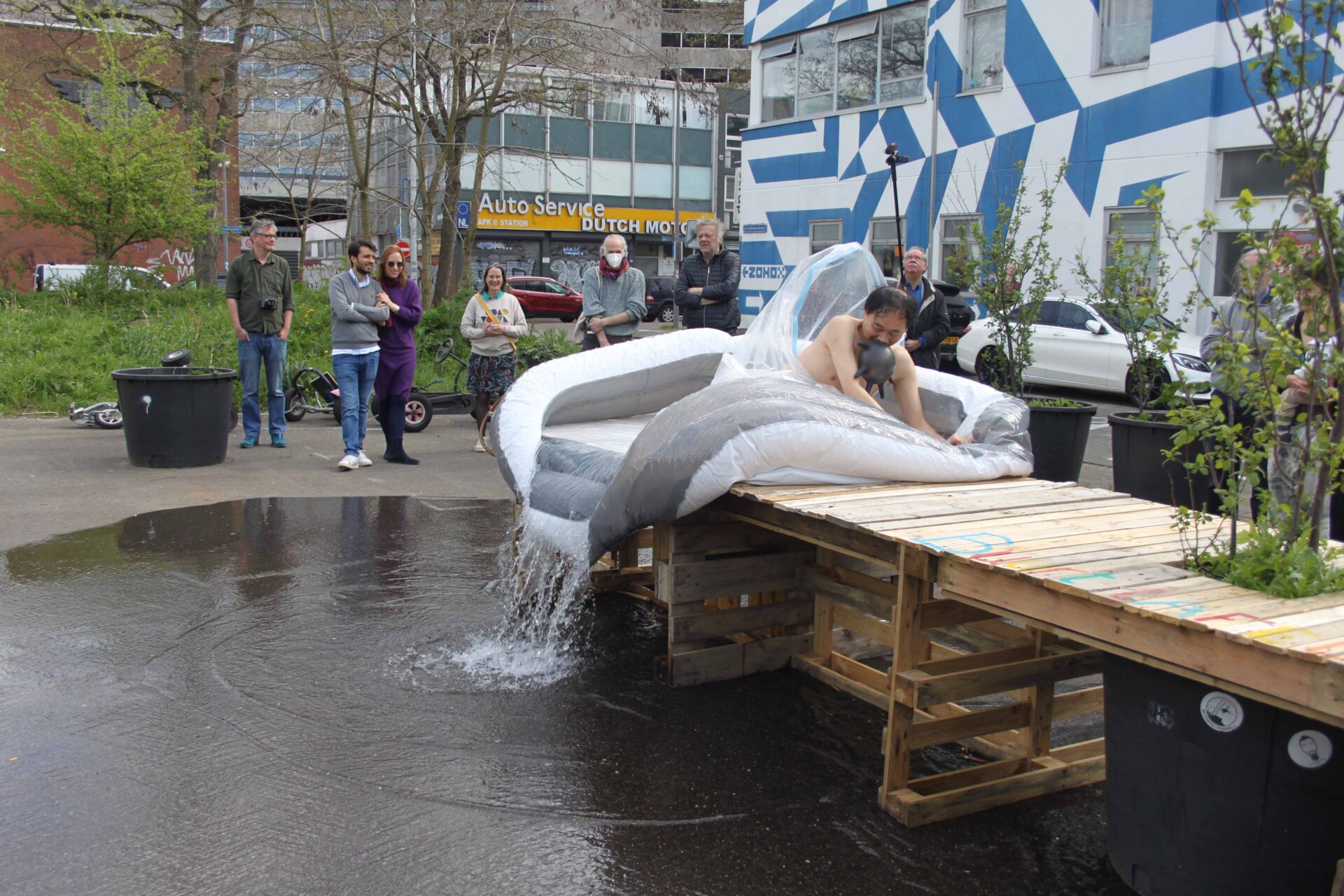
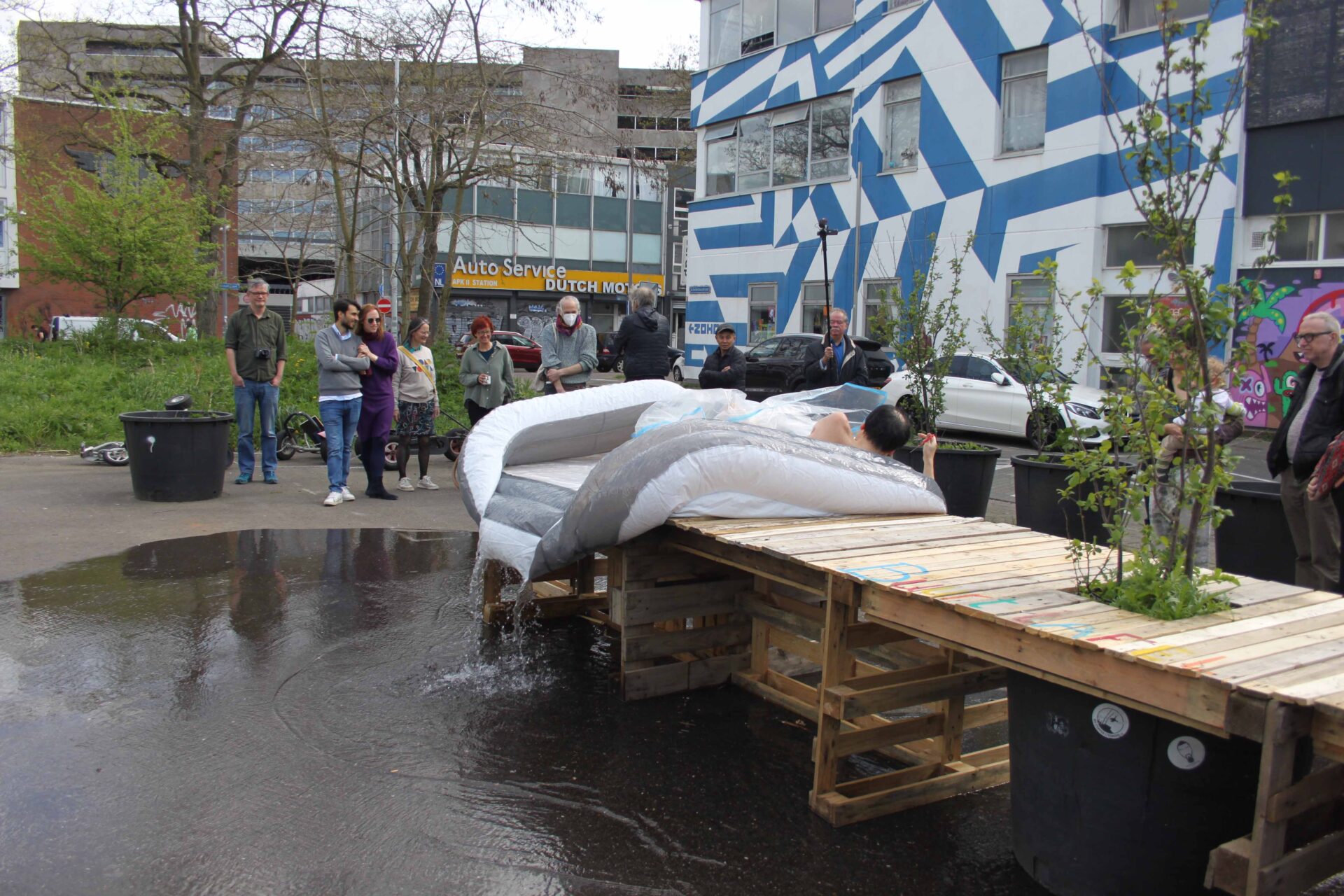
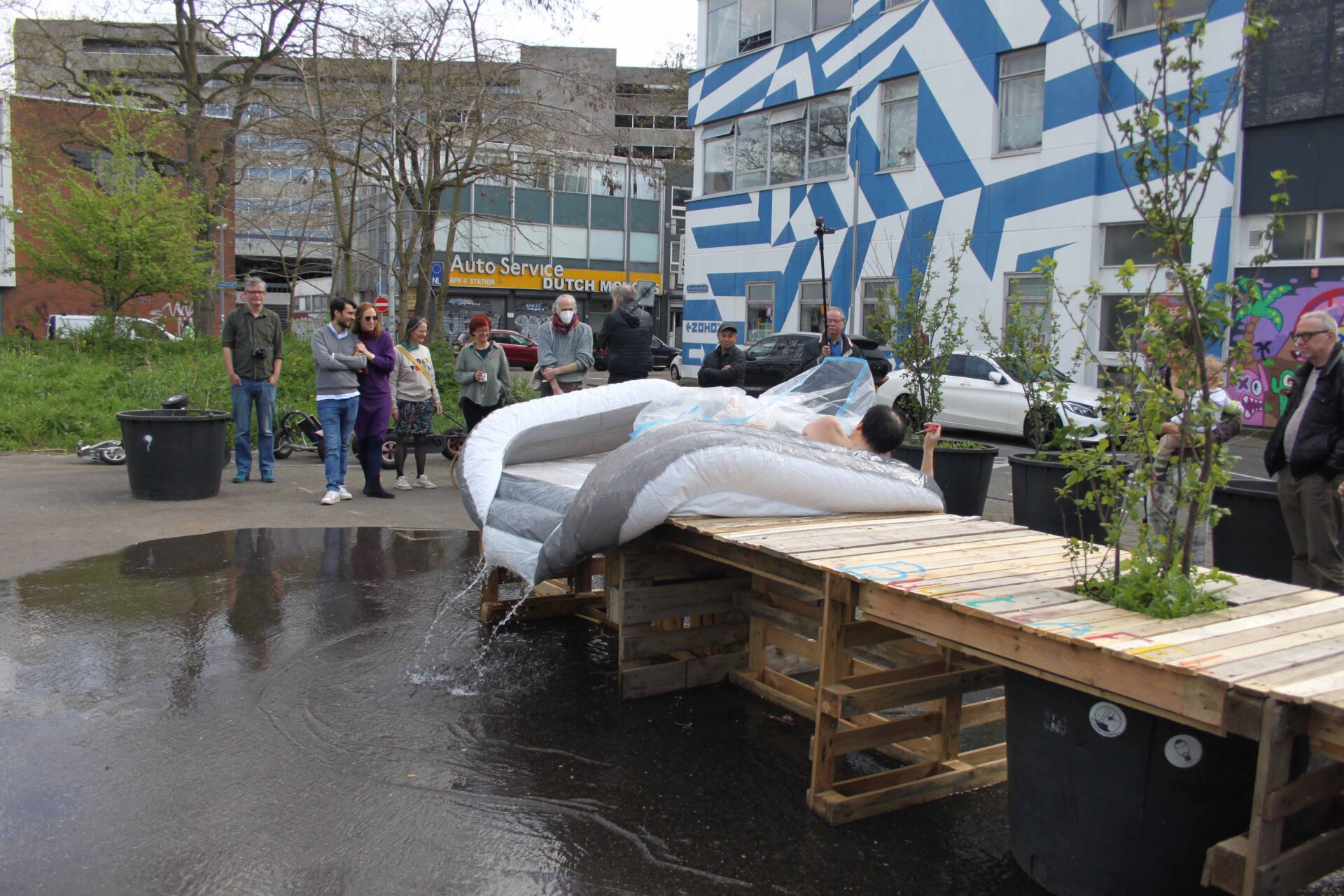
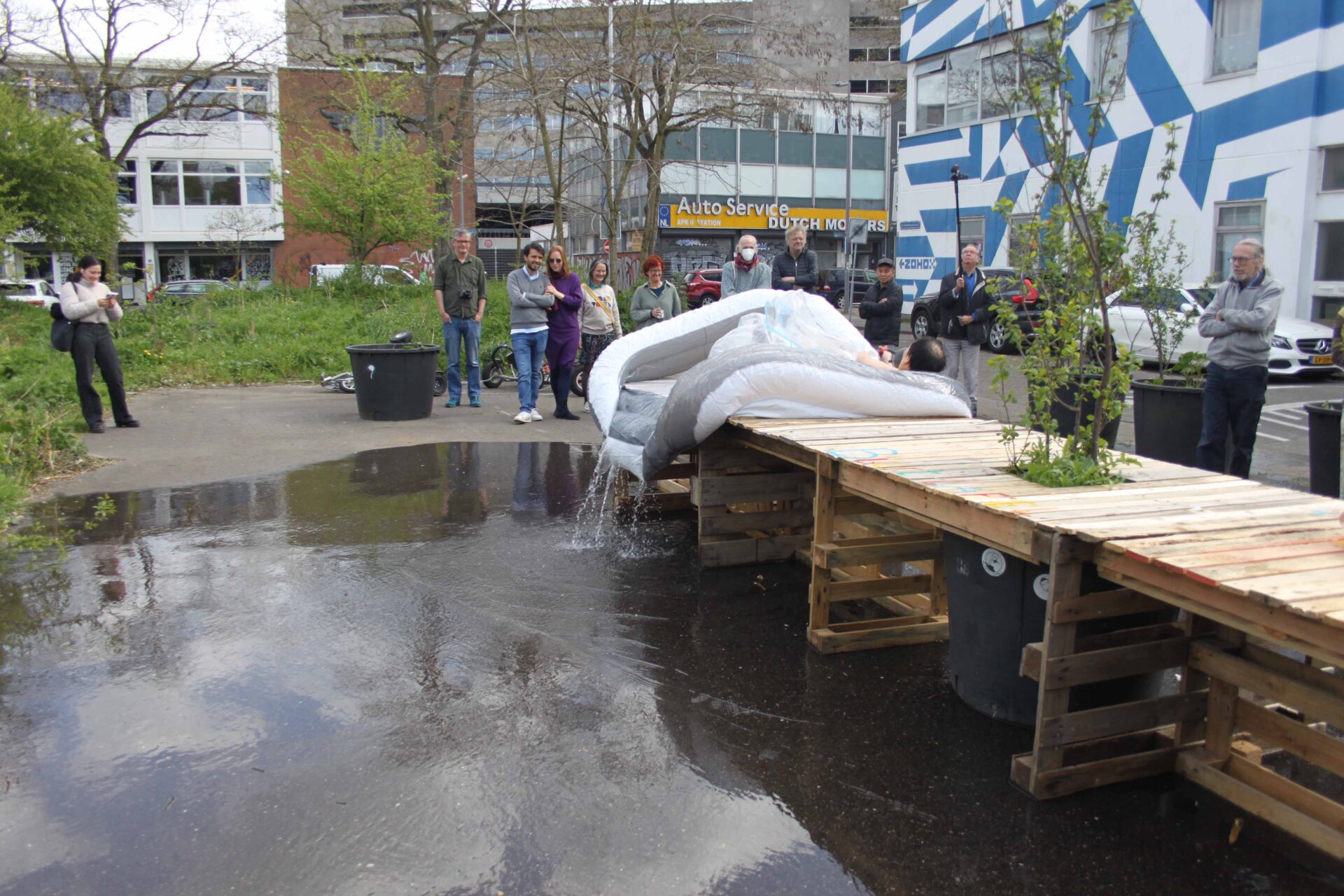
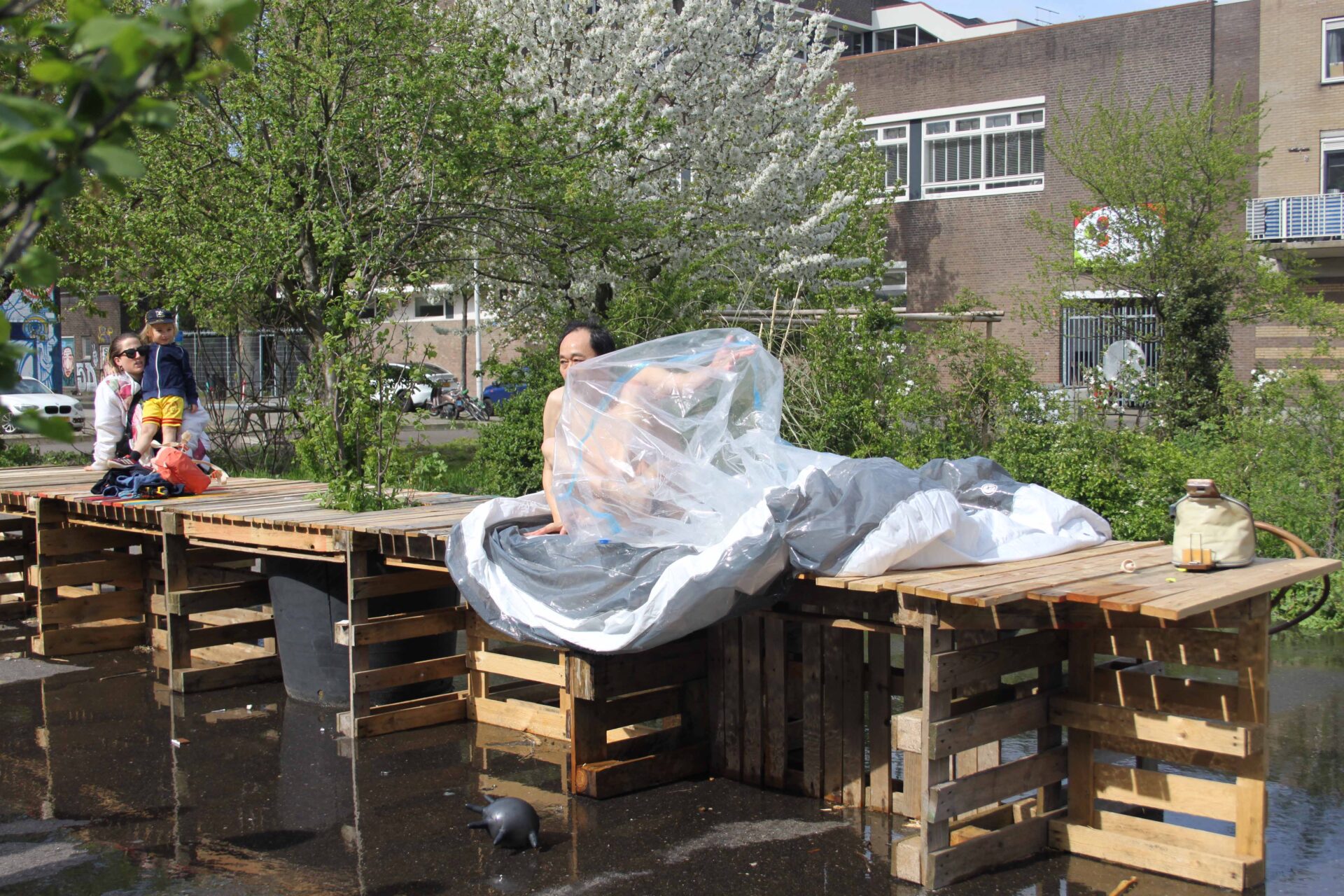
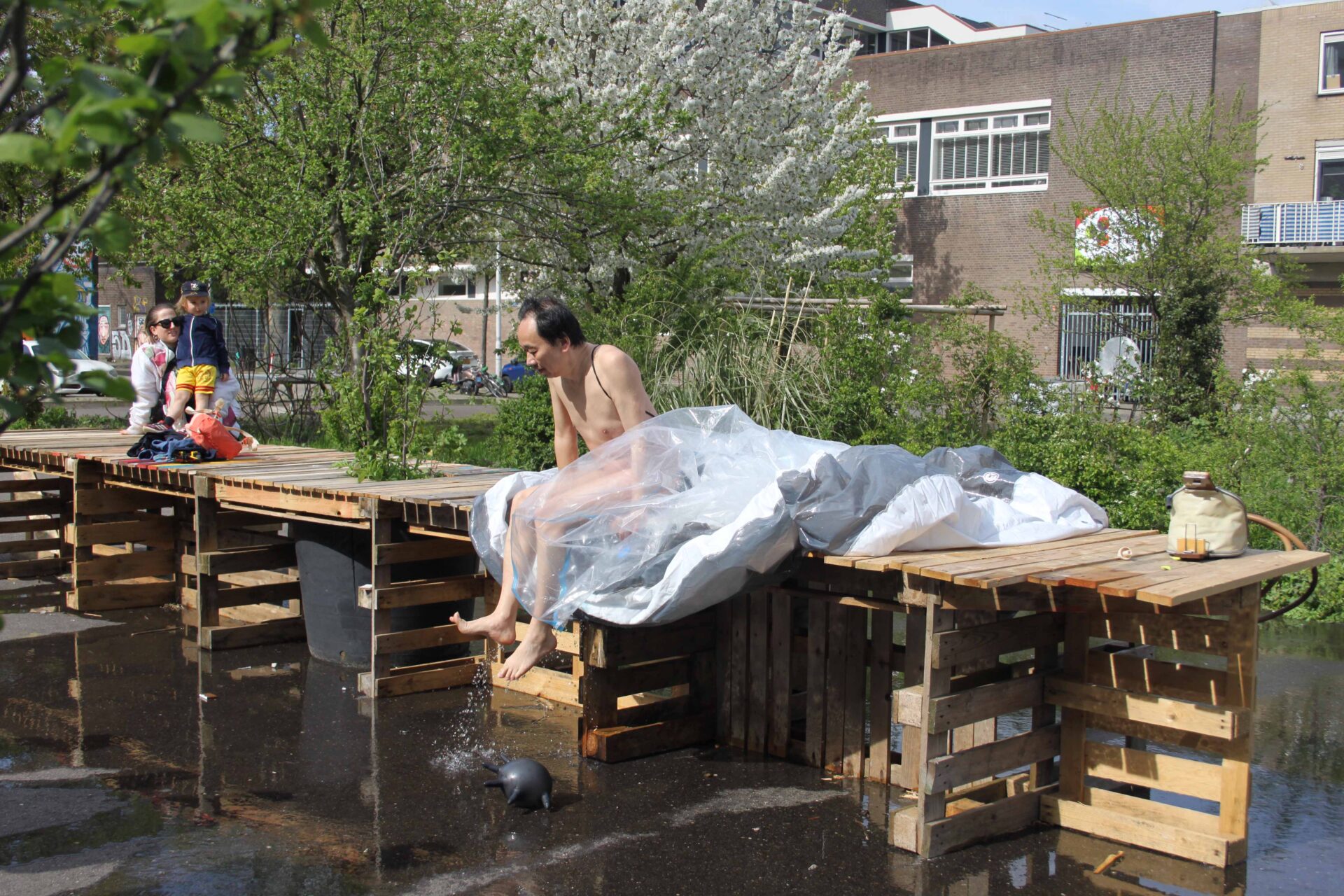
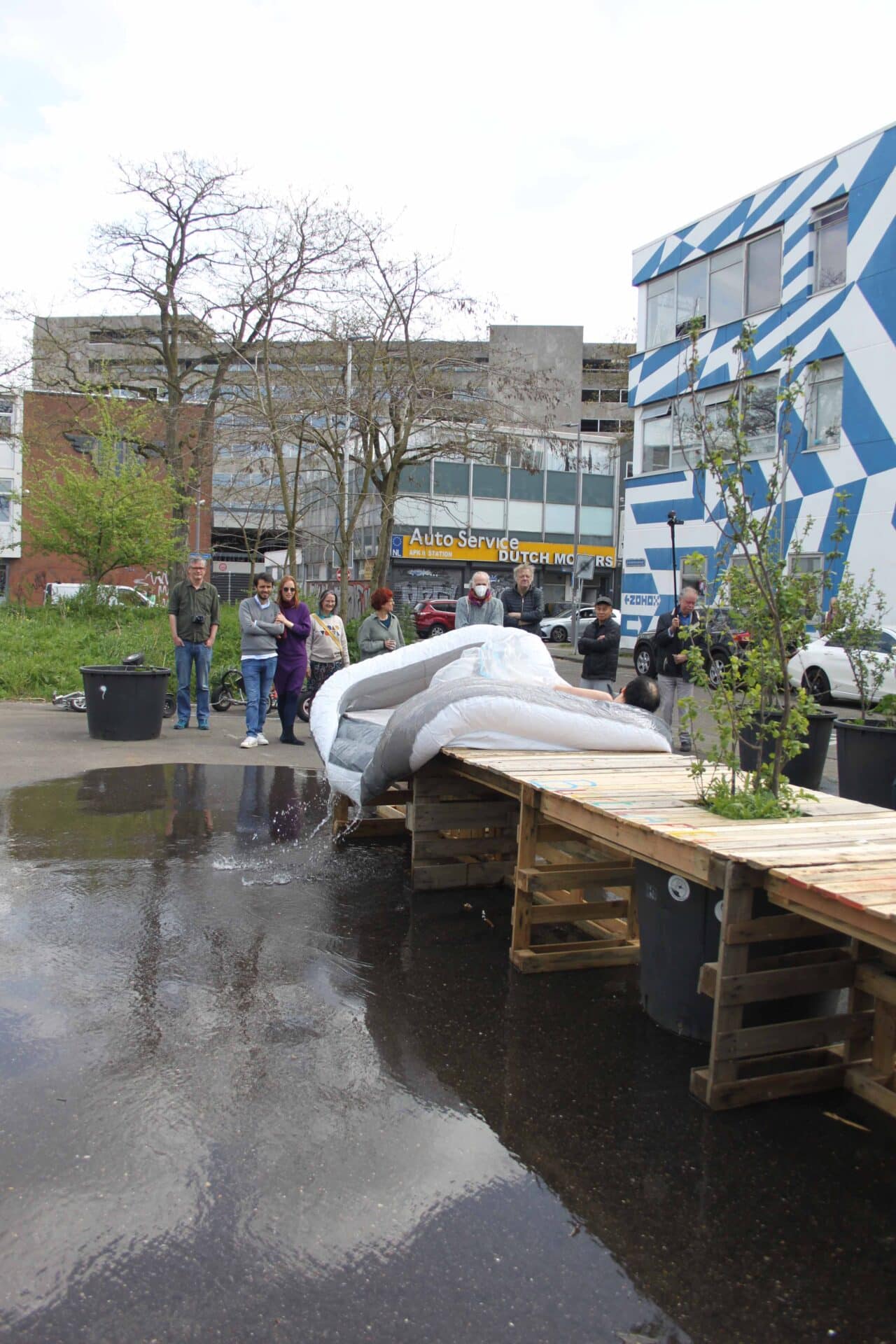
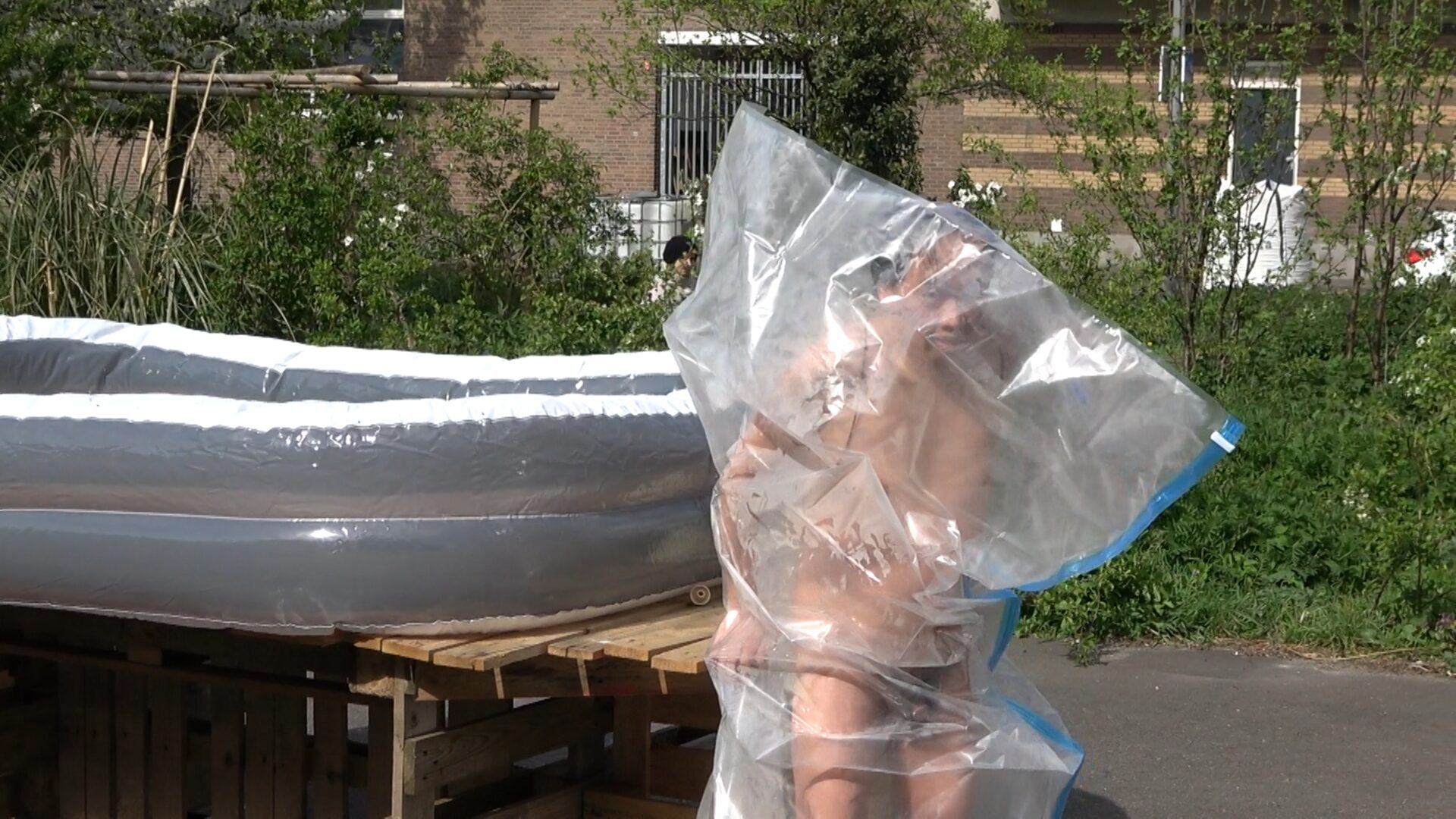
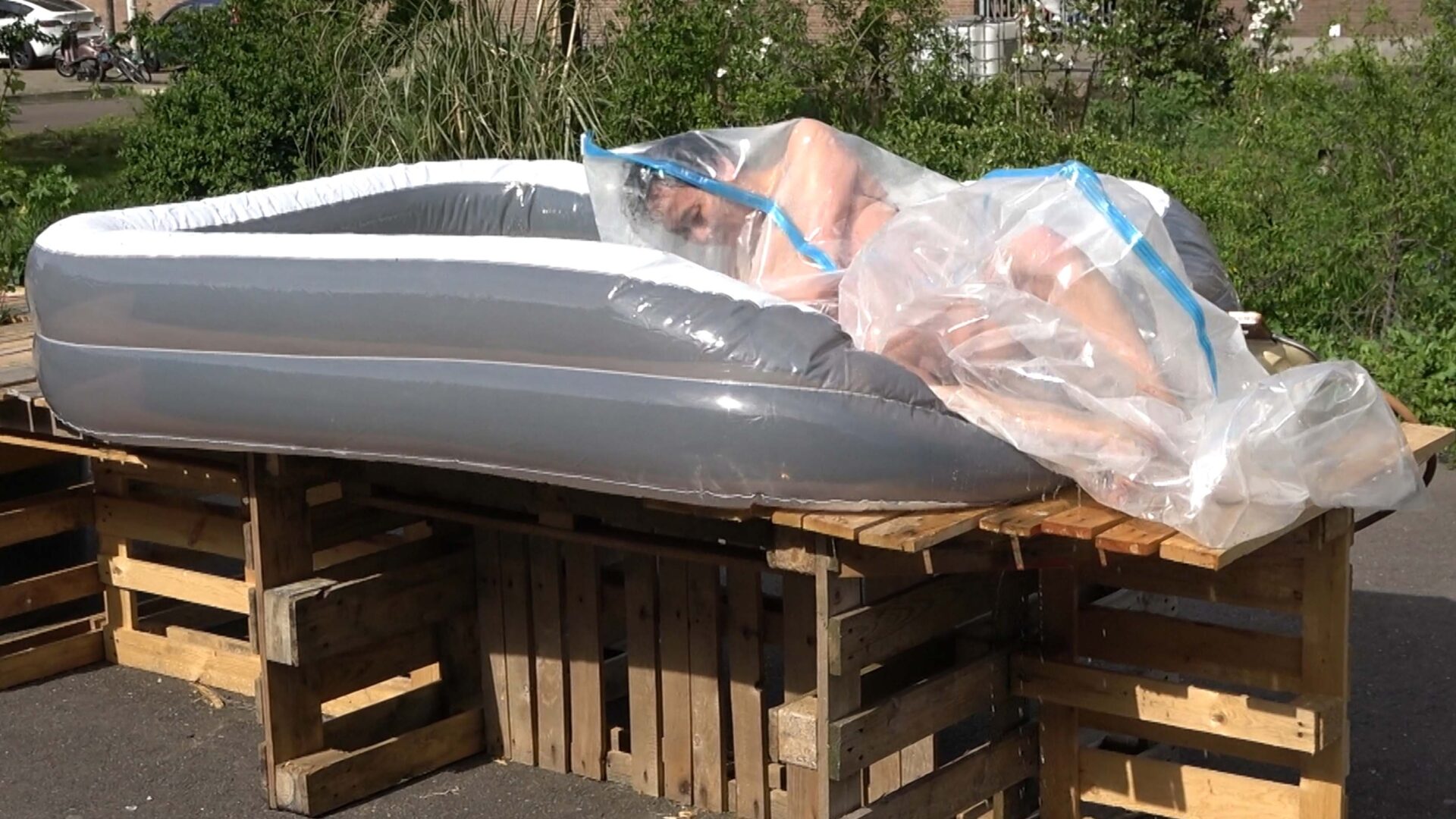
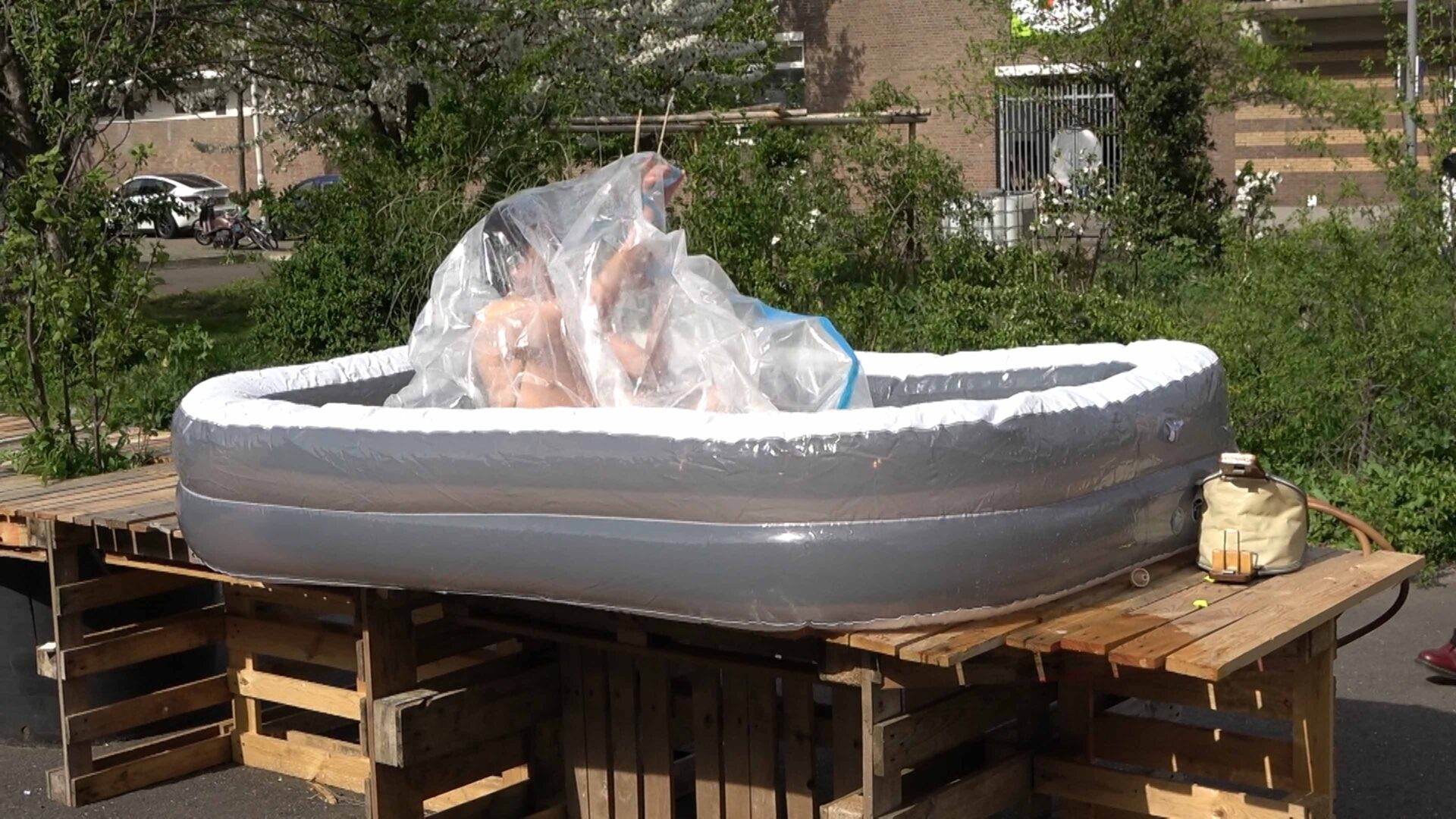
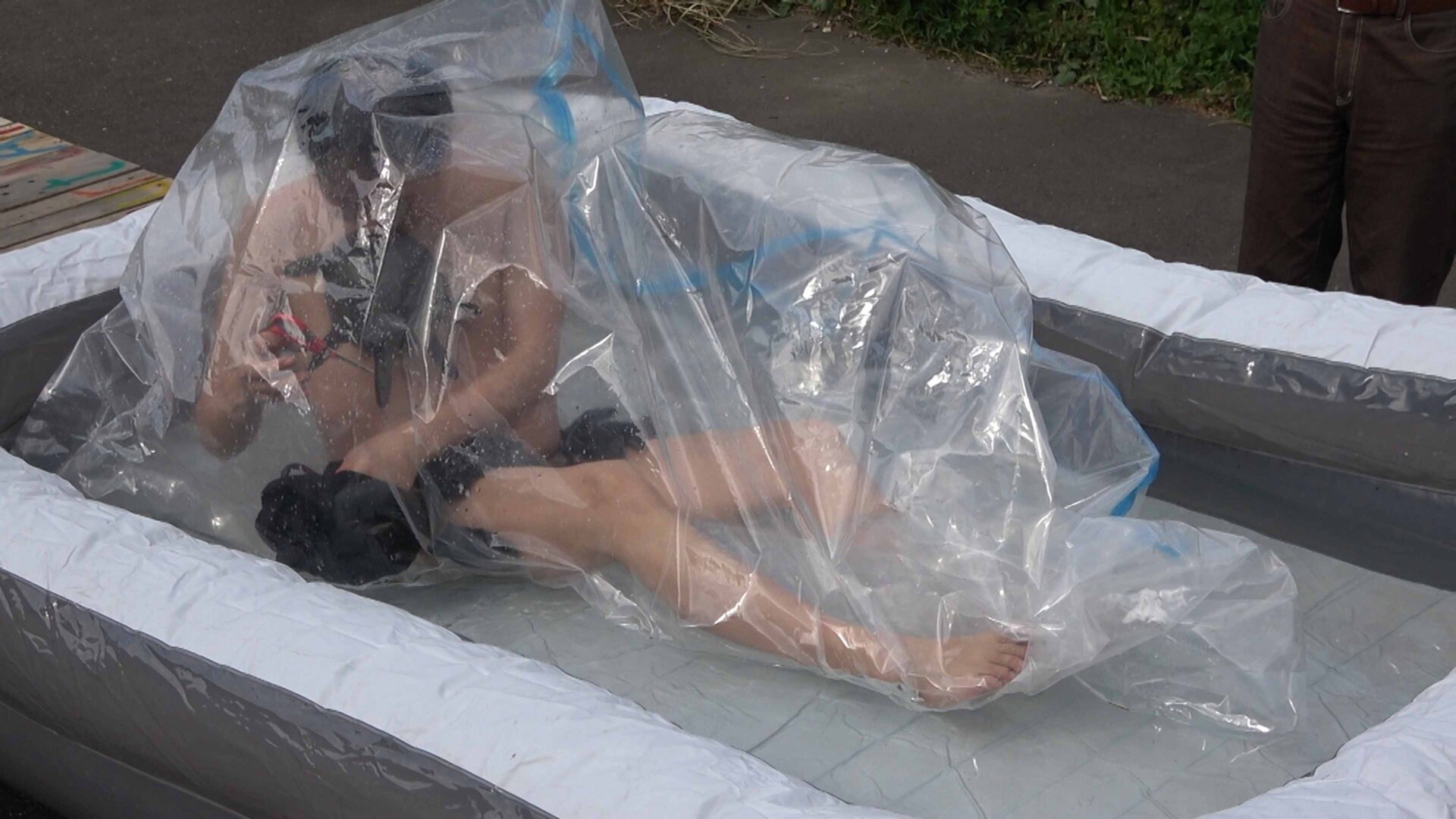
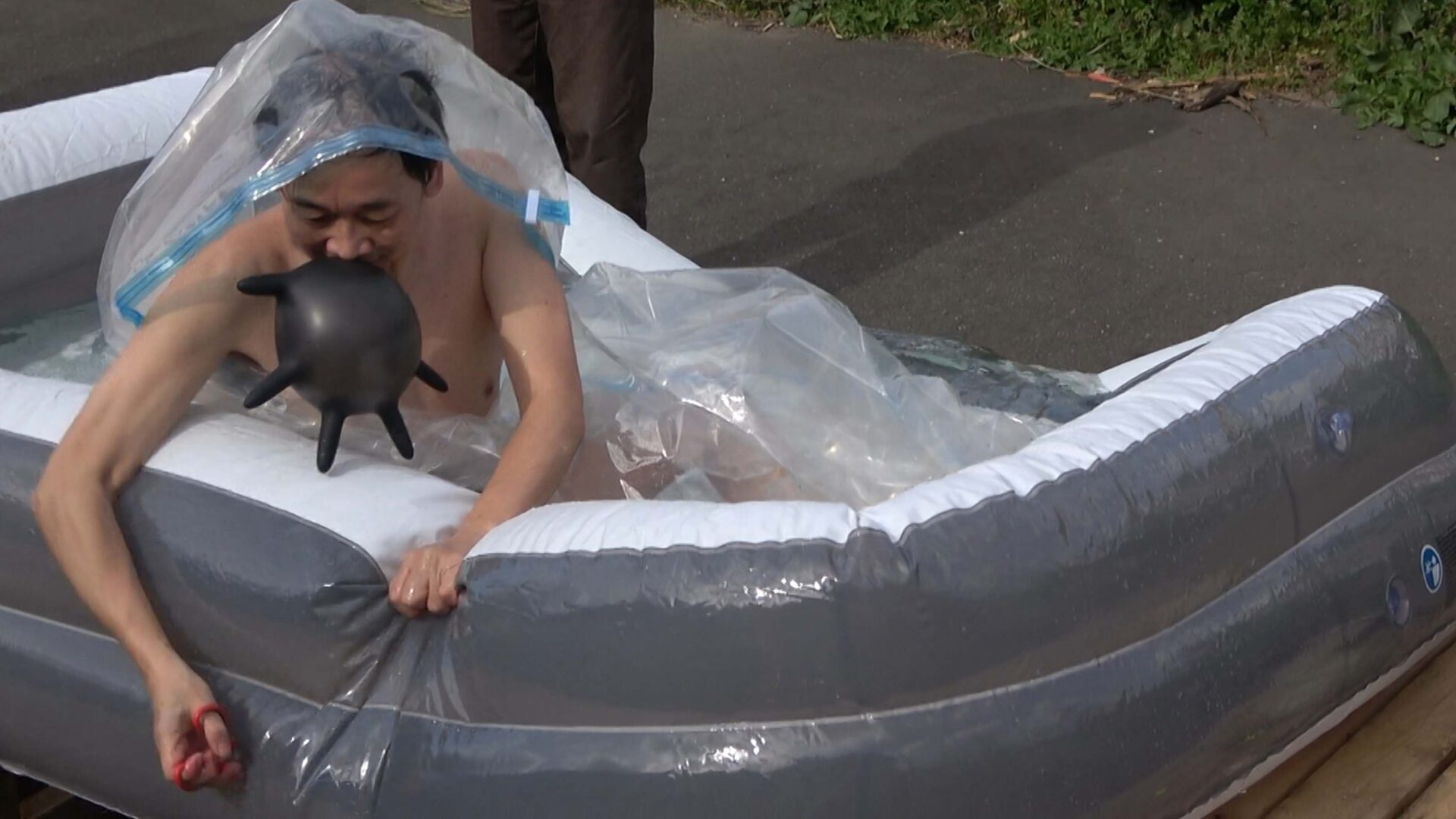
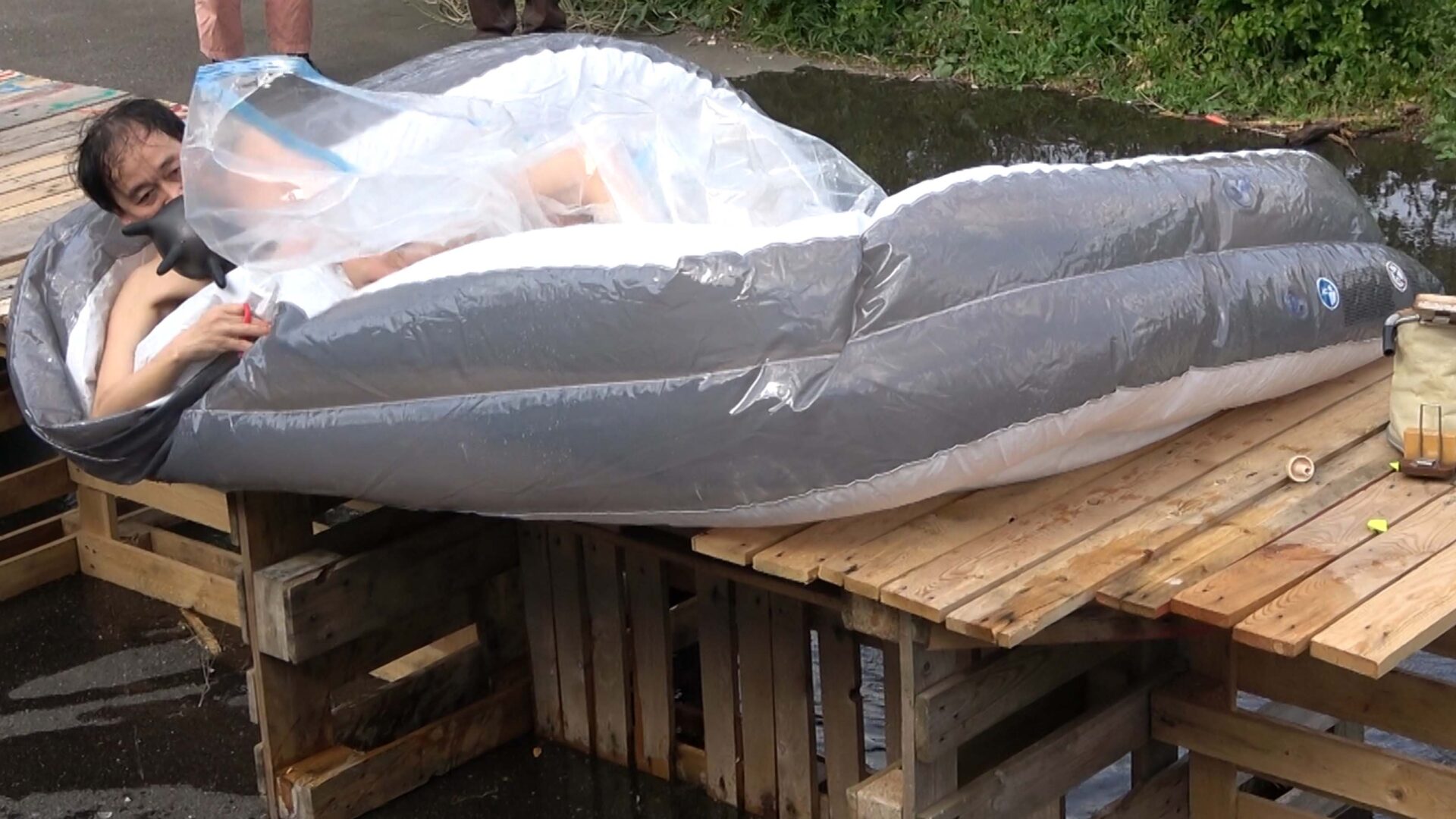
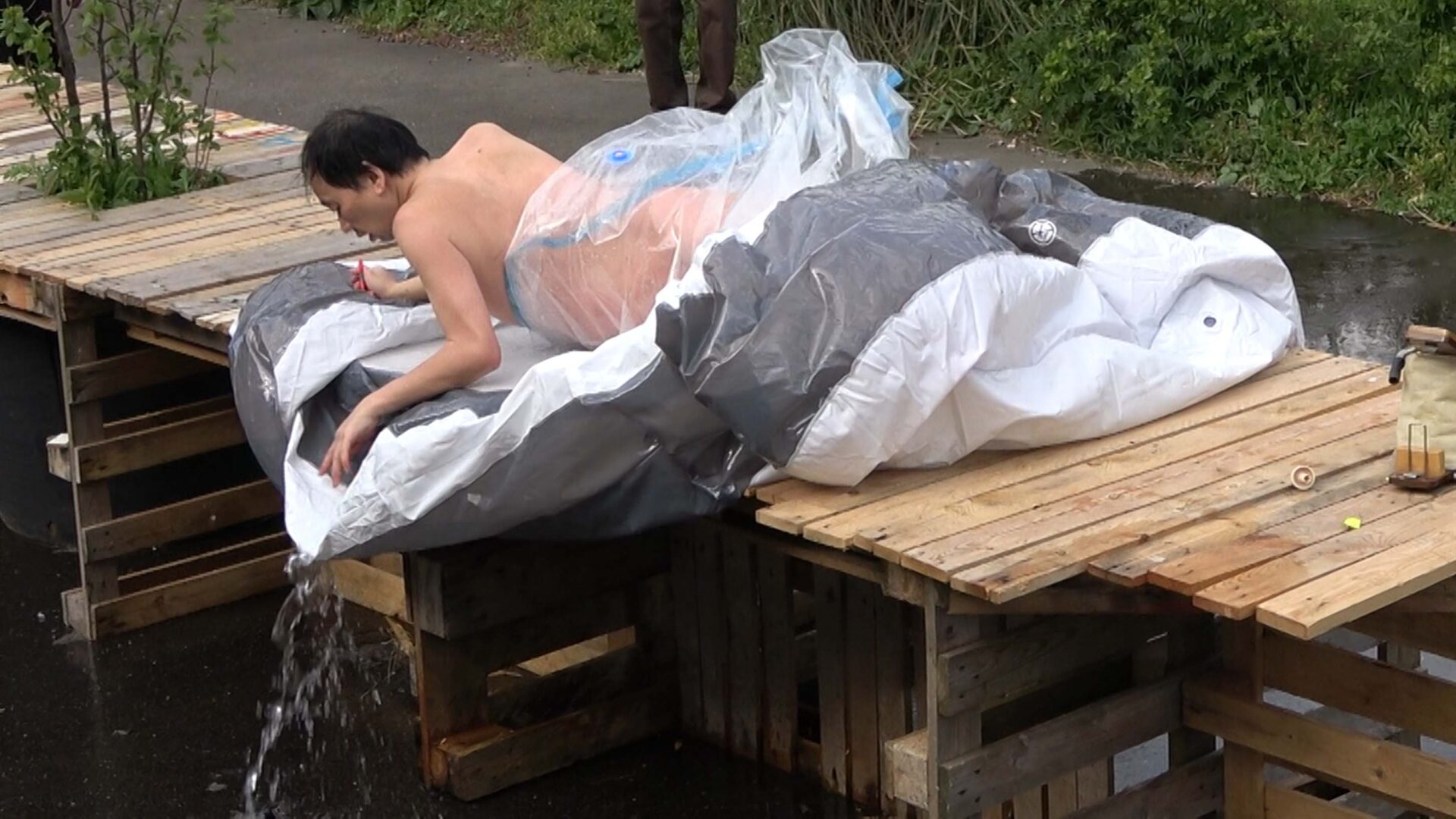
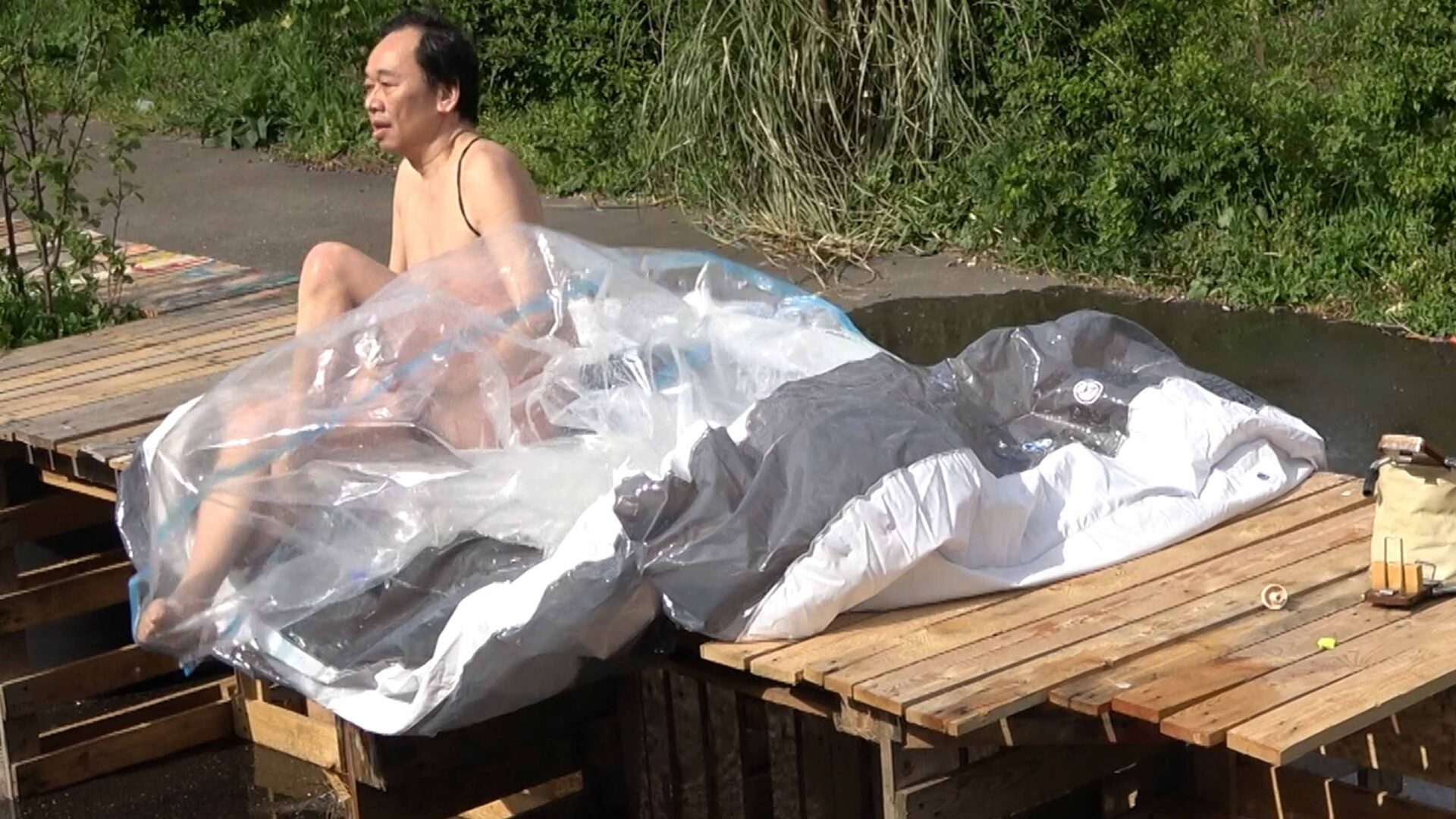
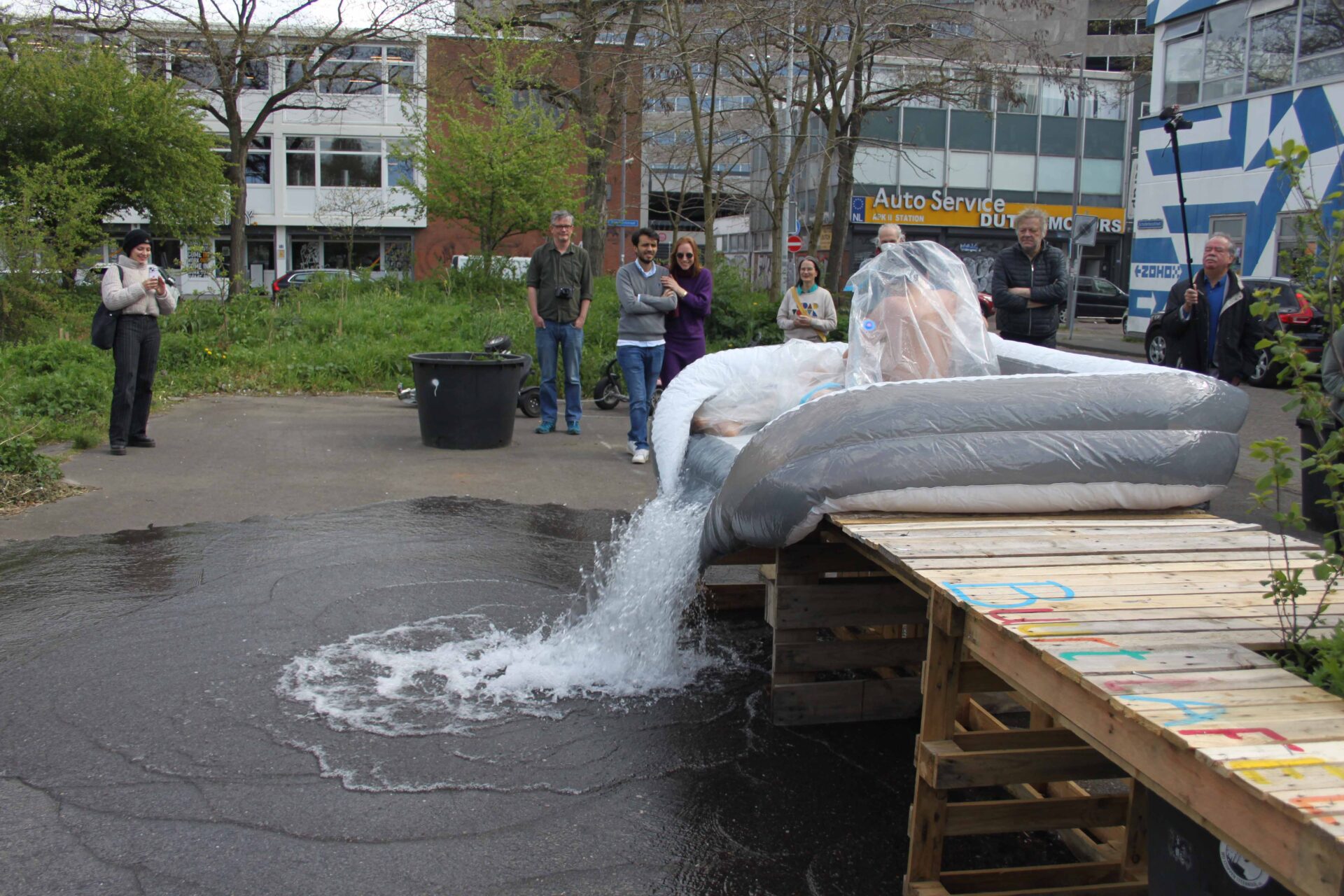
Outside stands a small, plastic pool placed on a table and filled with water. This setting carries quiet simplicity yet deep significance. Water, in spiritual and ritual traditions, symbolizes purification, rebirth, and clarity. The pool acts as both container and mirror of transformation.
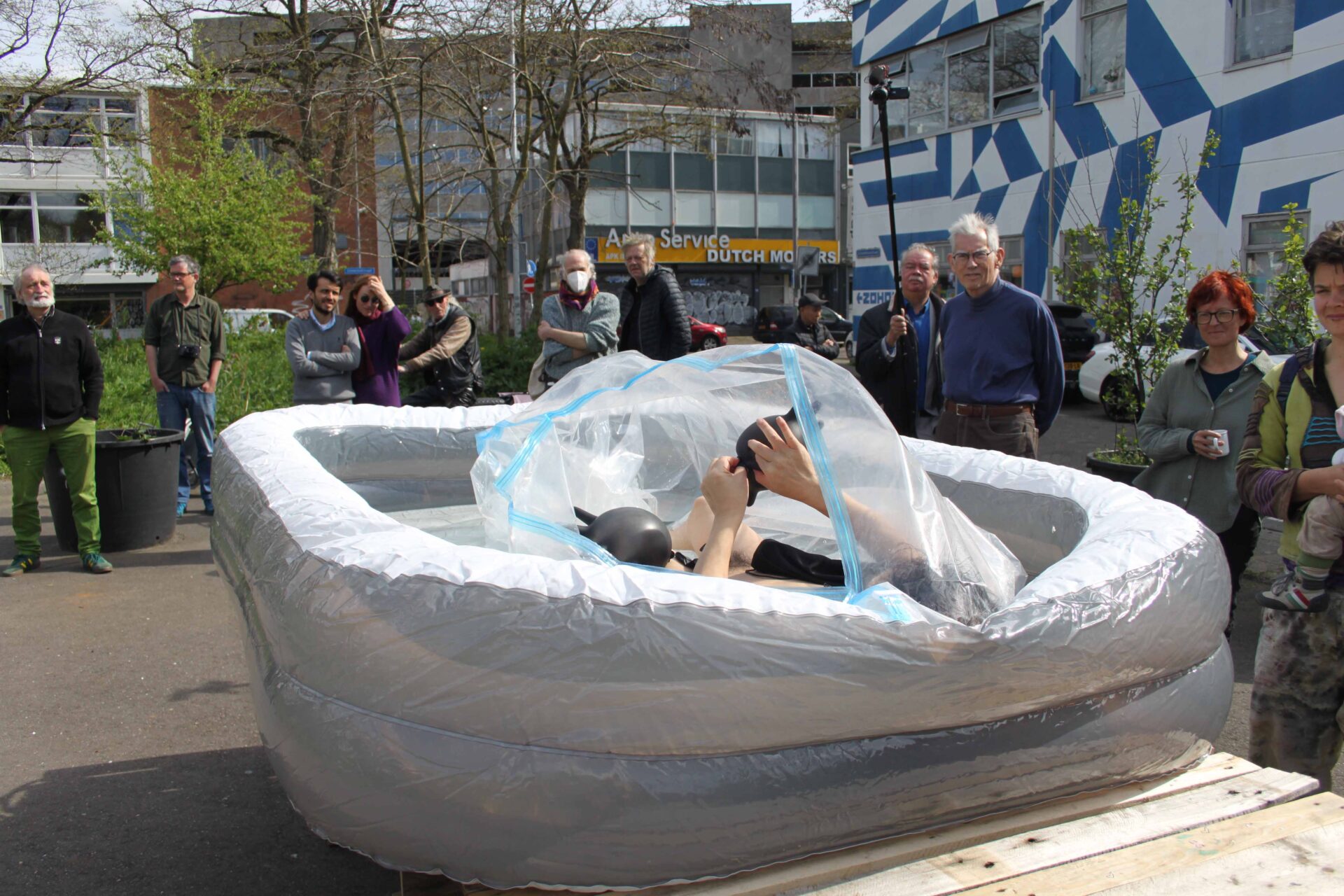
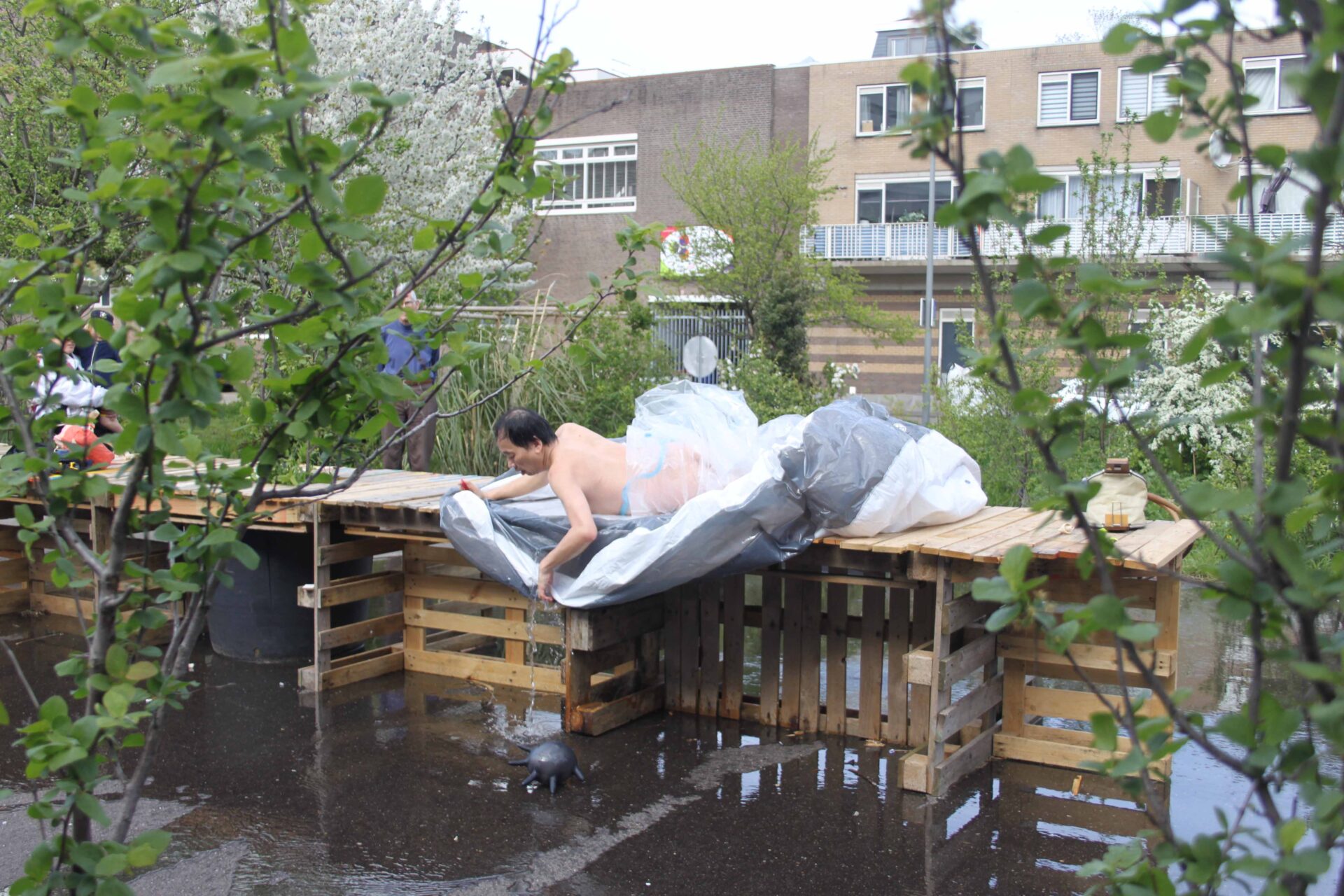
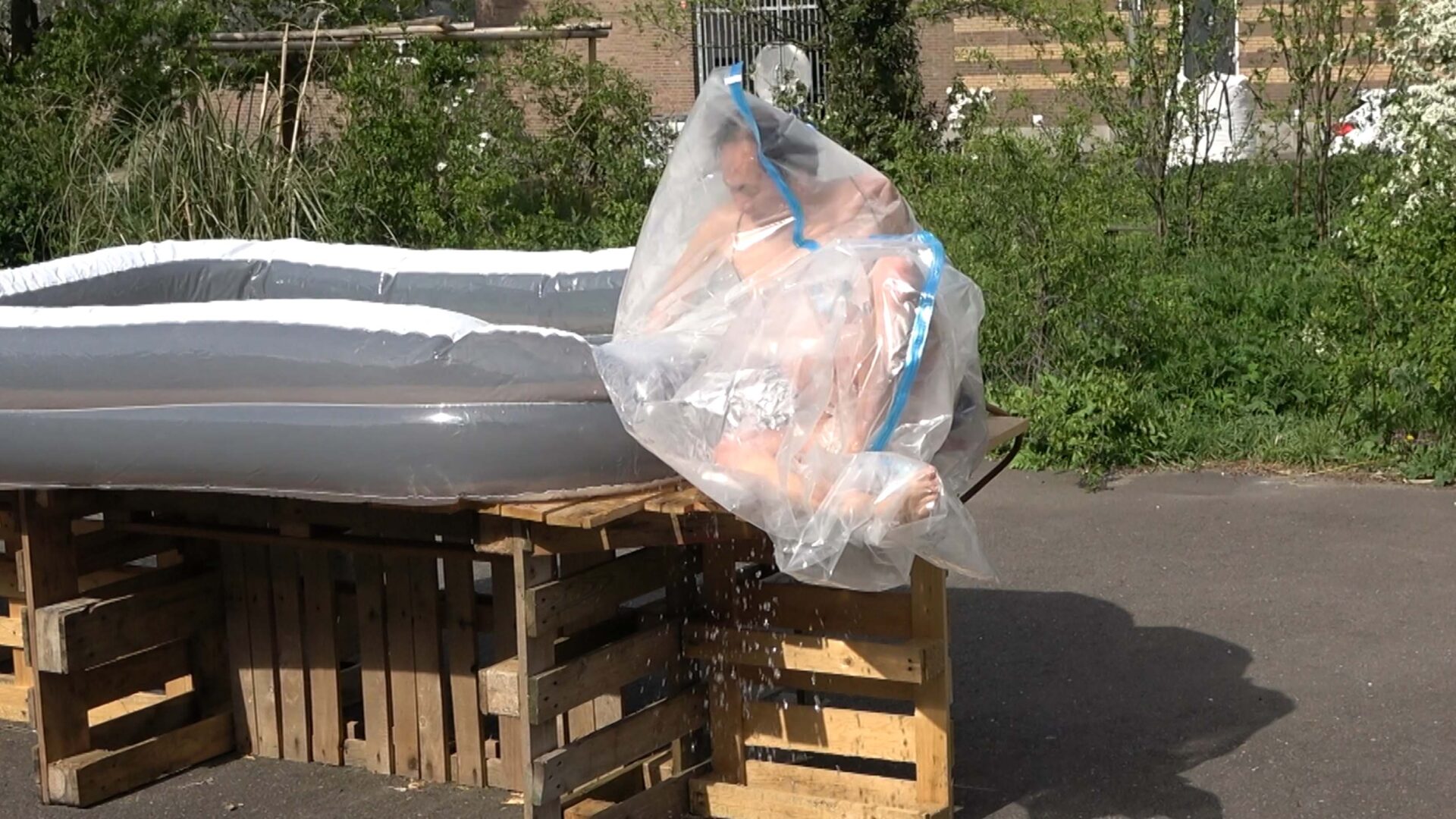
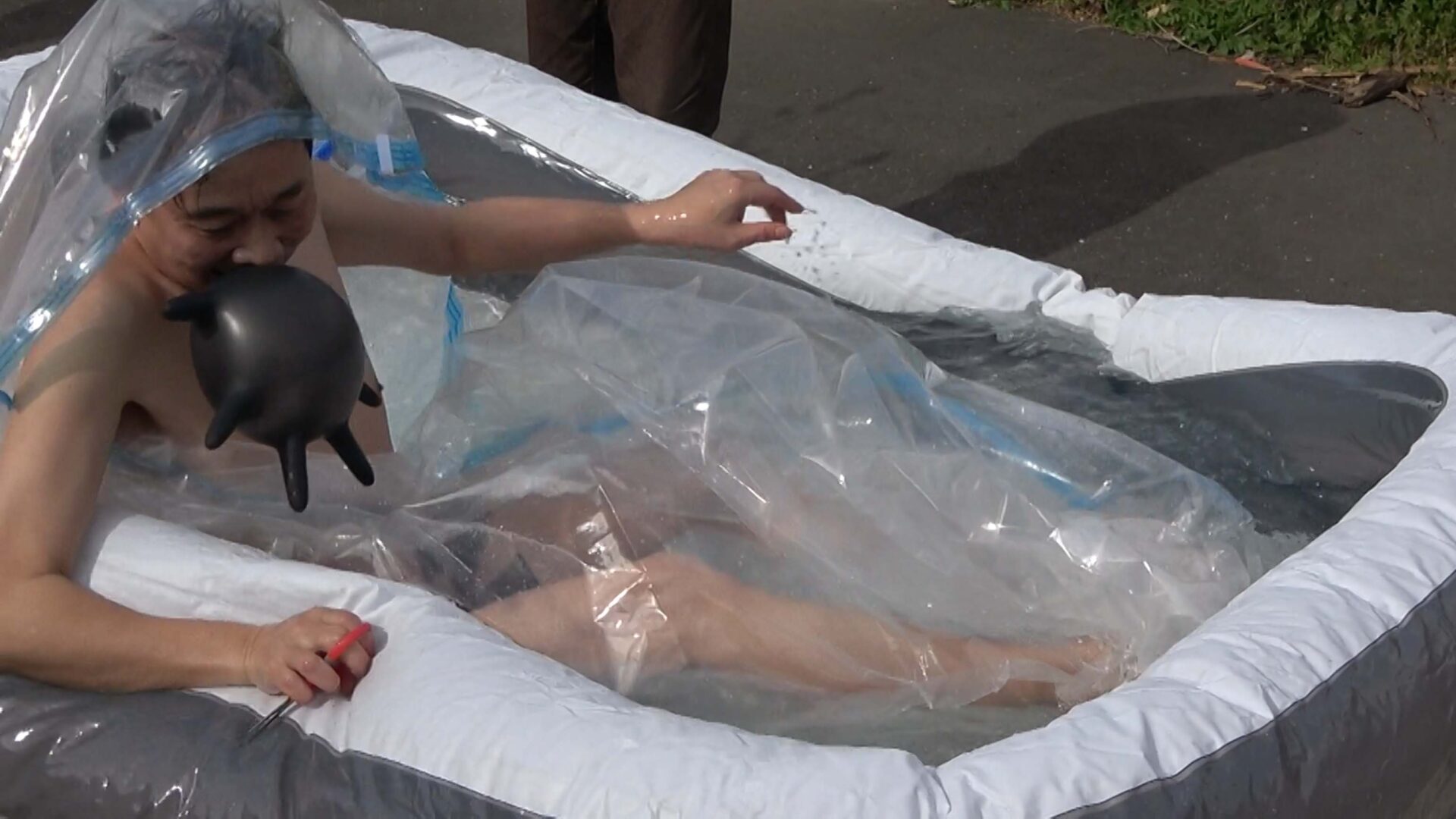
Still inside the plastic bag, Mukarno climbs into the water. The image fuses containment, fluidity, and vulnerability. He moves inside the water as if returning to a prenatal condition. Every action feels suspended between breath and silence. The scene builds an atmosphere of collective meditation.
The Symbolic Birth
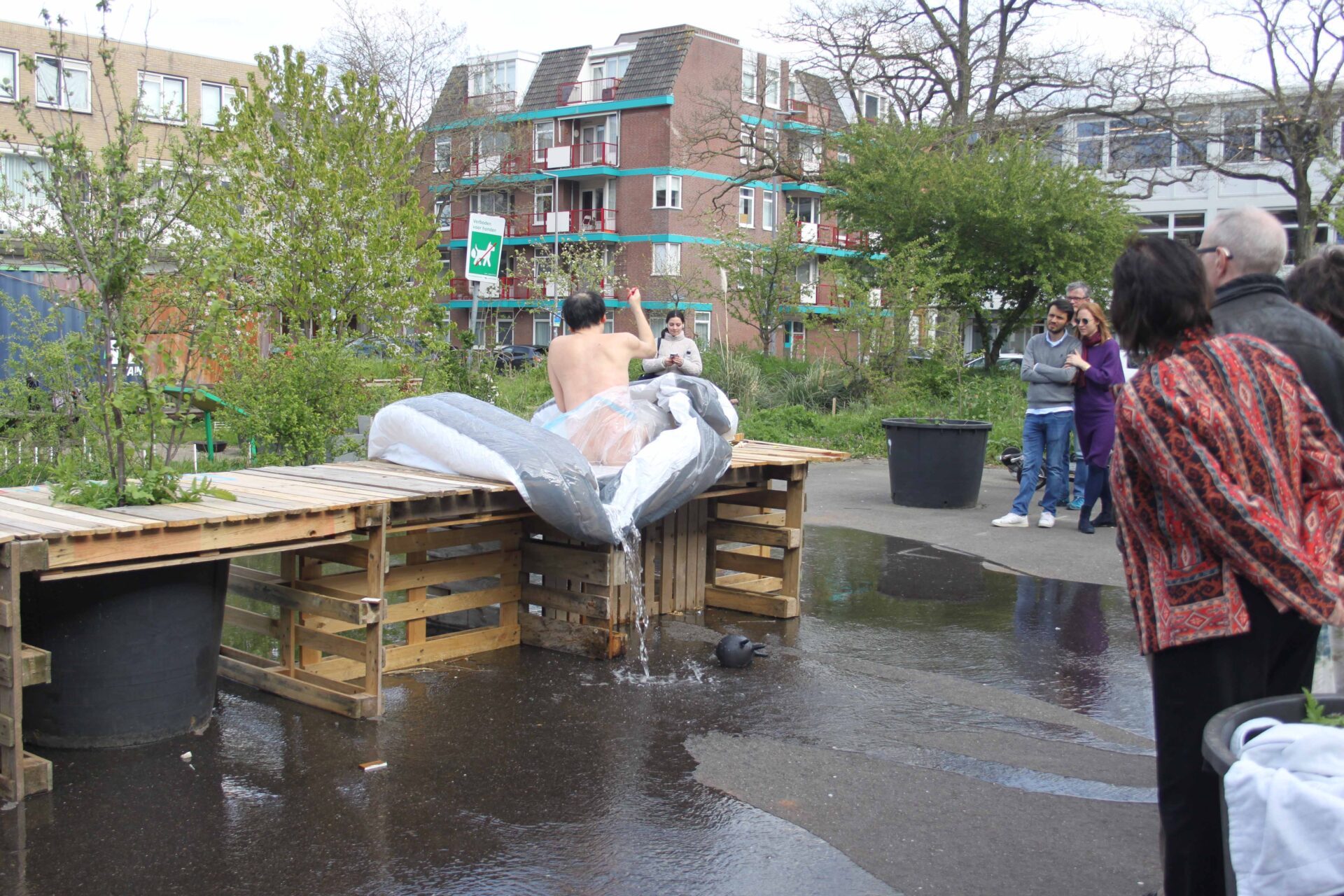
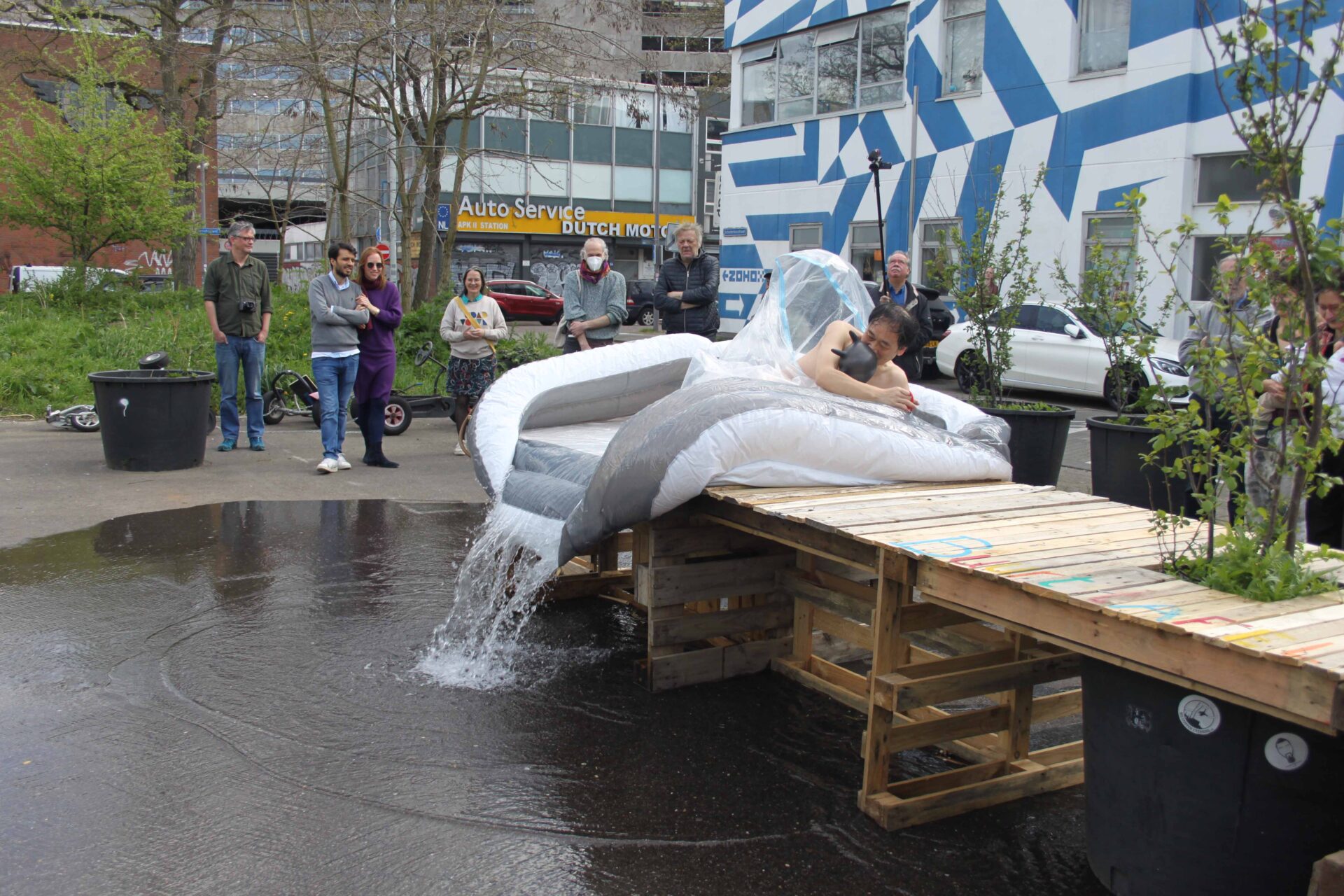
Inside the bag, Mukarno inflates two black rubber gloves. As they expand, they form the shape of two reaching hands. These hands seem to push outward, suggesting an unseen force that wants to bring him back into life. The moment carries tension between confinement and emergence: the desire to be born anew.
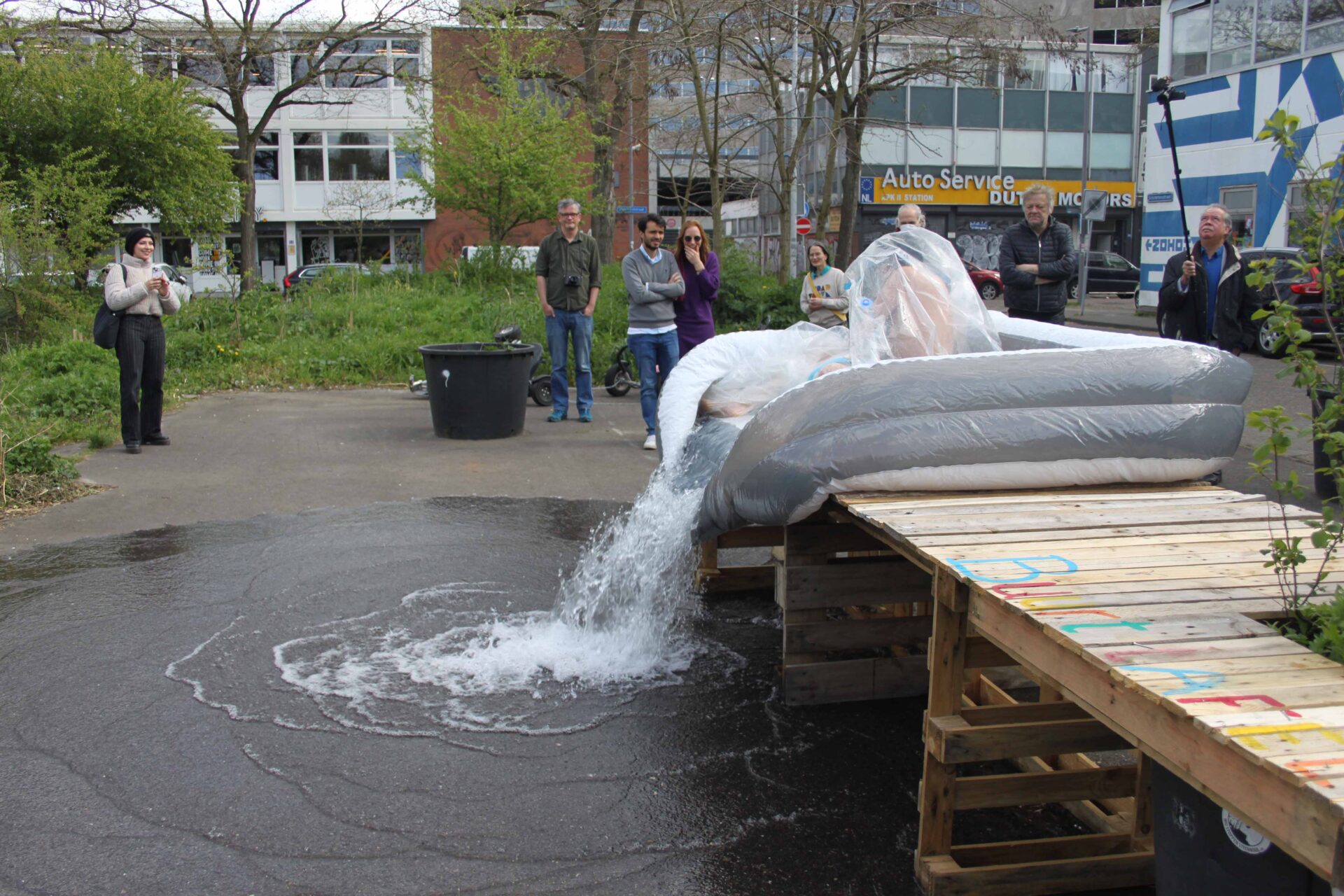
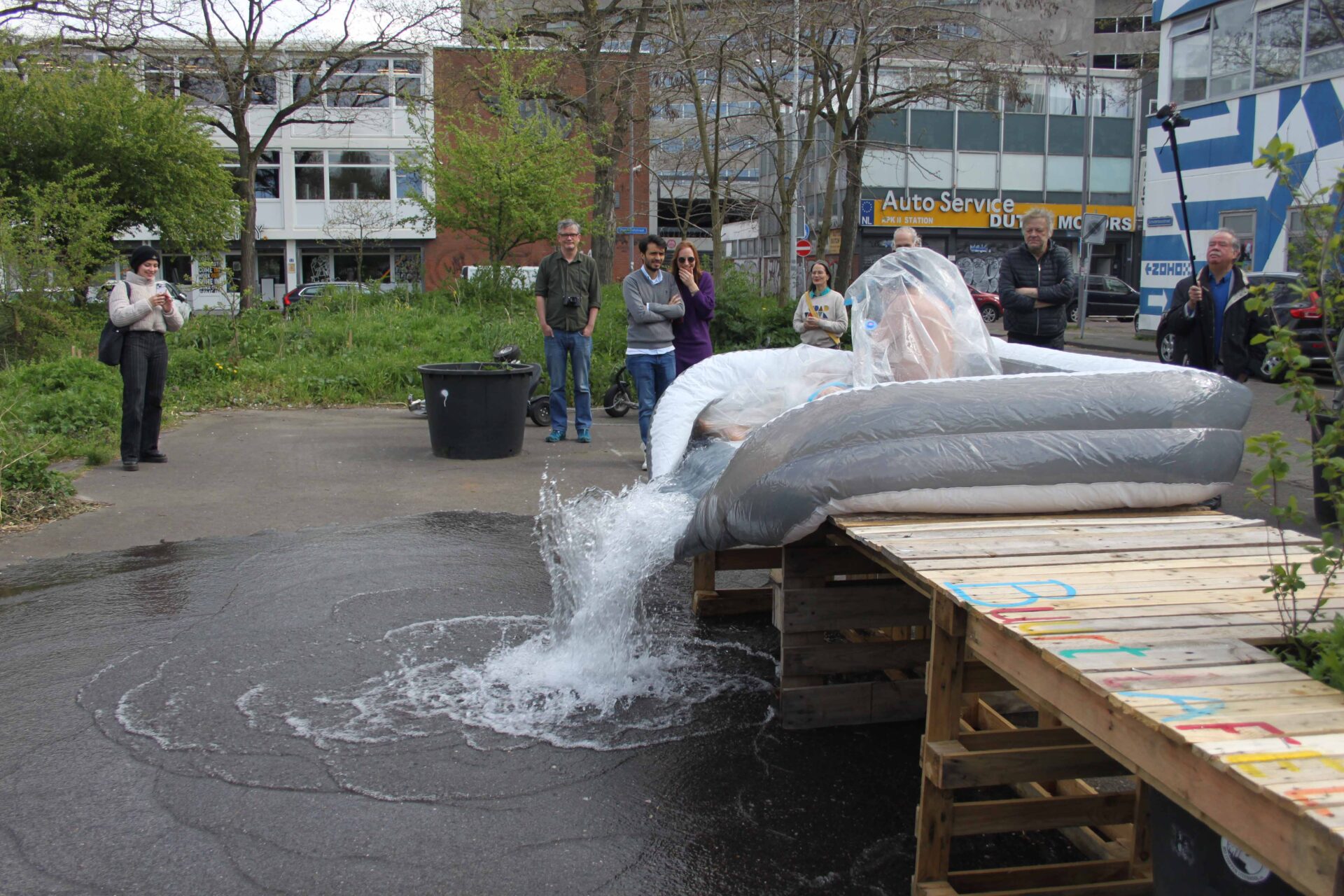
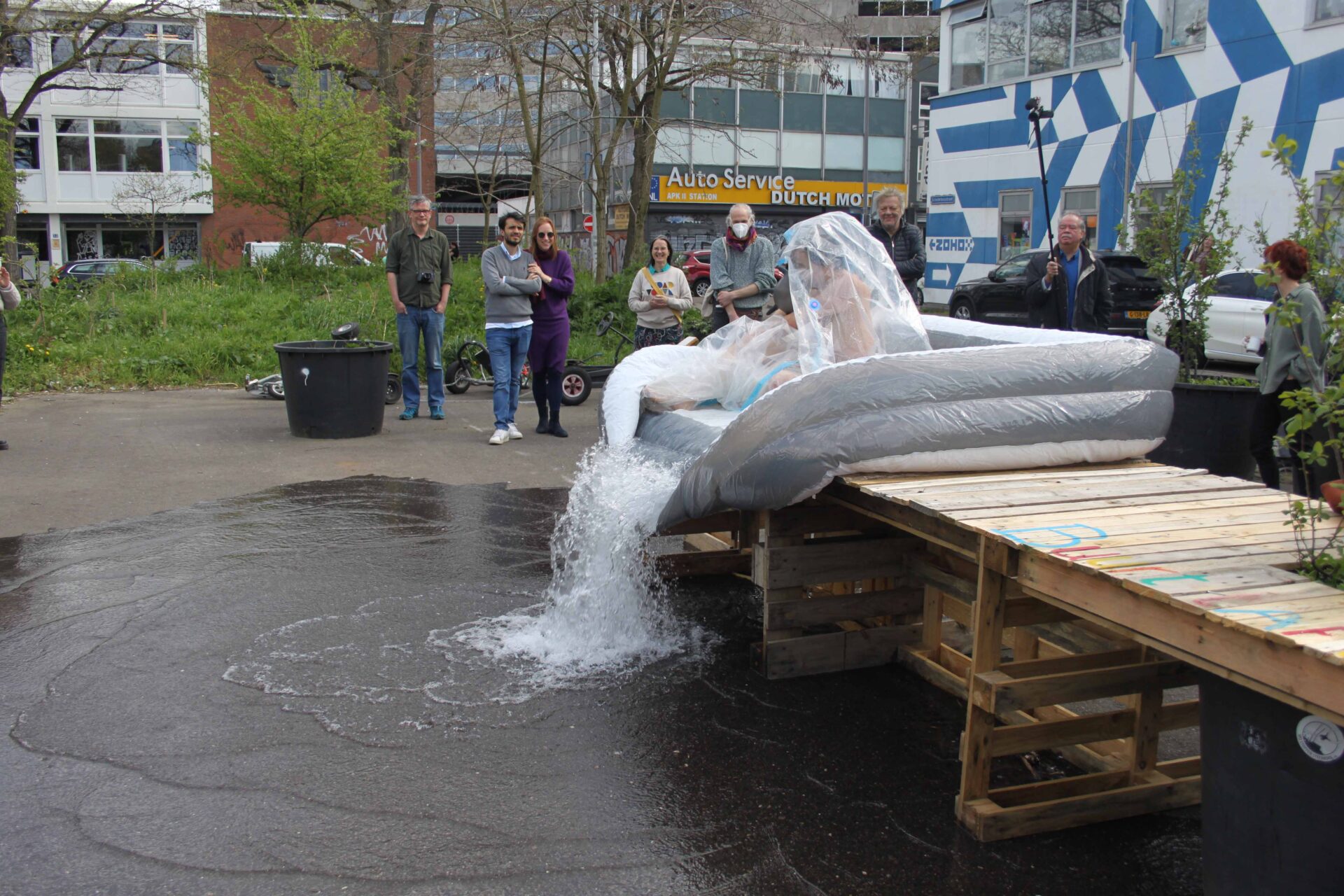
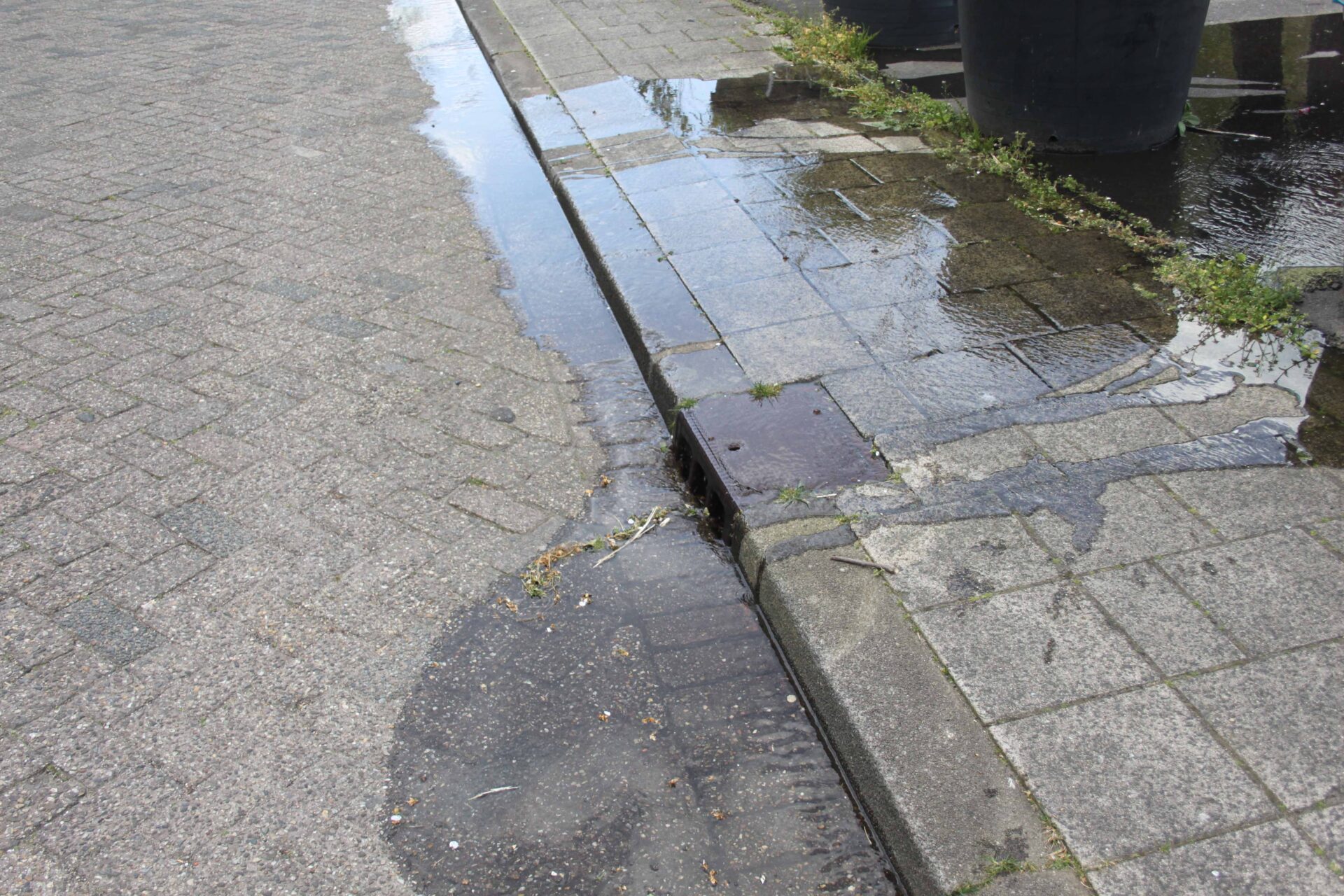
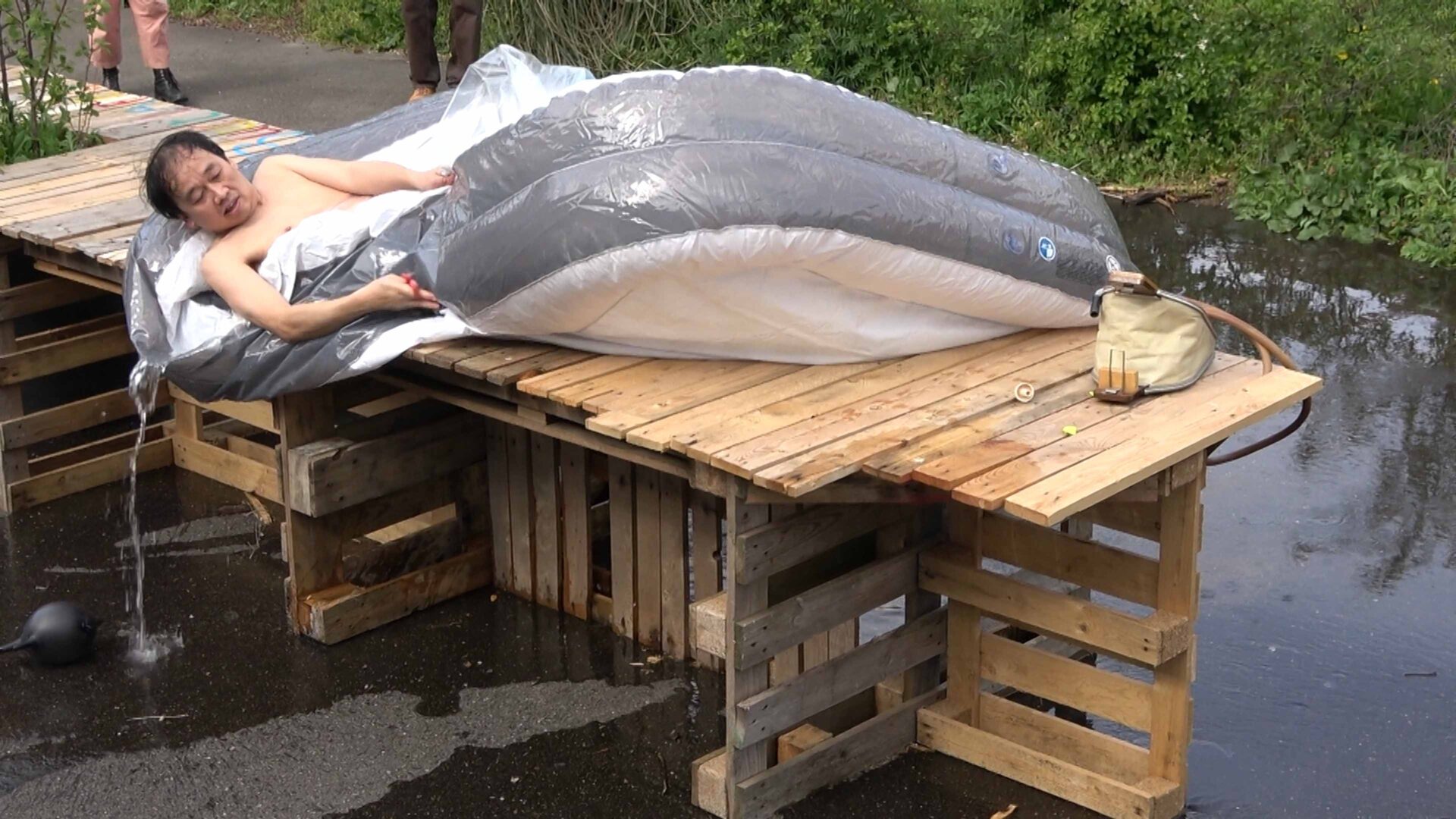
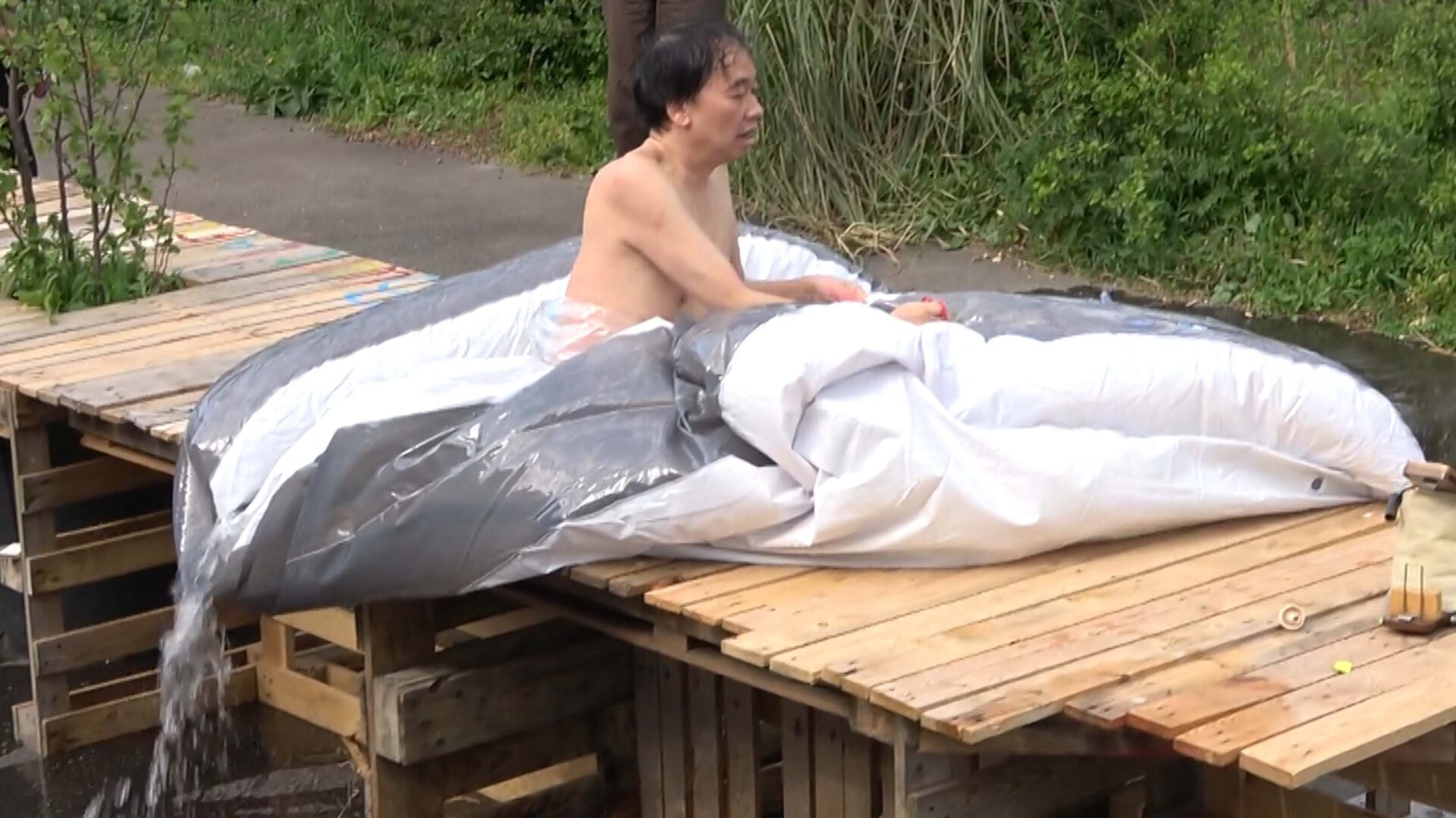
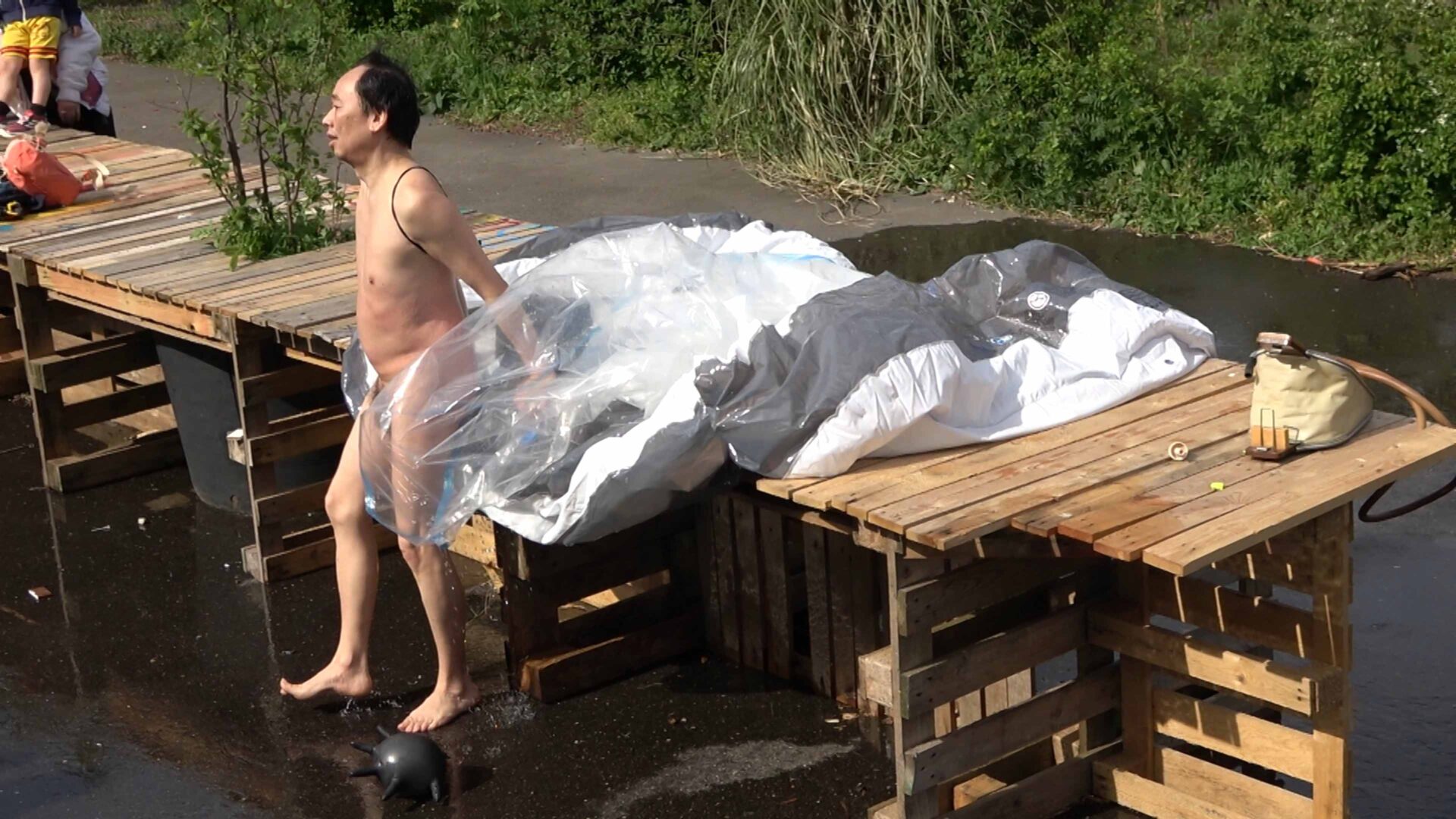
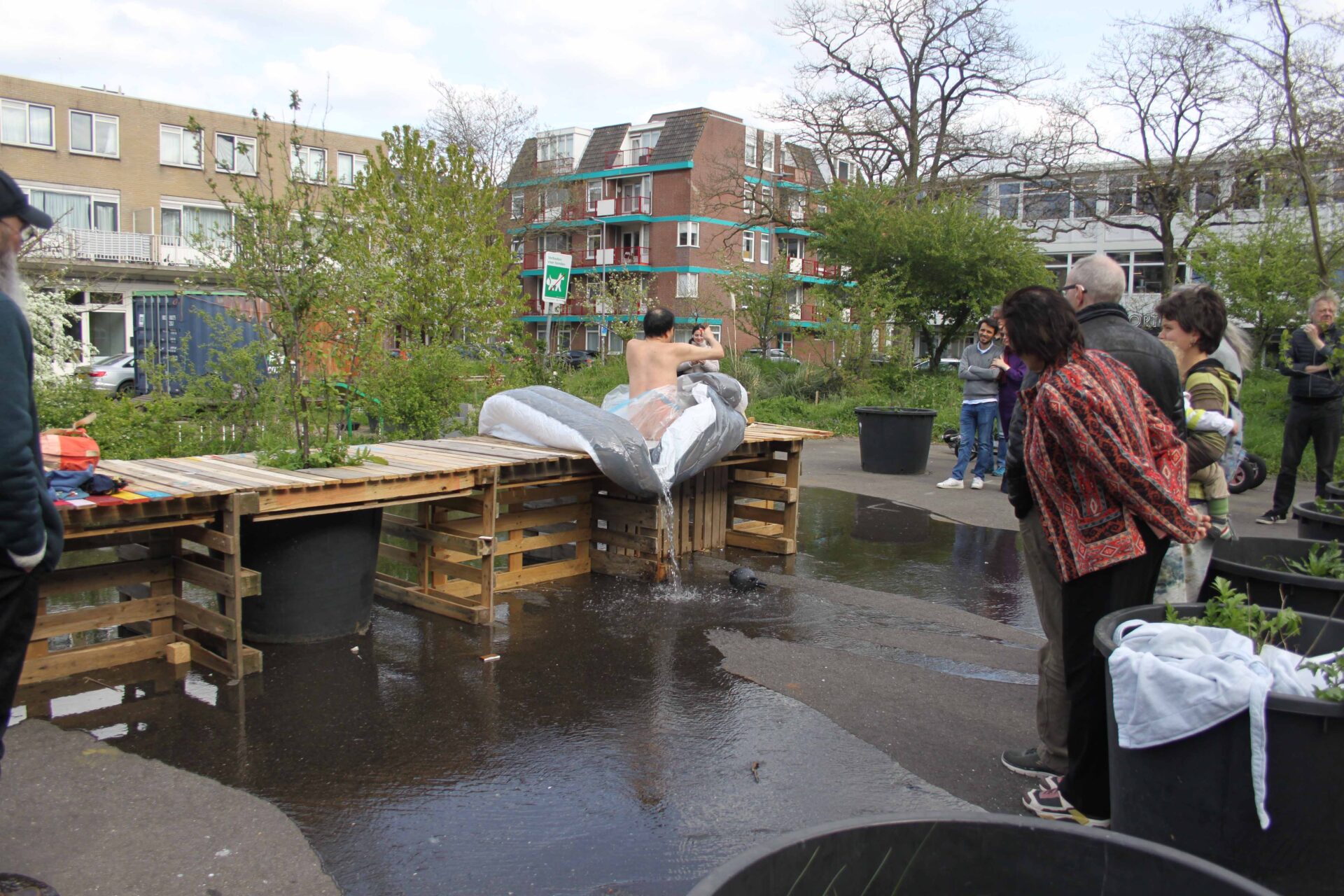
Then comes the decisive gesture. Mukarno takes a pair of scissors and pierces the pool wall. Instantly, water flows out and runs onto the ground. The sound of releasing water translates the spiritual process of cleansing into physical form. It represents the breaking of the womb’s membrane—the final passage from enclosed existence to open life.
Water becomes a symbol of freedom. As it touches the earth, the birth completes. The performer stands naked and newly alive. From black clothing and heavy boots, he moves to bare skin and flowing water. The transformation feels direct and honest, free from artifice. It ends with quiet reemergence rather than dramatic climax.
Spiritual Interpretation
Rebirth Through Resistance transforms the act of performance into a spiritual ritual. Mukarno’s gestures connect physical endurance with inner awareness. Through weight, breath, and vulnerability, he treats the body not as object but as mirror of the soul. Each phase—walking, falling, shedding, submerging— reflects movement through life’s stages: birth, struggle, exhaustion, death, and rebirth.
In many spiritual traditions, physical resistance becomes a gateway to purification. The deliberate difficulty of movement recalls pilgrimage or meditation. The bed becomes a symbol of human restlessness, the mask of breath recalls life’s fragility, and water embodies renewal. Mukarno’s work invites viewers to participate silently through empathy. The journey is personal yet universal.
The performance also raises questions about the relationship between body and environment. By moving from an interior stage to an outdoor setting, the body relocates its ritual to public space. The spectators do not remain passive; they follow, observe, and witness the rebirth collectively. This shared movement transforms the work into communal meditation—an act of spiritual connection through art.
Art, Spirit, and Cleansing
Mukarno’s performance language often explores boundaries between the visible and invisible. His art does not aim for beauty but for truth through experience. In Rebirth Through Resistance, truth appears in exhaustion and renewal. The body’s struggle against physical weight mirrors the spirit’s struggle against time and perception.
The cleansing process unfolds through action. Breathing transforms from sound into meditation. Water transforms from containment into freedom. The body transforms from isolated existence into pure presence. Each transformation reinforces the central insight: resistance leads to clarity, and struggle leads to awakening.
For spectators, the performance lasts less than an hour, yet its resonance extends far beyond the moment. The imagery remains in memory—the echo of breath, the sound of water falling, the sight of rebirth. Through these sensations, the work continues as reflection. It encourages viewers to consider how their own resistance may hold the seed of renewal.Rebirth Through Resistance by Philemon Mukarno stands as both art and spiritual act. It unites body and space, exertion and surrender, visibility and invisibility. Through minimal objects—a bed, a mask, a bag, and water—it communicates a profound message: rebirth requires letting go.
Presented during Performance Art in WGW #5 in Rotterdam, this work reaffirms that performance art can transcend expression and become transformation. Mukarno invites the audience not only to watch but to feel—to follow the path from heaviness to freedom, from breath to silence, from resistance to rebirth.
Photos by Ieke Trinks
Video by Maurits ten Horst