Objectification: Sex, Power and Performance Art in Berlin
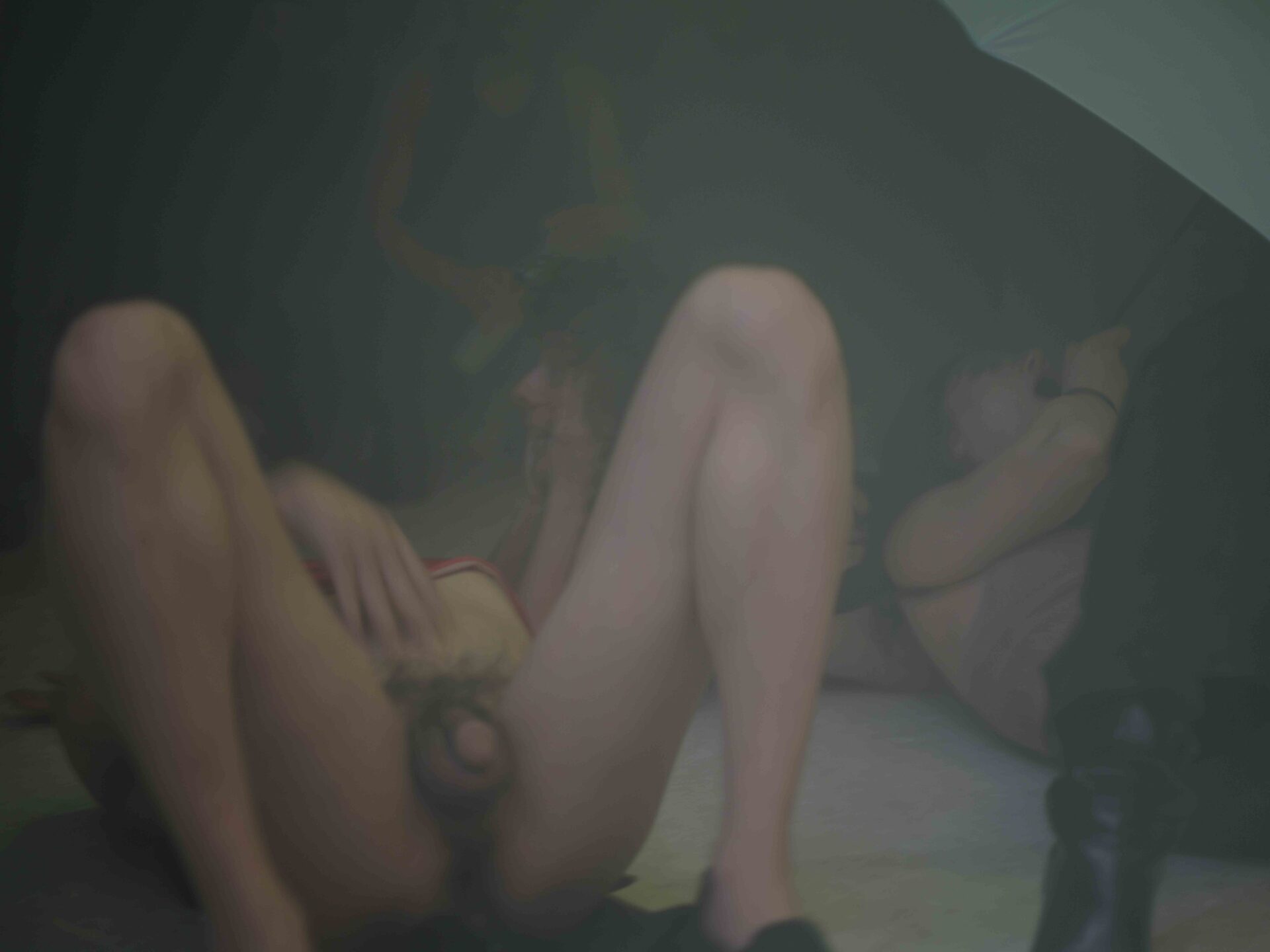
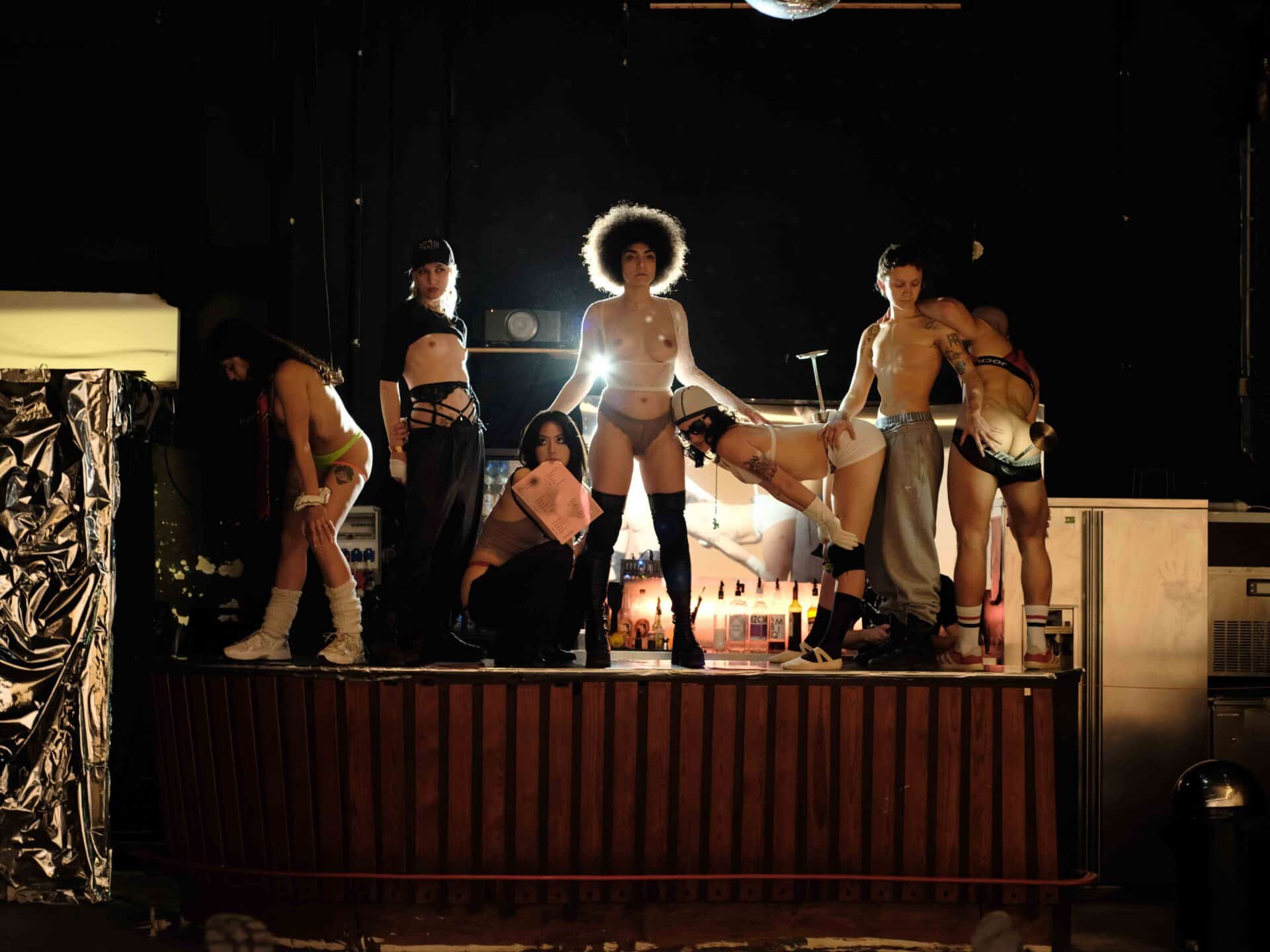
“Objectification” is a three-hour performance by Normies Study Group that examines sex, power, and the human body in public space. I, Philemon Mukarno, take part as one of more than thirty performers.
Concept and Setting
The work takes place at studio db in Berlin, a large industrial space near Uferstraße. For one evening, the venue becomes a living laboratory for bodies, intimacy, and social rules.
The performance does not offer a single clear story. Instead, each room presents another situation where bodies become objects, tools, or places. Sex is not decoration here; it is the main material and question. Every scene asks how desire, power, and care can exist in the same moment.
The Living Room
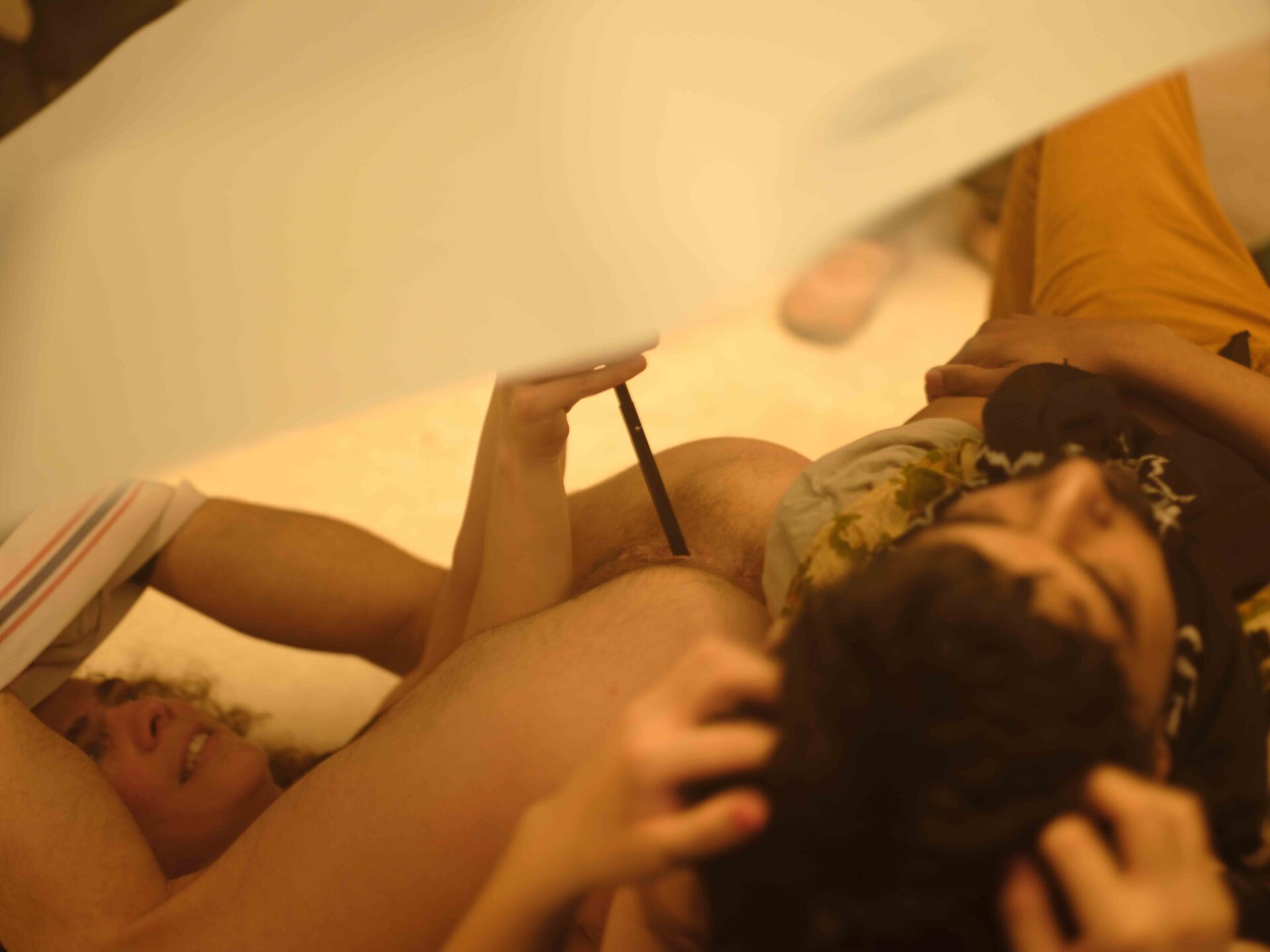
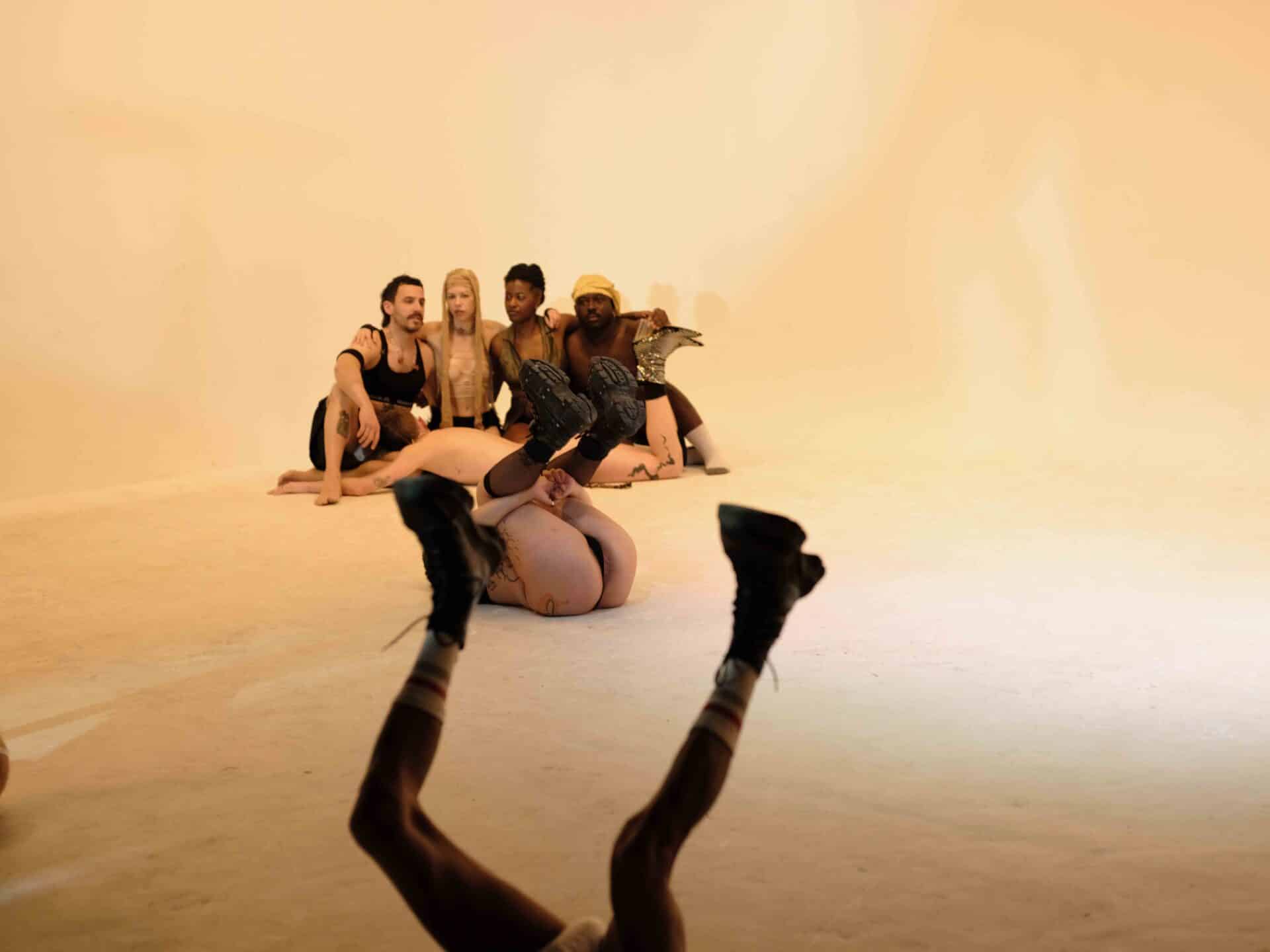
Visitors first enter a domestic scene called “The Living Room.” The space feels familiar: a bar, soft light, and places to sit. However, the sofas and chairs are made of human bodies. Performers hold fixed positions, turning flesh into furniture. I perform as a chair. My shoulders and head rest on the floor while I balance upside down. My pelvis becomes the seat where visitors are invited to sit. I am naked, like many other performers in the room.
The contact is direct and heavy. Someone sits down, and their weight presses into my hips. The situation looks simple but feels complex. I am both a person and a thing under someone’s body.
Pregnant Game and Intimate Prizes
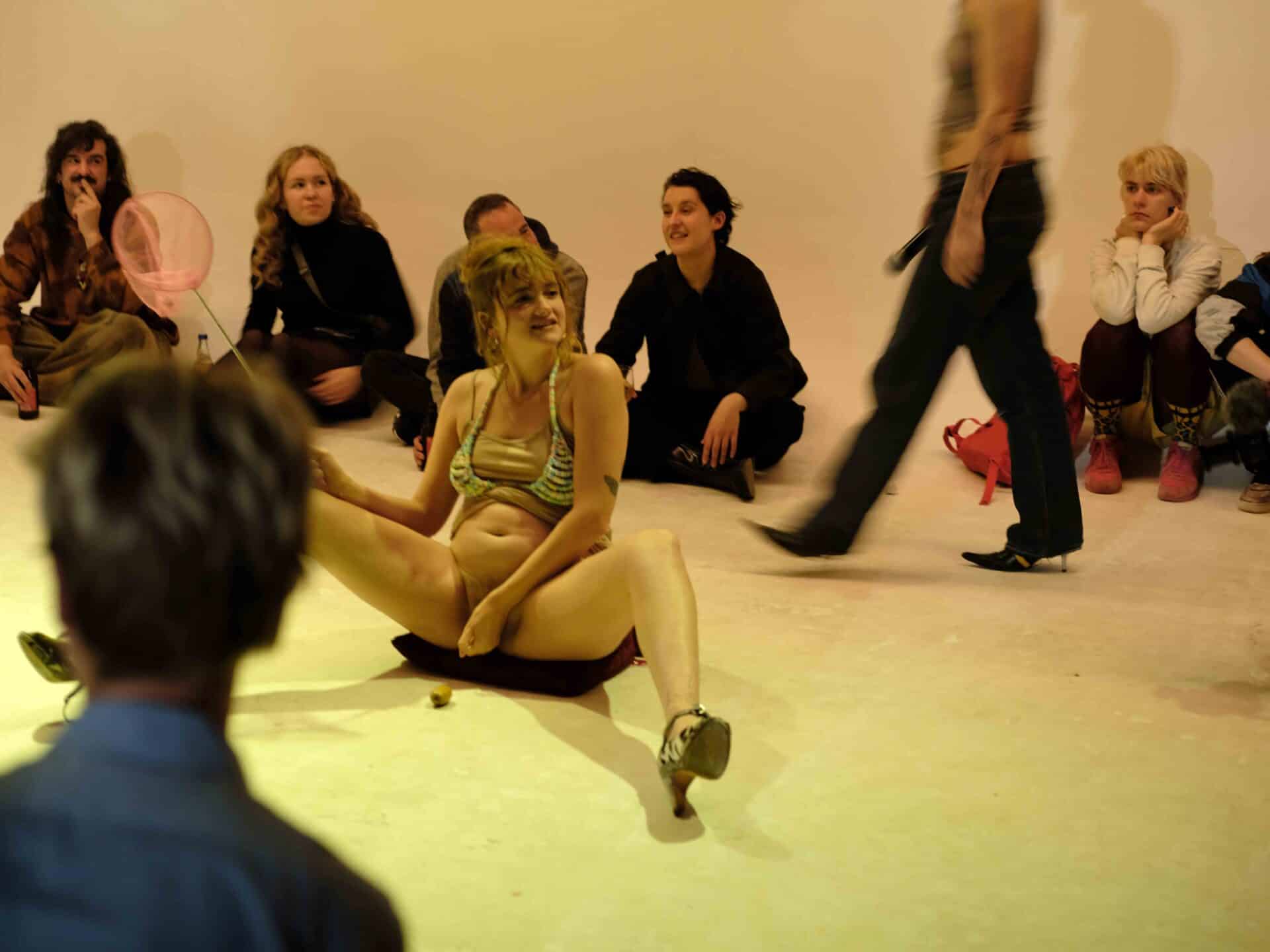
After some minutes, another shift occurs in the living room. Performer Nellie Heindrichs, visibly pregnant, enters the performance area. She carries a small net and a collection of balls. She invites visitors to throw a ball into the hanging net. When a ball lands correctly, she offers a prize from between her legs. Sometimes it is a baby doll; sometimes it is a sweet.
The action is playful yet loaded. Sex, pregnancy, and reward fold into a simple game. The body becomes a dispenser of gifts and expectations. Visitors must confront their feelings about fertility, sex, and display.
A Circle of Sofas and Lullabies
Later, performers assemble in a ring and again become seating. Our bodies form a low circle, like a soft, uneven sofa. Visitors are invited to sit among and on us. When a visitor settles down, a performer leans close. We sing lullabies softly into the visitor’s ear. The songs are quiet, almost private, but heard in public.
This moment brings care into the frame of objectification. A body is a chair, but also a source of comfort. Sexual tension mixes with tenderness and the vulnerability of being held.
Playground of Flesh
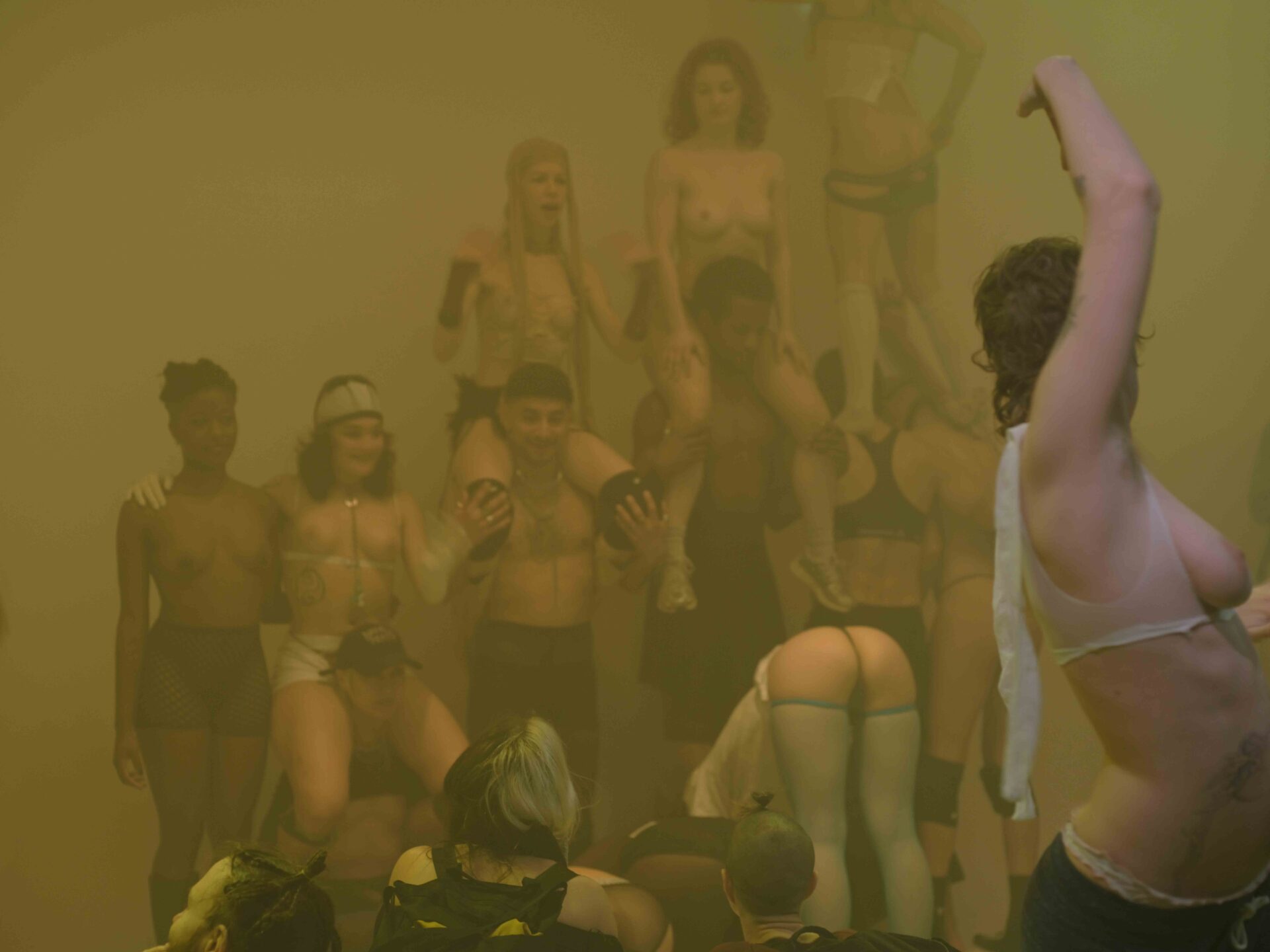
In the next phase, the space changes into a playground. Here, the bodies of performers become climbing structures and play devices. Visitors can climb, lean, and balance on us within clear limits. Groups of performers also form “bushes” and “shrubs.” We use our own pubic hair, head hair and body hair to suggest vegetation. The space looked playful, but the body material remained explicit. From a distance, the scene looks like a park made of bodies. The playground stage treats adult sexuality like a field of play. Desire becomes movement, climbing, slipping, and testing balance. The question arises: where does play end and exploitation begin?
Choreography of Control
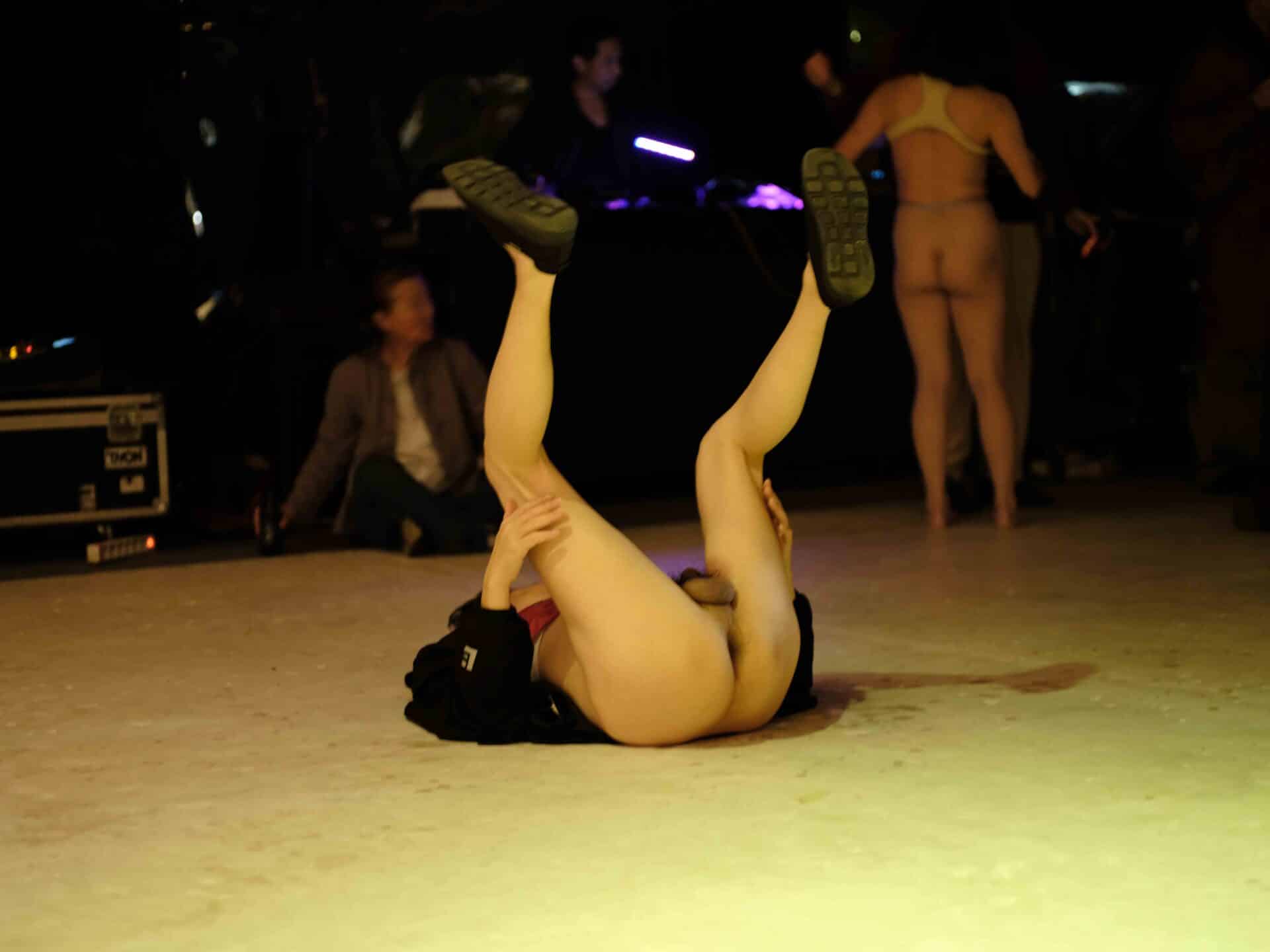
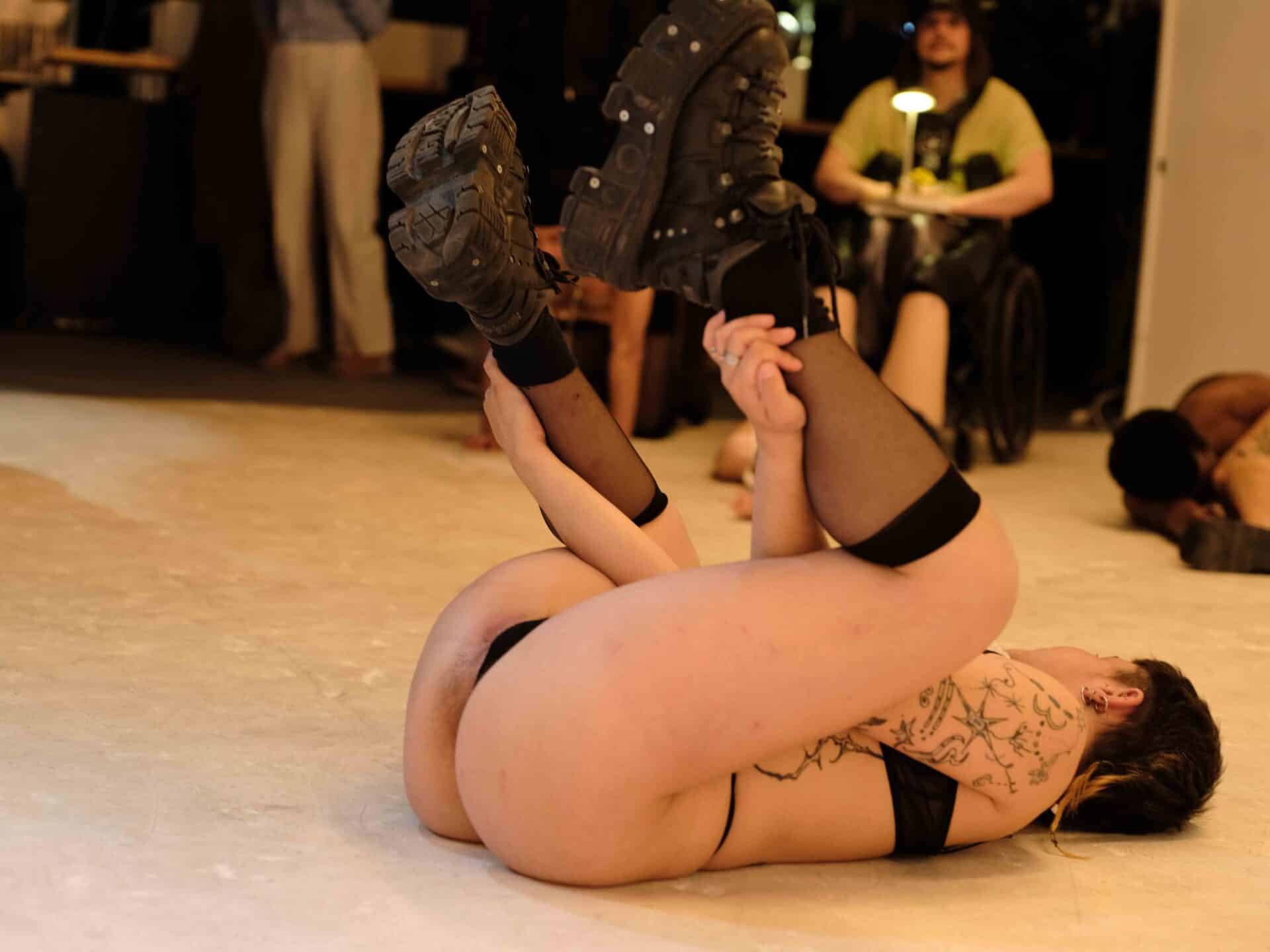
Another section introduces a strict, minimal choreography. Performers lie side by side on the floor, facing sideways. We wait in stillness, listening for a single sharp clap. When the clap sounds, we raise our hips into the air. Our backs form a line of arches pointing upward. Then we drop again and return to our starting positions. As the music changes, order breaks into chaos. We scatter, cross, and overlap, no longer aligned in rows. Yet the clap still controls us; each time, hips lift again. This rhythm between structure and disorder mirrors social control. Sexual behavior can seem free, yet follows strong invisible rhythms. A small external signal can still direct the most intimate gestures.
Toilets and the Public Body
Next, the performance touches the theme of toilets and privacy. A plastic inflatable pool is placed within the space. Performers stands around the pool and treat it as a shared urinoir. At the same time, other performers act as living toilets. Other performers kneel or position themselves and became toilets, and the audience was invited to urinate into their mouth. The exact actions stay within the frame of consent and care. This stage collapses the boundary between private function and public view. It asks who has the right to hide their bodily needs. Sex, here, connects with shame, control, and the politics of waste.
Confession Room and Moving Structures
The “Confession Room” offers another kind of intimacy. Together with Hurricane Alexandre Schaef and Christiaan Schmidts, I build installations. We use objects from the space, including Christiaan’s wheelchair. Visitors are invited to enter, sit, and activate these structures. They might roll, tilt, or lean, guided by our instructions. The room recalls a church confessional, but without a priest. Instead, there is open contact between performers and visitors. Bodies and equipment form temporary machines for story and release. Here, sex is more suggested than shown, yet still present.
The Intimate Room
The “Intimate Room” brings the theme of sex into sharp focus. We construct a wall with openings and hidden spaces. Visitors can engage in sexual contact with performers through this wall. The sixth section, lasted thirty minutes. It included a Glory Wall, built so the audience could carry out sexual activity. In the score, Mukarno performed oral sex and anilingus. Sheen performed fellatio. Other performers stimulated nipples. Other performers invited audience members to engage in anal and vaginal sex. This was the most direct section of the work. However, its force came not only from explicit action. It also came from arrangement. The wall organized bodies, proximity, and permission. Therefore, sex appeared not as private fantasy, but as shared structure inside an art space. I participate in explicit acts that remain within consent. Close contact occurs through the structure rather than in open view. Other performers focus on different erogenous zones, each with choice. The wall both hides and displays. It turns sex into an architectural feature of the performance. Desire travels through small spaces, fragments, and partial visibility.
Here, objectification becomes circular. Bodies are objects of pleasure, yet also agents who set limits. The room highlights negotiation, consent, and the politics of looking.
Wall of Backs
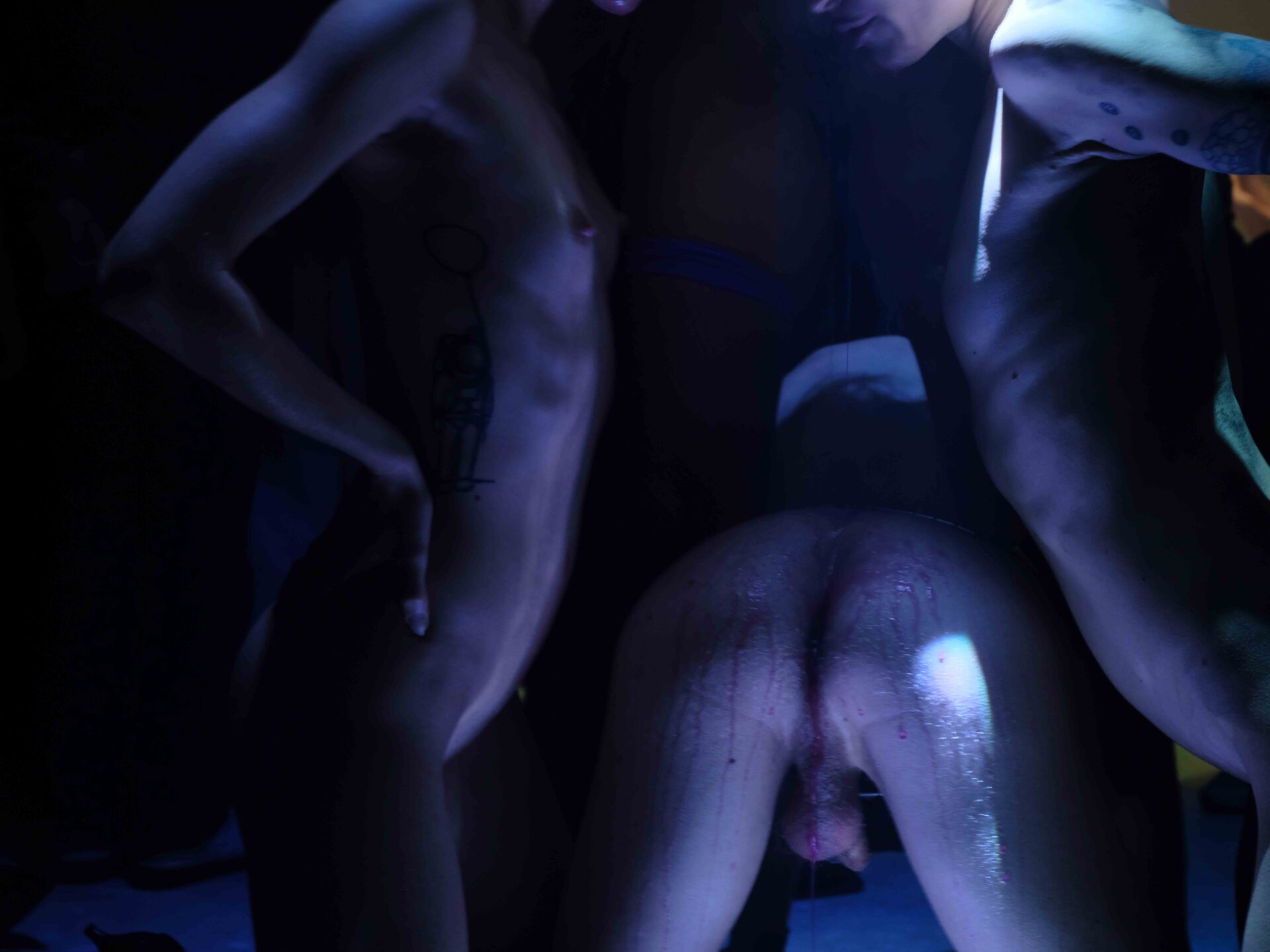
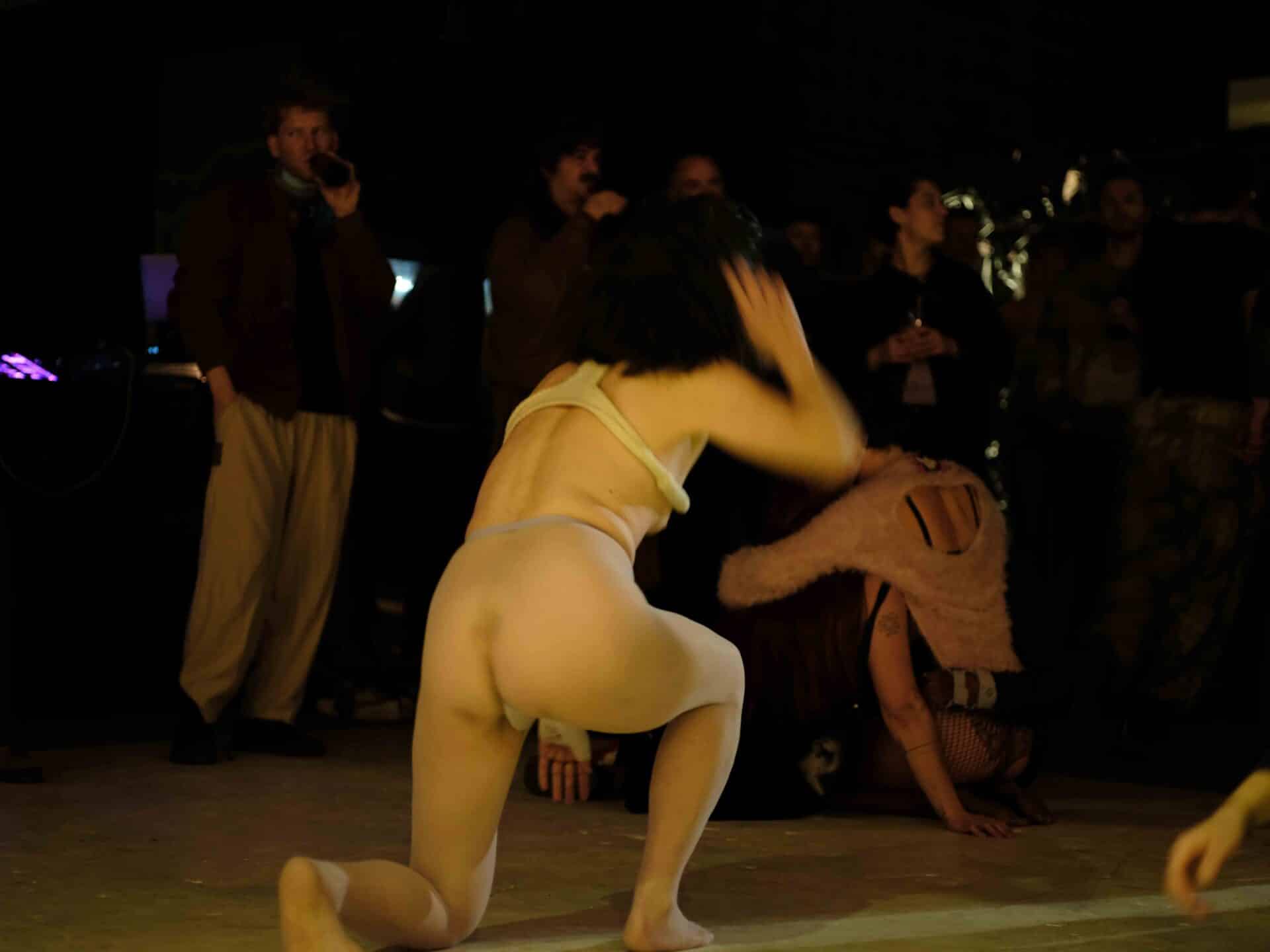
Toward the end, we form a line facing away from the audience. All performers present their bare backs and buttocks toward the crowd. From the front, visitors see only a continuous wall of flesh. The gesture is simple but charged. The most vulnerable side of the body faces the spectator. The faces, however, disappear from sight, removing personal identity. At one point, some performers stand on the backs of others. The living wall becomes higher, like a stacked barrier. The image is heavy, uncomfortable, and difficult to ignore. In this moment, objectification is unmistakable. We are surfaces, not individuals, yet we hold the pose by choice. The scene asks who is watched, who watches, and who carries weight.
Nellie Heindrichs takes part in a high-tension tableau involving direct bodily contact with Mathilde Flor Usinger. And she presses her feces onto the back of Mathilde Flor Usinger.
Collaboration and Ensemble
“Objectification” is not a solo work. It is a collective piece with a large, diverse ensemble. Performers come from different backgrounds, genders, and experiences. Directors Mathilde Flor Usinger and Ruben R guide the structure. However, each performer contributes personal ideas and limits. Many actions grow from trust built during rehearsals and discussion. Sound by Tengal connects the rooms into one long journey. Changes in tone signal shifts between play, ritual, and confrontation. The performance lasts three hours, yet time feels stretched and altered. This ensemble frame is important for the sexual content. No scene stands alone or aims only at shock. Together, they build a layered study of objectification and agency.
Audience Participation and Consent
Audience members are never simple spectators. They sit, climb, listen, and sometimes join intimate actions. However, participation is always based on clear invitation and consent. Performers use eye contact, body language, and verbal prompts. Visitors can decline, move away, or only watch from a distance. This freedom is essential when sex enters the frame. Because of that, the performance questions everyday consent as well. People often accept physical contact in clubs, streets, and homes. In “Objectification,” those habits are exposed, slowed, and examined. The work shows how quickly a body becomes a thing. At the same time, it shows how attention can return personhood. A simple question—“Are you okay?”—can change the entire scene.
Sex as Lens, Not Decoration
Sex in this work is not an added topic. It is the main lens through which we view society. Objectification usually describes how people reduce others to bodies. Here, we push that reduction to an extreme. We become furniture, toilets, walls, and playground equipment. Sexual desire is present in nearly every action and room. Yet the performance remains a study, not a party. Pleasure and discomfort walk together through the space. Humor appears, but it never fully removes the tension. By foregrounding sex, the work exposes hidden social rules. Who may show their body, and who must stay covered? Whose desire is seen as normal, and whose as dangerous?
Space, Time, and the City
The location of studio db also matters. Berlin carries a long history of experimental art and nightlife. Many spaces in the city explore sex, kink, and performance. “Objectification” enters this landscape yet stays distinct. It is not a club night or a private party. Instead, it is framed as performance art with clear time limits. The schedule runs from 20:00 to 23:00 on one evening. Within these hours, visitors pass through each stage in order. The city continues outside, yet inside, rules are suspended.
This contrast highlights how context shapes the meaning of sex. The same act feels different in a museum, bar, or street. Performance art allows us to hold these differences in view.
Reflection as Performer
For me, performing in “Objectification” raises personal questions. When I offer my naked body as a chair, I feel exposed. I am both host and object, artist and piece of furniture. The contact with visitors is direct and unpredictable. Some sit gently; others place their weight without hesitation. Each body tells me something about trust, curiosity, or dominance. Throughout the night, I move between roles and rooms. I become furniture, participant in games, builder of installations. In each position, sex and power feel slightly different.
This constant shift keeps the performance alive and risky. It prevents our bodies from becoming simple symbols or fixed roles. Instead, we stay complex, even when appearing as simple objects.
Why Objectification Matters Today
We live in a time of constant images and online exposure. Bodies are photographed, shared, and judged at high speed. Sexual content circulates freely, often without much reflection. “Objectification” slows that process down. It places real bodies and real consent in front of you. You cannot scroll past; you must decide how to respond. The performance does not offer solutions or moral lessons. Rather, it opens a space where discomfort and desire coexist. Viewers leave with their own questions and memories. In that sense, the work is both intimate and political. It connects the private acts of sex to public structures of power. Through bodies, it asks how we see, touch, and use each other.
Closing
“Objectification” uses sex as a sharp tool to study objectification. By turning performers into chairs, toilets, walls, and partners, it reveals how fragile personhood can be. At the same time, it shows how consent, care, and awareness can return agency to even the most exposed body. The Berlin context matters, too. Studio db is a well-established venue for experimental and durational performance. The audience on 4 April 2026 was largely composed of people familiar with this mode of work. That context shapes what is possible.